

Two frames every km: Walking and photographing 5,500km across Europe
"Every day is an adventure" mutters my wife.
She's wincing in pain and gazing down at a nasty gash in her arm as I help her to her feet.
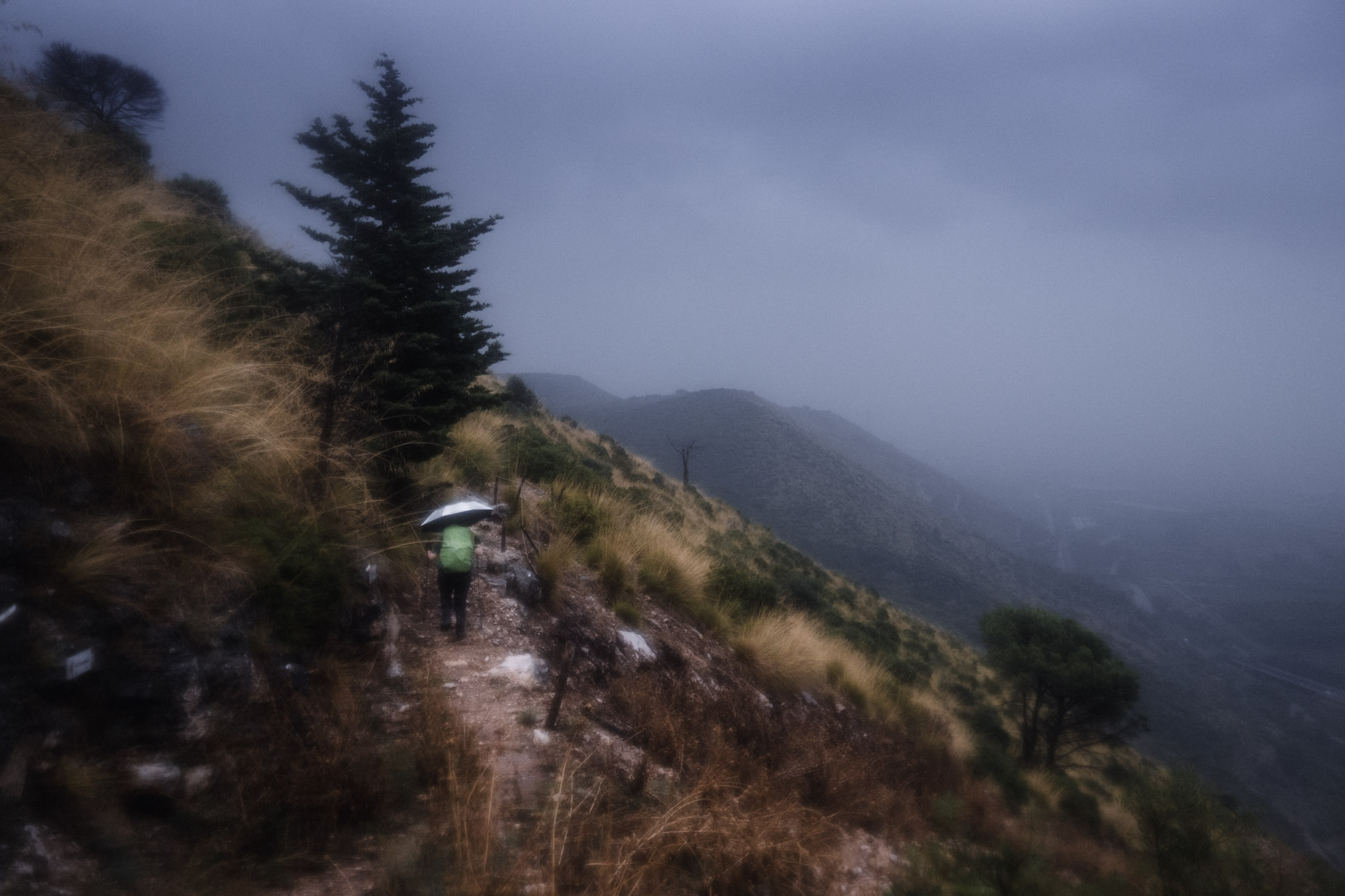
We're on a walk high in the Southern Italian Lepini mountain range and when a misstep negotiating a steep downhill path results in a nasty fall, there's a tangle of arms and legs followed by a dull thud as she hits the ground.
Blood is beginning to pool around the edges of the cut where a sharp stone has dug deep into the flesh.
There's no close town, nothing but steep and rocky terrain as far as we can see.
There's not a lot we can do but carry on.
Pick yourself up, dust yourself off and start all over again.
The first step
We're out on a walk and the photography today has been spectacular, with grand sweeping landscapes and quiet forest trails the order of the day, but for the time being the camera is going to have to remain untouched.
We need to get down off this mountainside and clean up the damaged arm. Photography and the walk will have to wait.
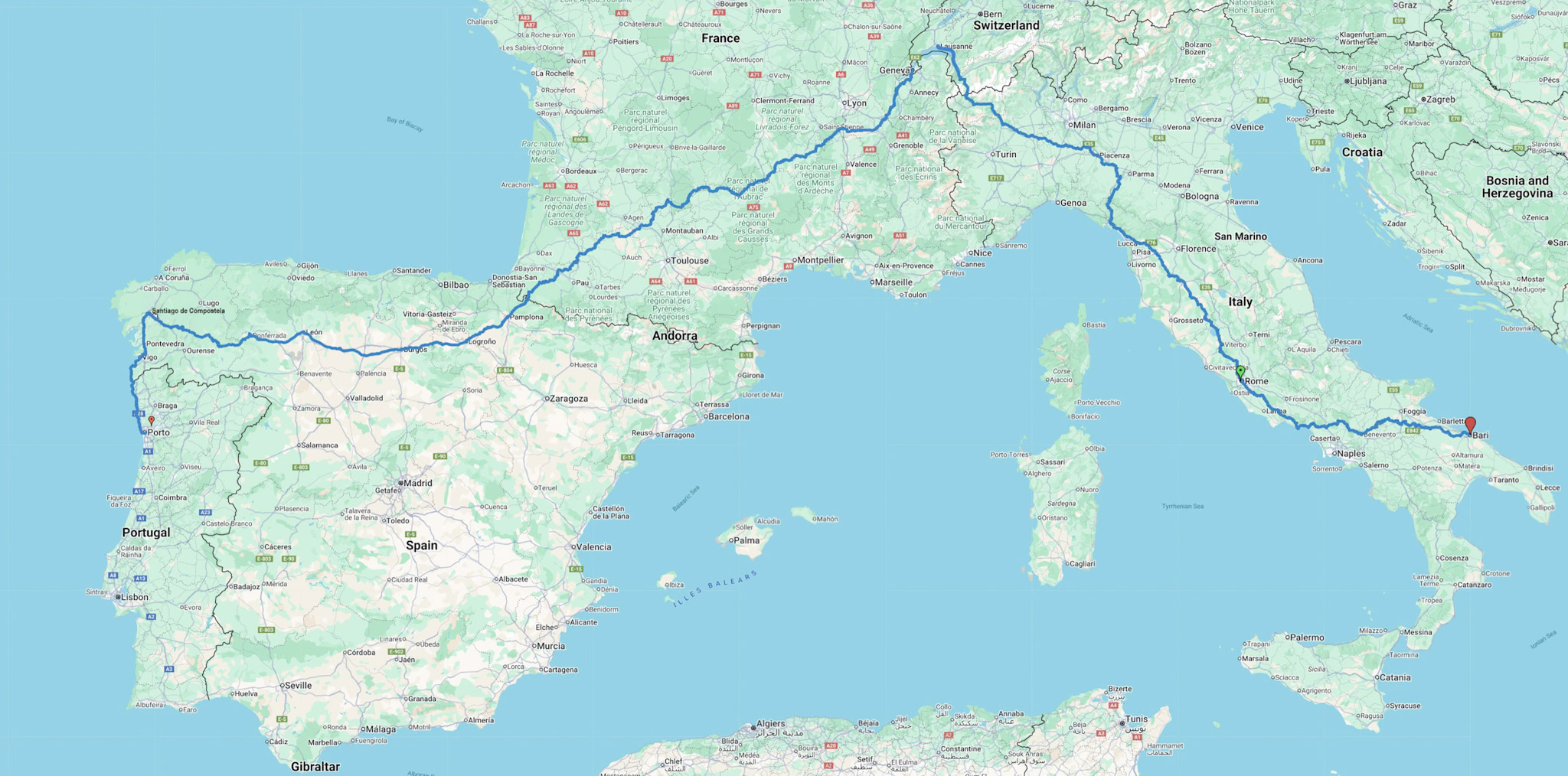
This is no ordinary walk. For us, it began a long way from here, in Porto — the dreamy Portuguese riverside city and traditional starting point of the Portuguese Coastal Camino.
That particular camino is a lovely walk, meandering as it does northwards up the Atlantic coast towards Santiago de Compostella where pilgrims, adventurers and walkers alike traditionally end their camino.
However, for us, that end was just the beginning.
A plan without a plan
It wasn't a bad idea to begin with.
"Let's go for a walk" she said.
Plans were hatched, maps pored over and itineraries discussed, the choice was made, and a location settled on.
Our first goal was to reach Santiago from Porto, a low stress three week walk.
Maps were studied, itineraries loosely discussed, and an initial goal set: Porto to Santiago, a relatively low-stress three-week journey. Why we then chose to keep going — extending the walk stage by stage until it eventually ended in Bari, some 5,500 kilometres away — is less clear.
There was no agenda beyond curiosity, shared experience, and, for me, the chance to immerse myself in photography.
Joining the dots
The various camino routes that crisscross Europe are like a mad spider’s web, dozens of intersecting paths that can be linked together into epic journeys.
It's also possible to join the dots and connect one camino to another to create your own vast and epic walk in a region that is full of vast and epic walks.
By the time our first goal of reaching Santiago was completed, the bug had well and truly bitten. We were addicted, and as any addict will tell you, an addiction needs to be fed.
But frustratingly, this had to wait.
The Schengen Zone’s complicated visa rules meant we only qualified for a 90‑day walking window in each six‑month period.
We had to find a way to break the walk into manageable sections, walks that would fit into a 90‑day window, long enough to feel substantial but short enough that we could finish each stage, stay on a little longer, rest up, and enjoy some sightseeing, history, and culture along the way.
Choosing the right camera
For a photographer, deciding to walk across Europe raises an immediate question: what camera do you carry when everything goes on your back?
Every extra gram is going to hurt.
A short list was made and issues noted to consider.
A shortlist emerged, weighed against practical realities: image quality, durability, battery life, weather sealing, lenses, charging, and cost. A Leica Q2 was briefly tempting, but ultimately rejected — too heavy, too expensive, and too risky once insurance costs were factored in.
Indecision led to an early mistake: dusting off an old Fujifilm X‑T1. It was familiar, uninsured, and flawed. Battery life was poor, weather sealing nonexistent, and image quality compromised by a stubborn sensor dust spot. It didn’t last long.
It was replaced with a much better choice, the Fujifilm X100v.
Perfect for the job required, small, light, weatherproof and great quality, it quickly became the work horse I needed.
Packing it all in
Almost as challenging as choosing the camera was working out how to carry it. In a backpack it would never be used. A neck strap clashed with a pack. Bum bags were bulky and uncomfortable.
In the end I made the decision to try the Cosyspeed Streetomatic bag. Worn on the hip, this worked to a degree, but it was still bulky and uncomfortable to wear with a backpack.
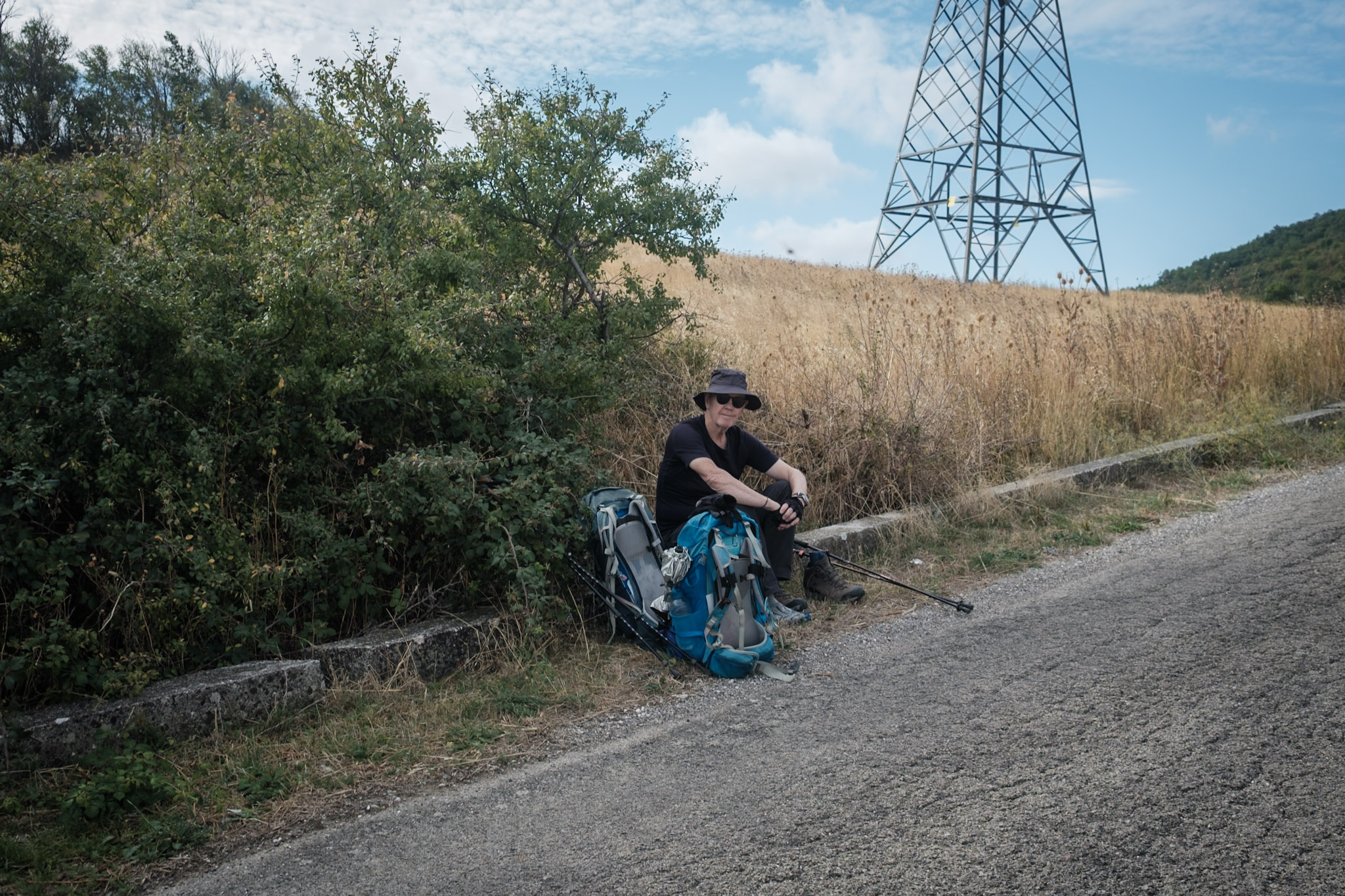
Eventually, I replaced it with a smaller Crumpler hip belt bag before I finally settled on the Peak Design Capture Camera Clip. This was the best solution with a small weather sealed camera and worked well, with a few hiccups.
Oh, and here's a tip: don't forget to check and tighten the screws holding the clip to the backpack, otherwise you're likely to see your camera fall off unexpectedly and bounce down the road!
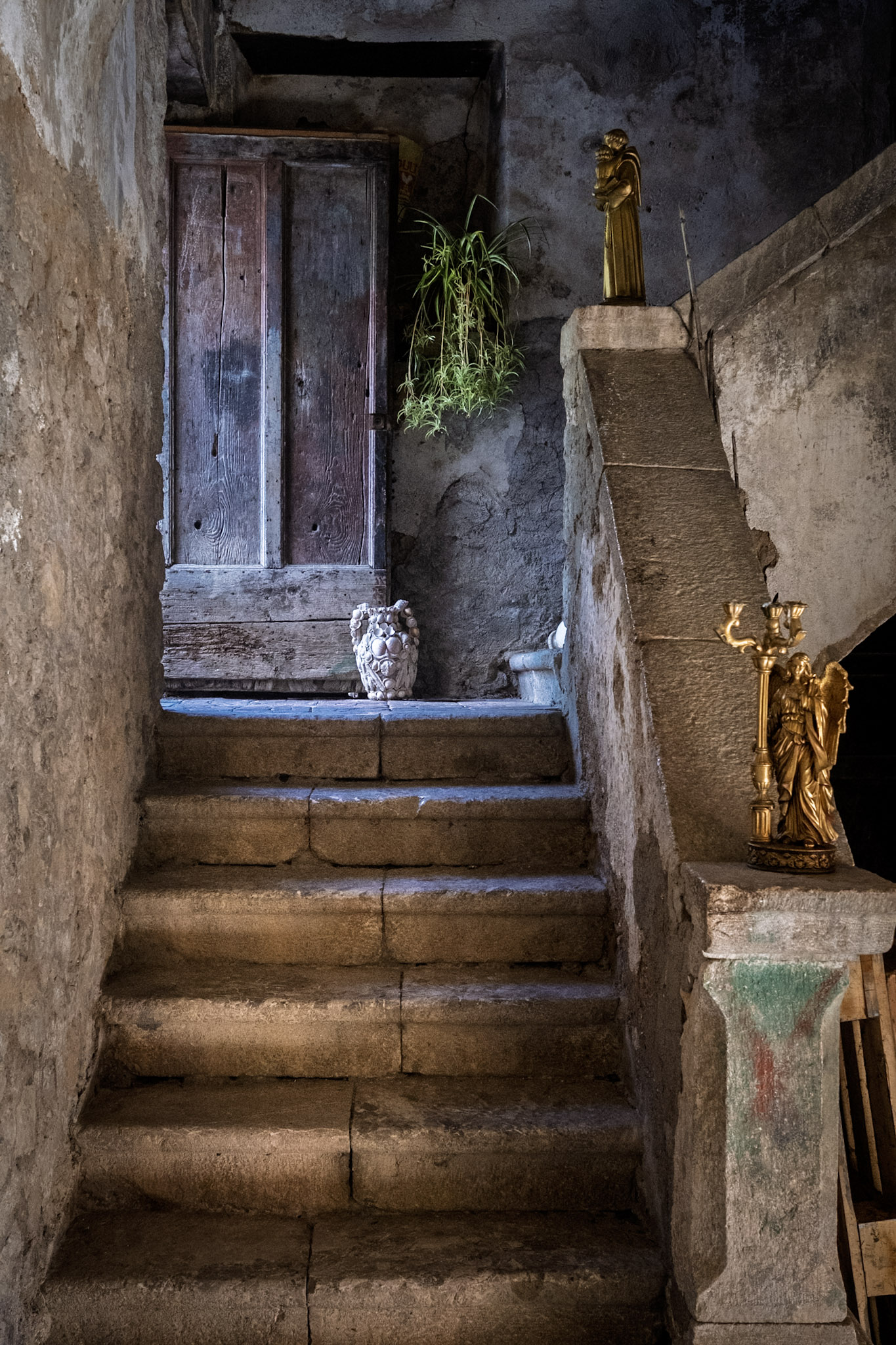
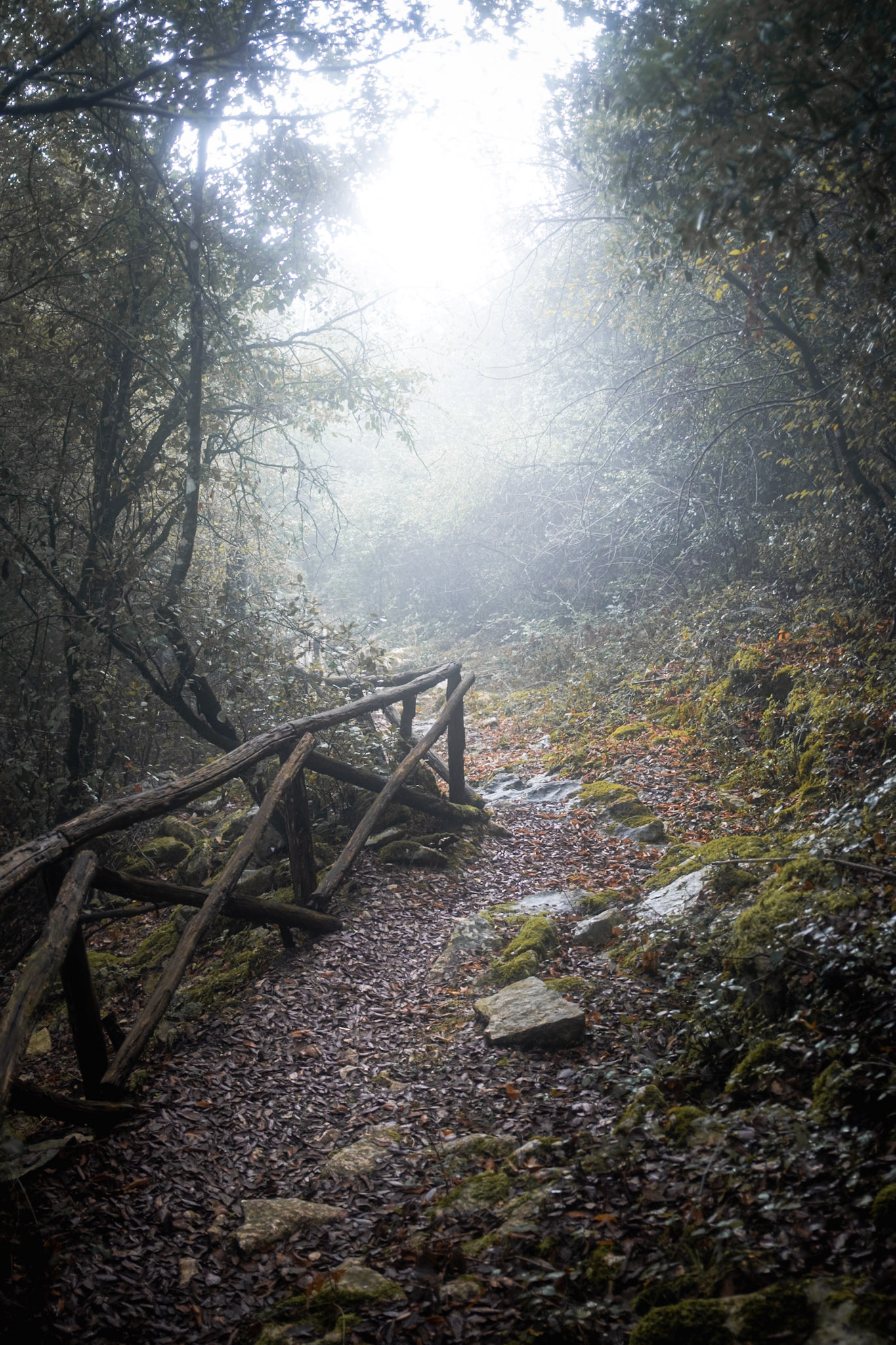
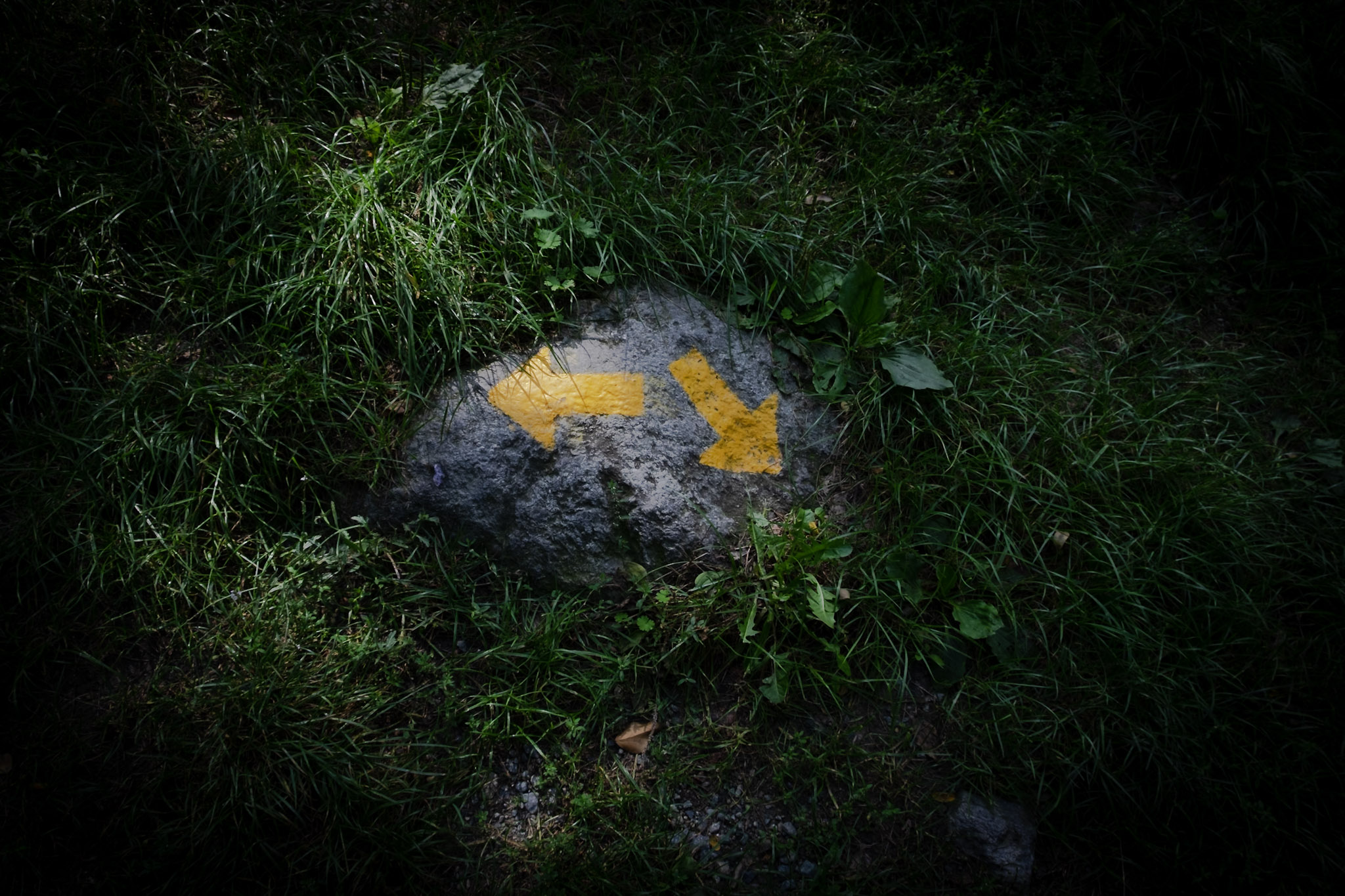
Day by day
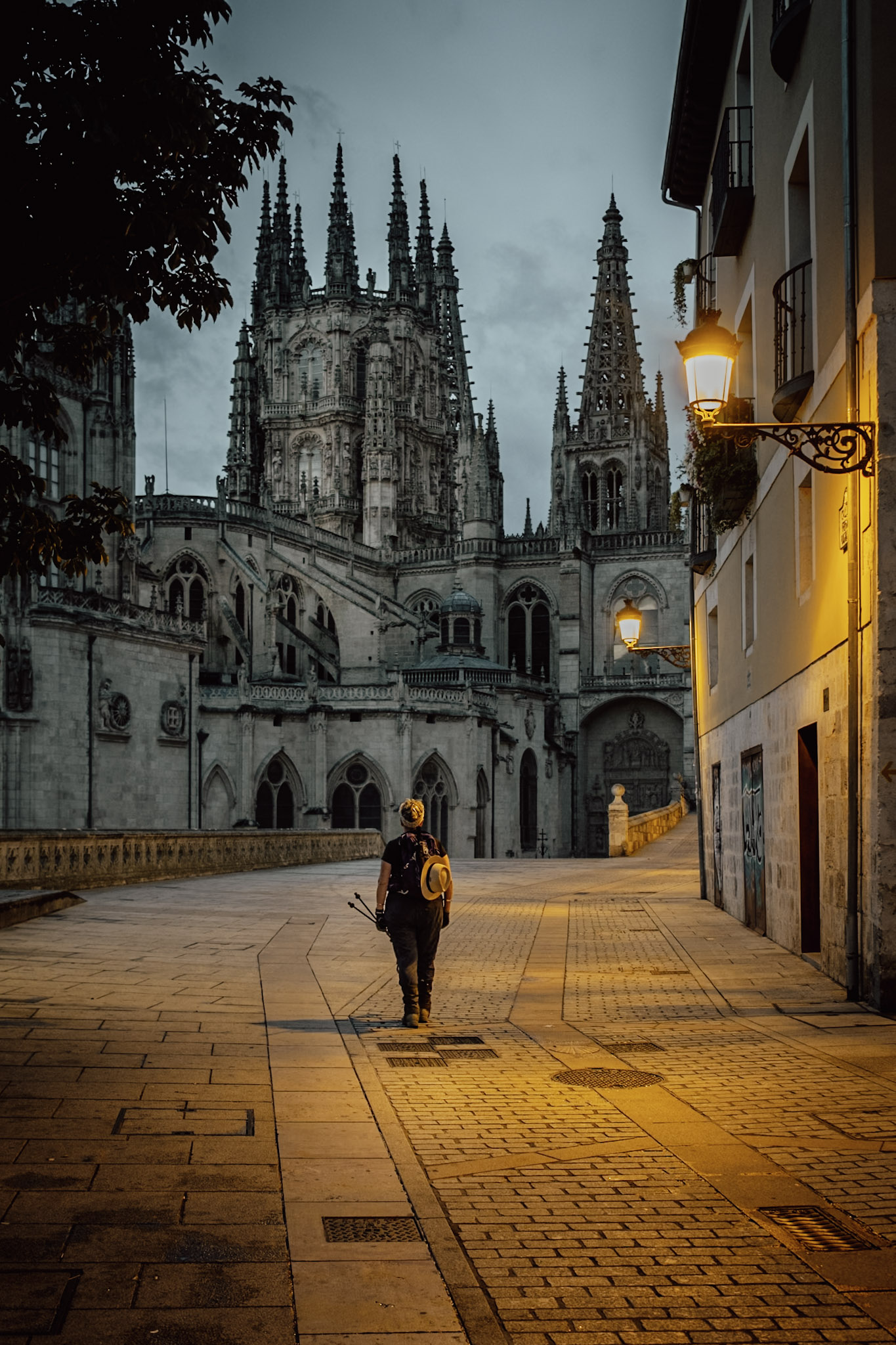
A walk of this length and scope is a photographer's dream. It's the ultimate slow form of travel, where days drift into each other and the weeks become months. You have time to think, to observe and to dream, to rise early and to wander aimlessly.
Blessed to be idle enough to wander through dusty fields, our route scribbling its way across Spain, France, Switzerland and finally Italy, we walked where we could, stopped where we wanted, and eat, slept and rested when we needed.
We'd often rise early, regularly before dawn, both to avoid the afternoon heat and to ensure that we'd arrive into the next village before sunset.
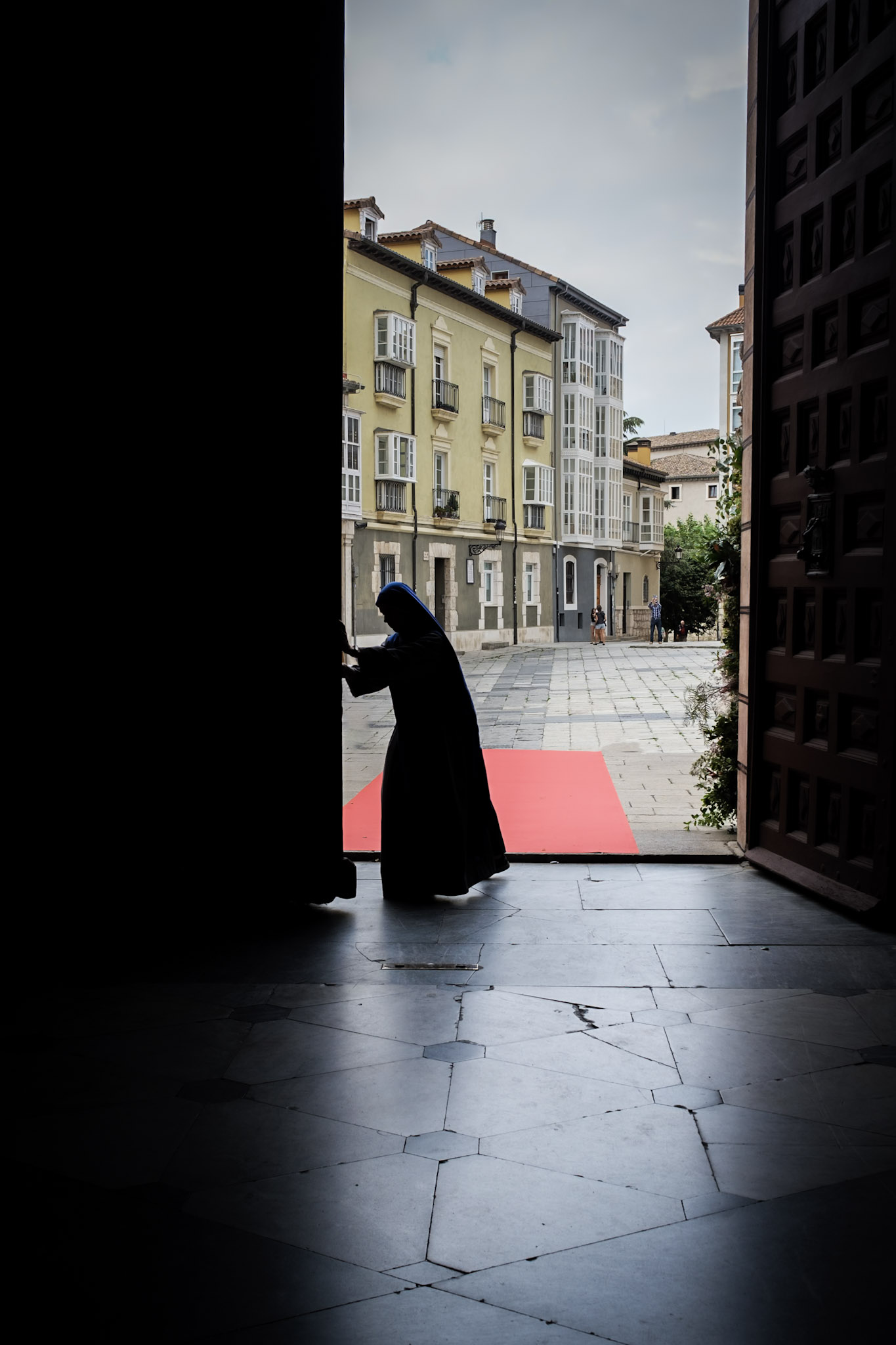
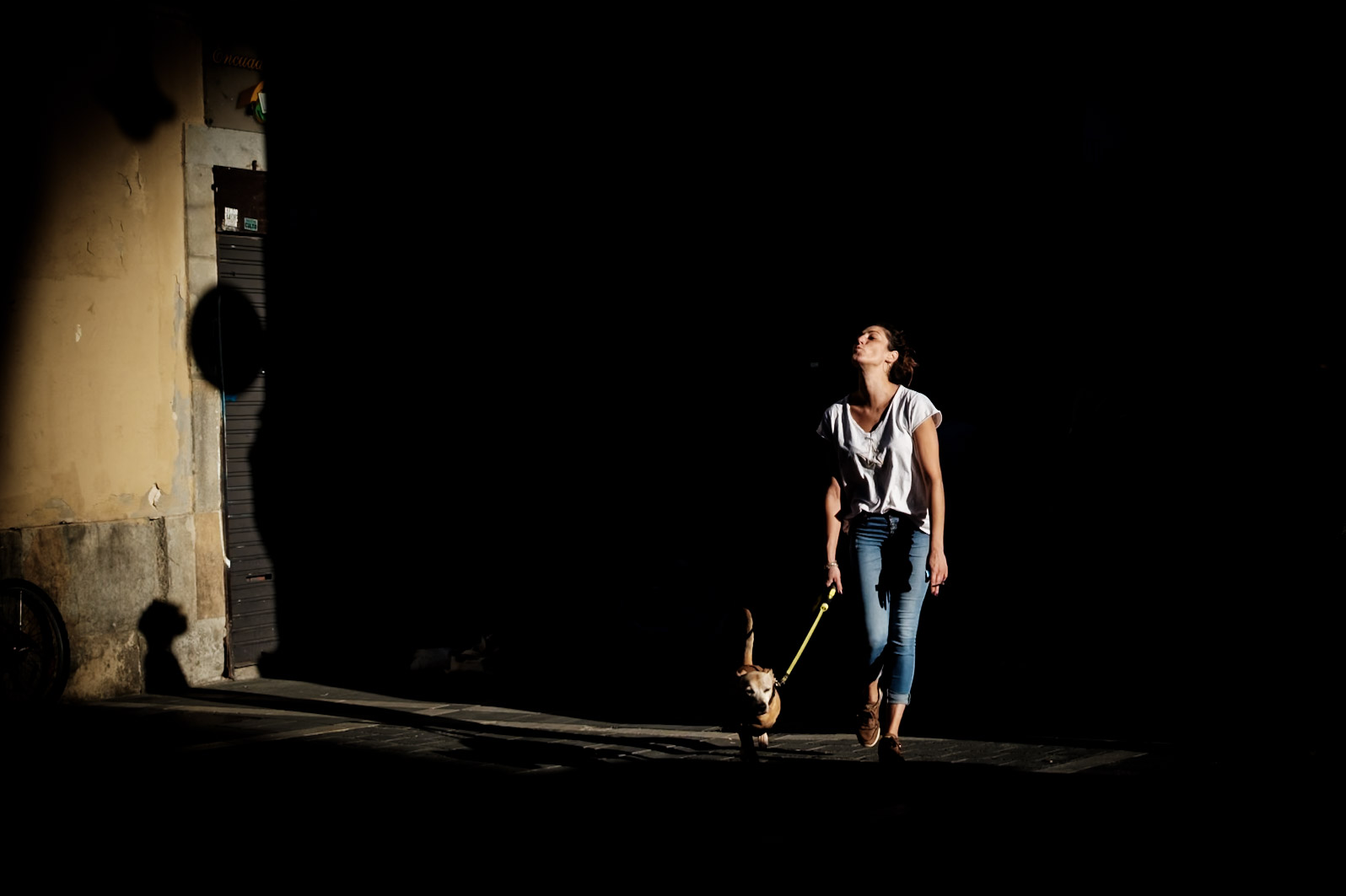
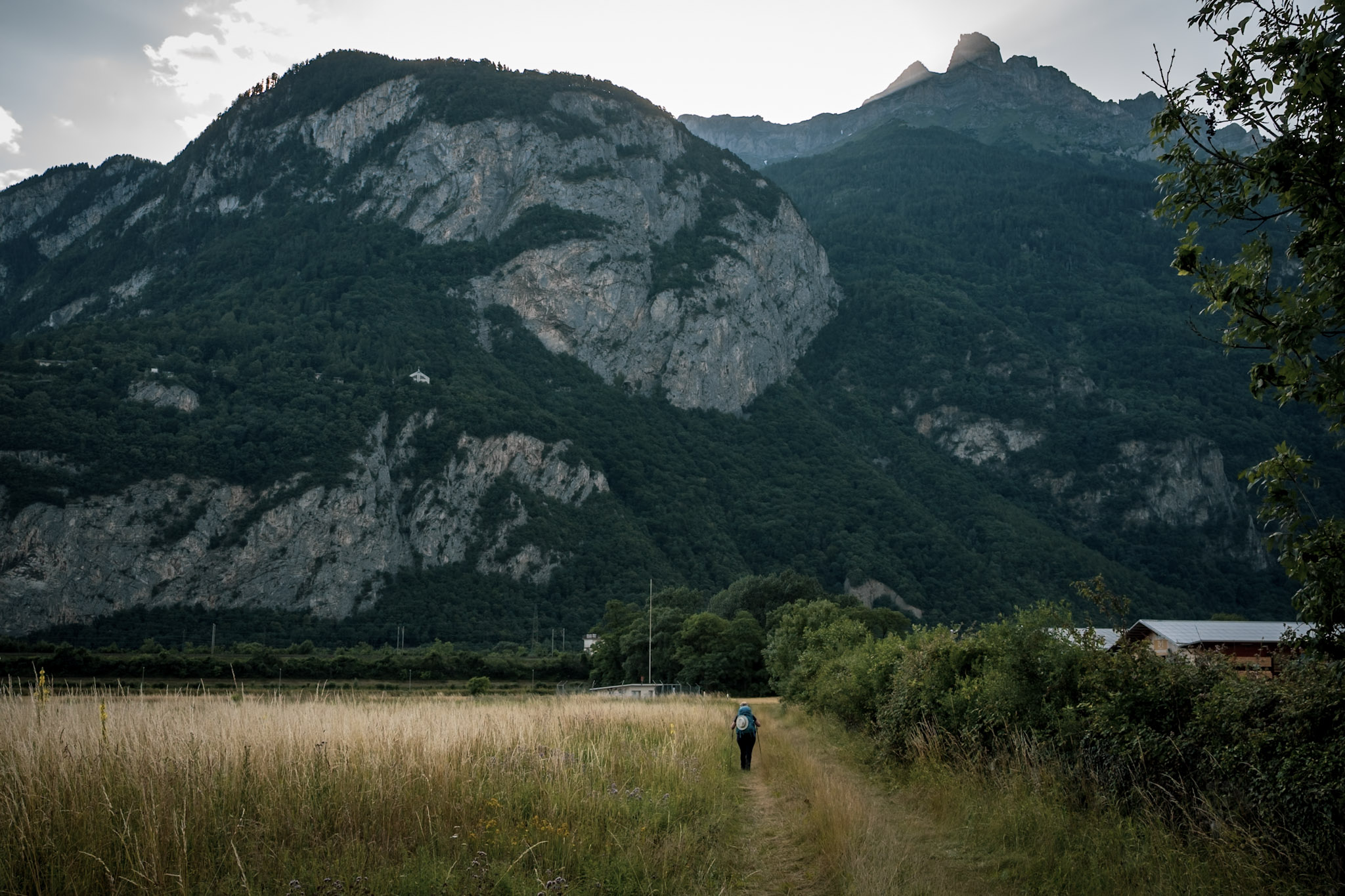
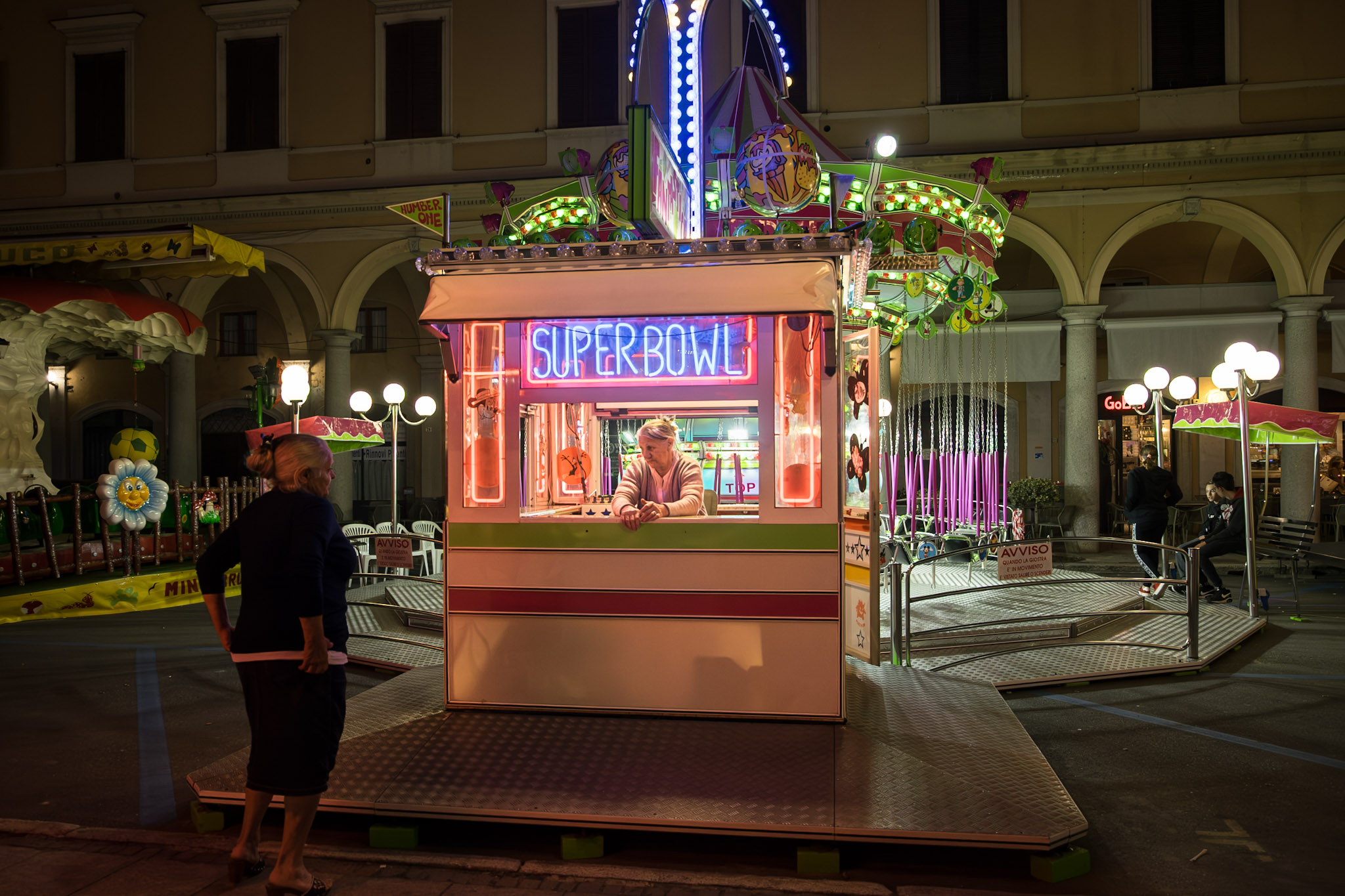
There's a quiet time in the early morning, heading out for another day on the path. It's an ideal time for reflection and an opportunity to settle the mind, but also ideal for photography.
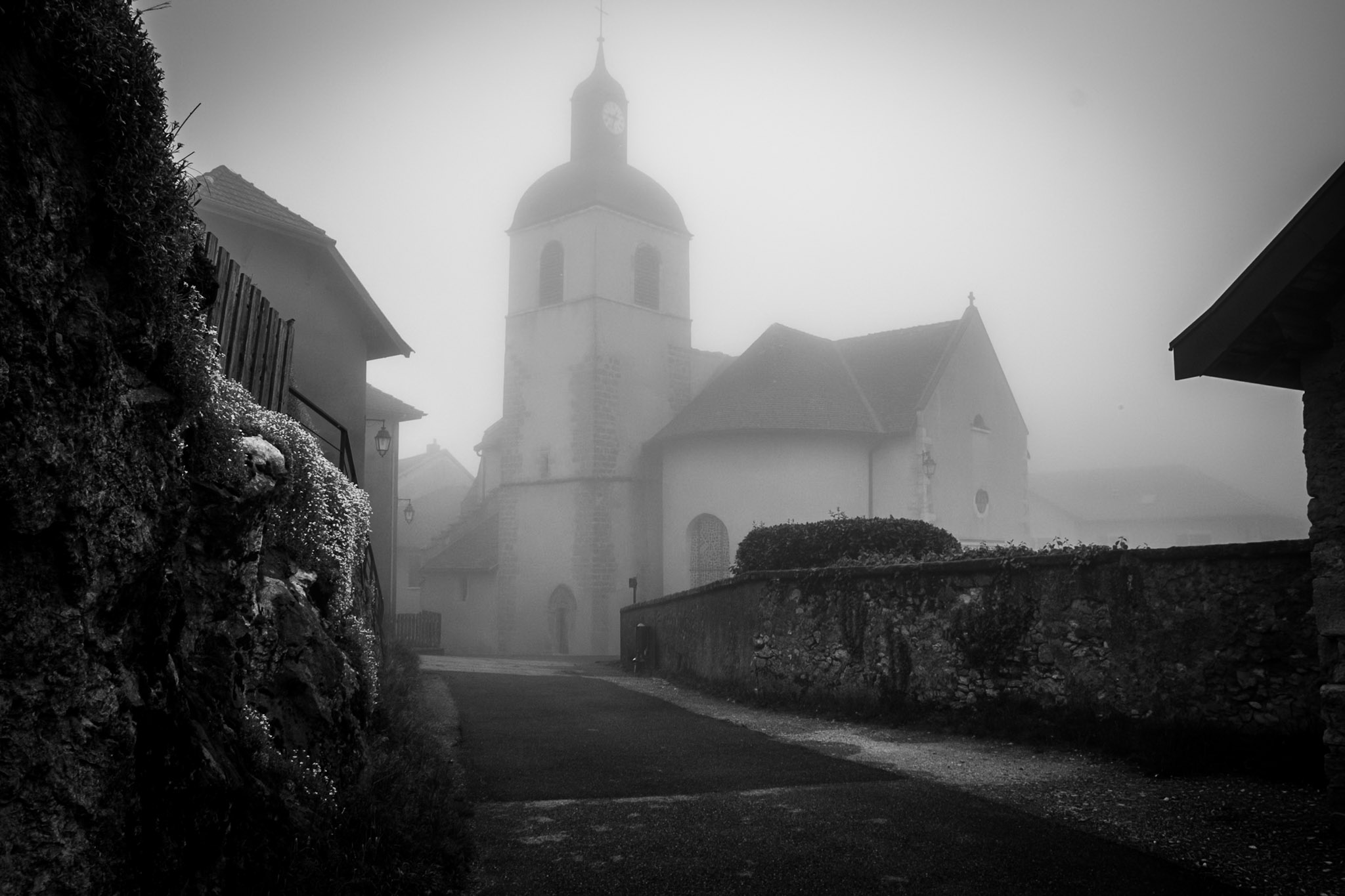
The early pre-dawn light softly reveals the shapes and patterns of the old towns, lying quiet in the morning stillness. Each day dawns to reveal a different landscape, often industrial, and often we'd be greeted by cool and dark forest, quiet fields of farms and rural areas.
Golden hour became my perfect start to the day, a favorite opportunity to push myself and the capabilities of the Fuji.
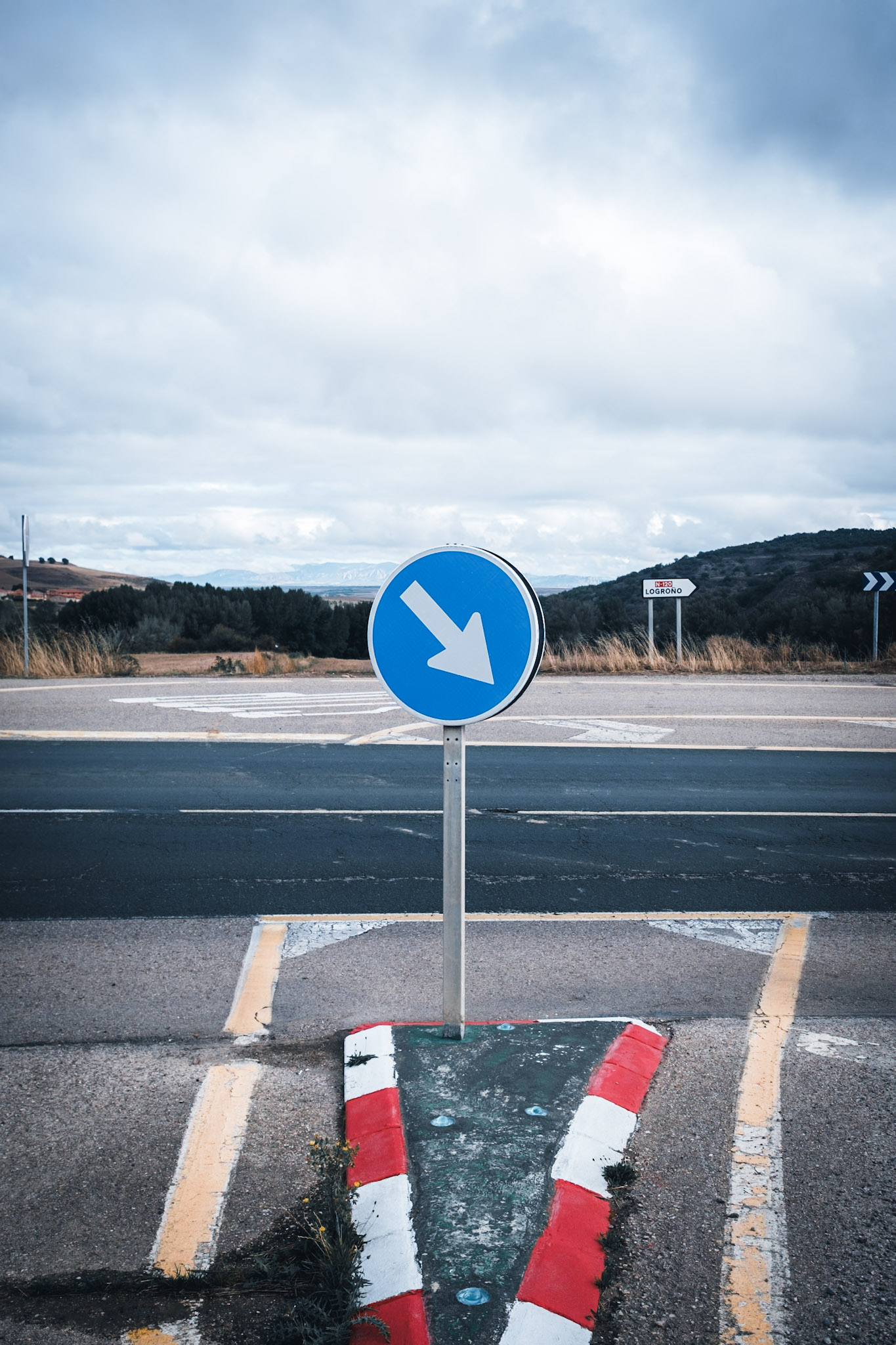
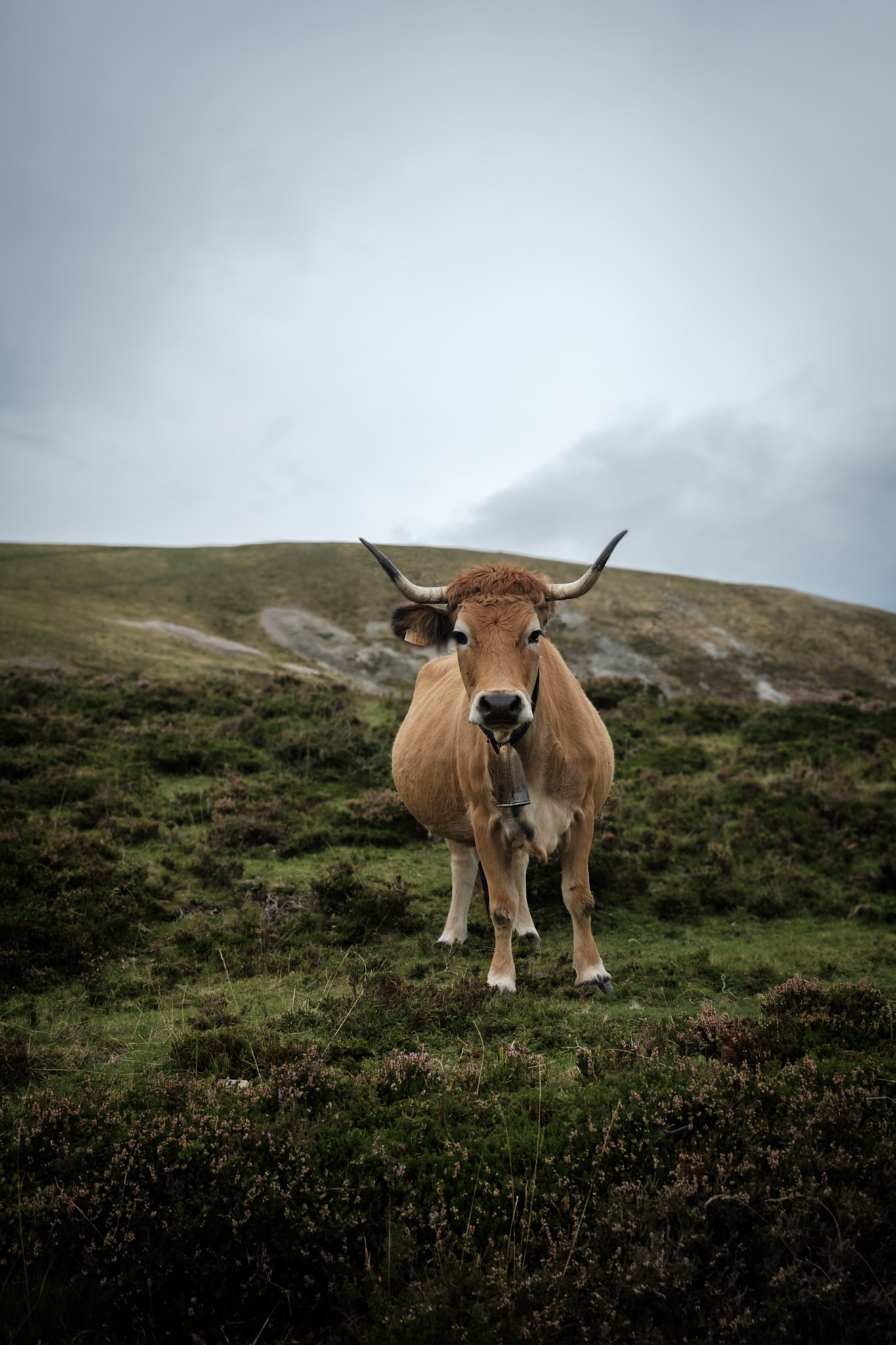
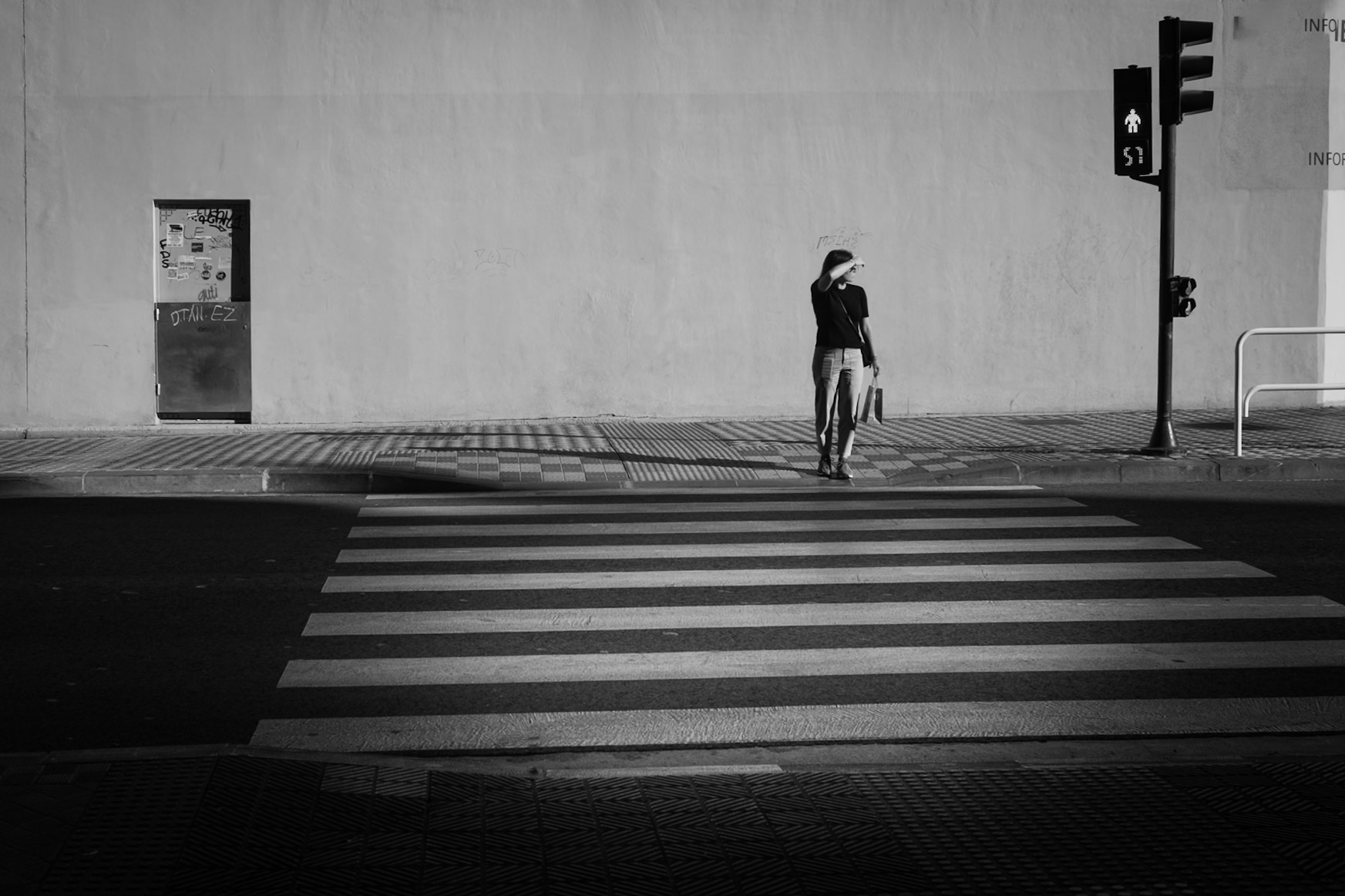
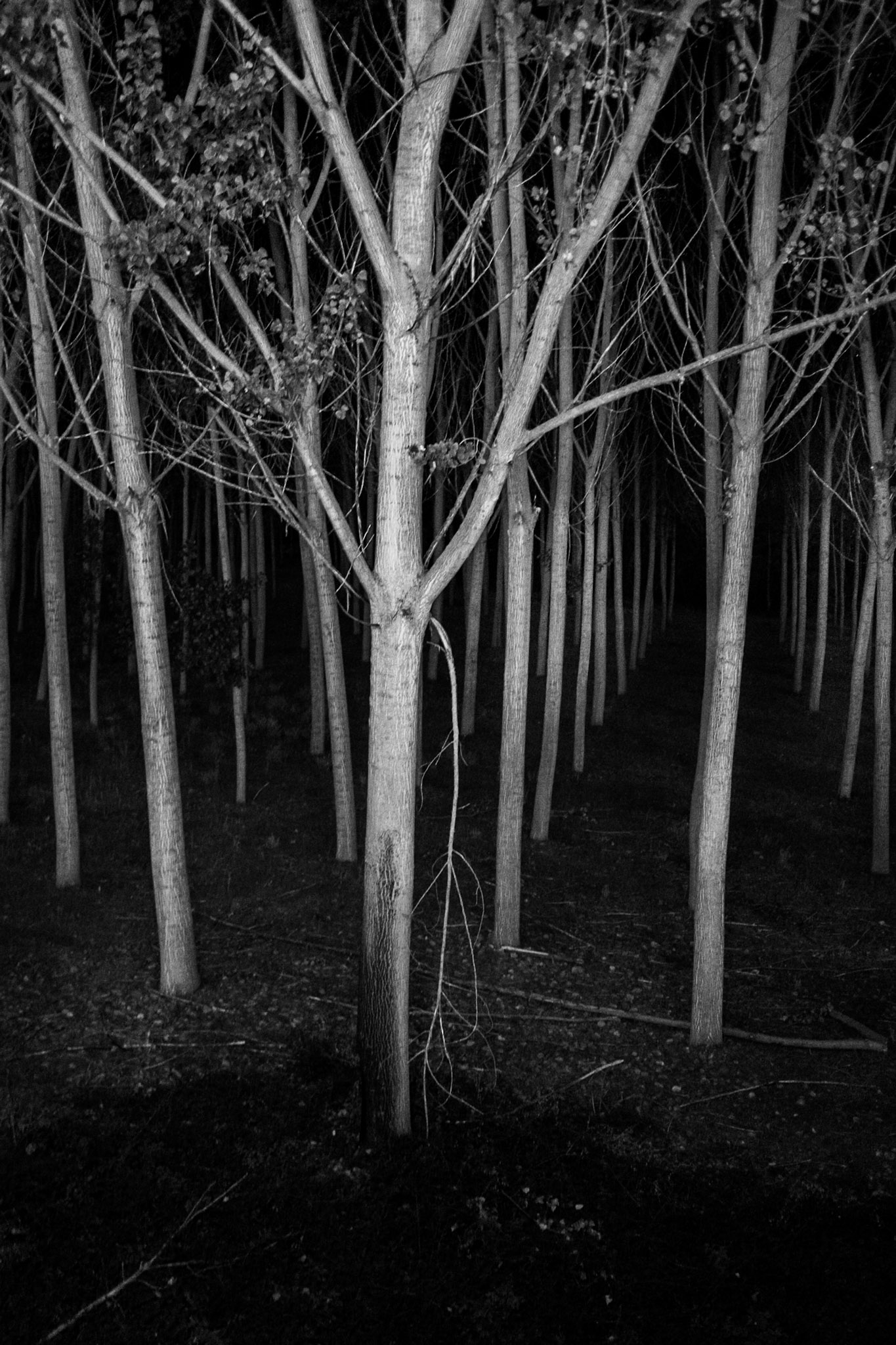
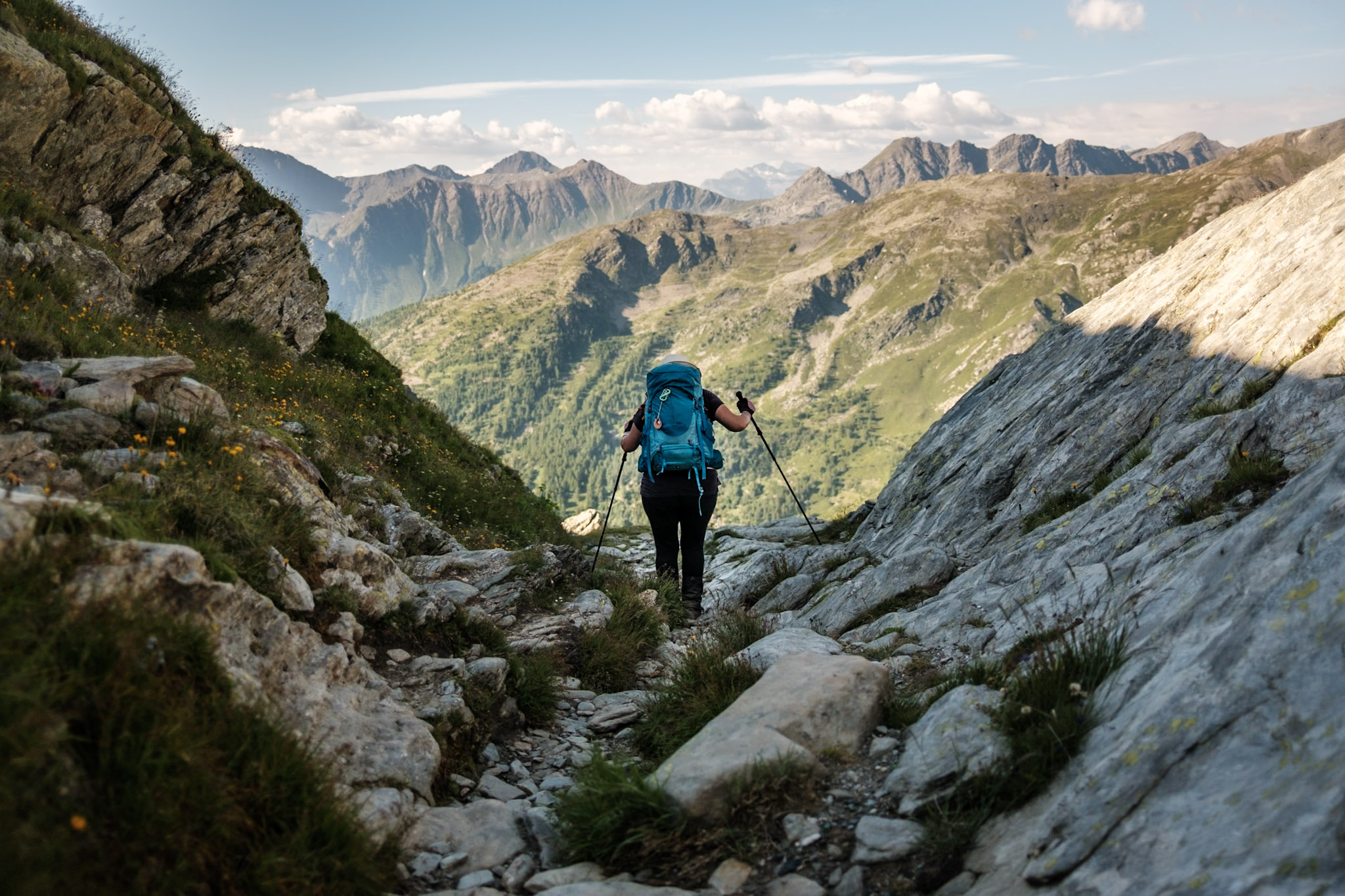
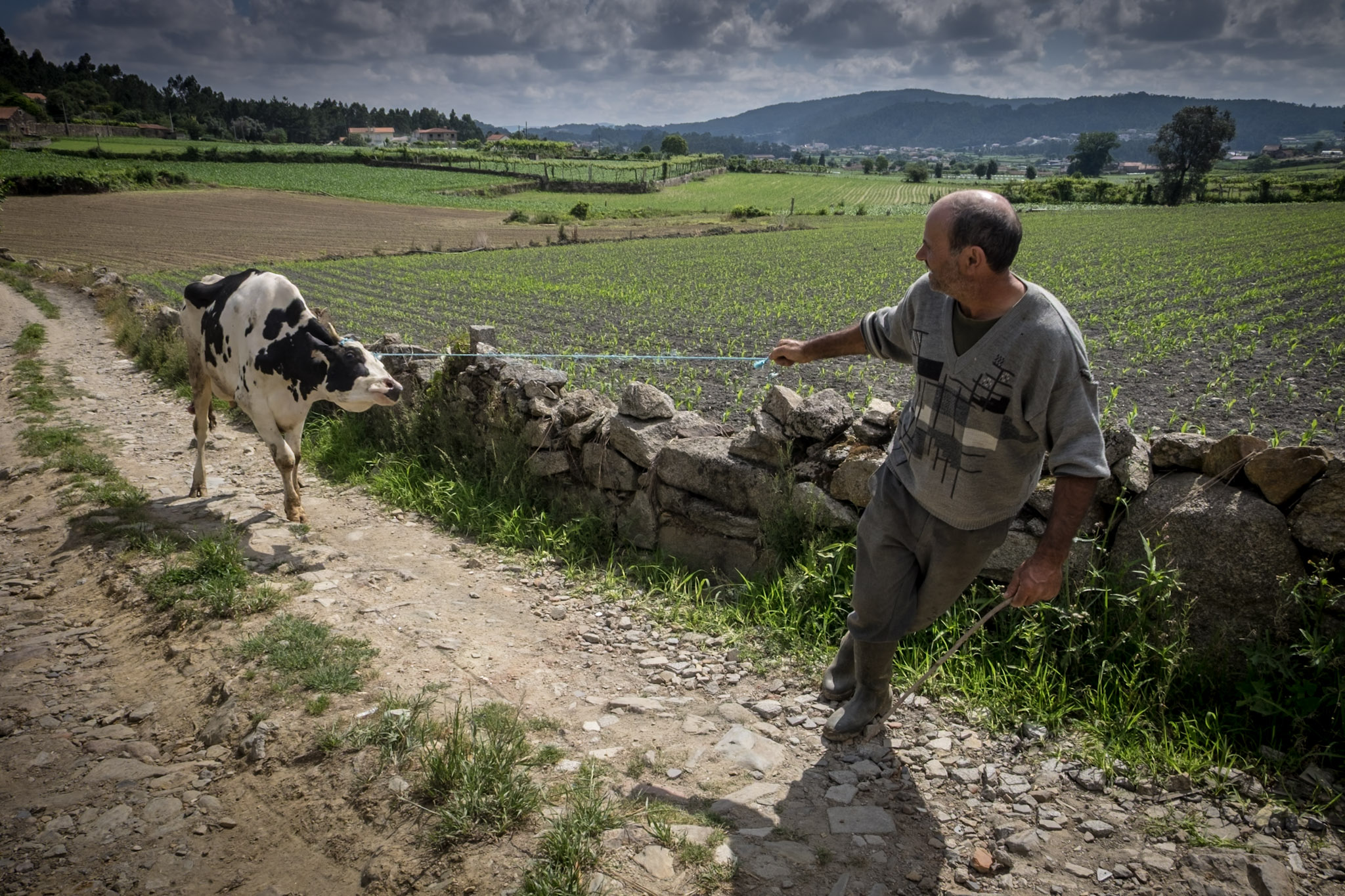
One of the joys of this kind of extra slow travel for a photographer is the chance to build a body of themed work over time. You get to ponder the scene slowly as you make your way through the landscape.
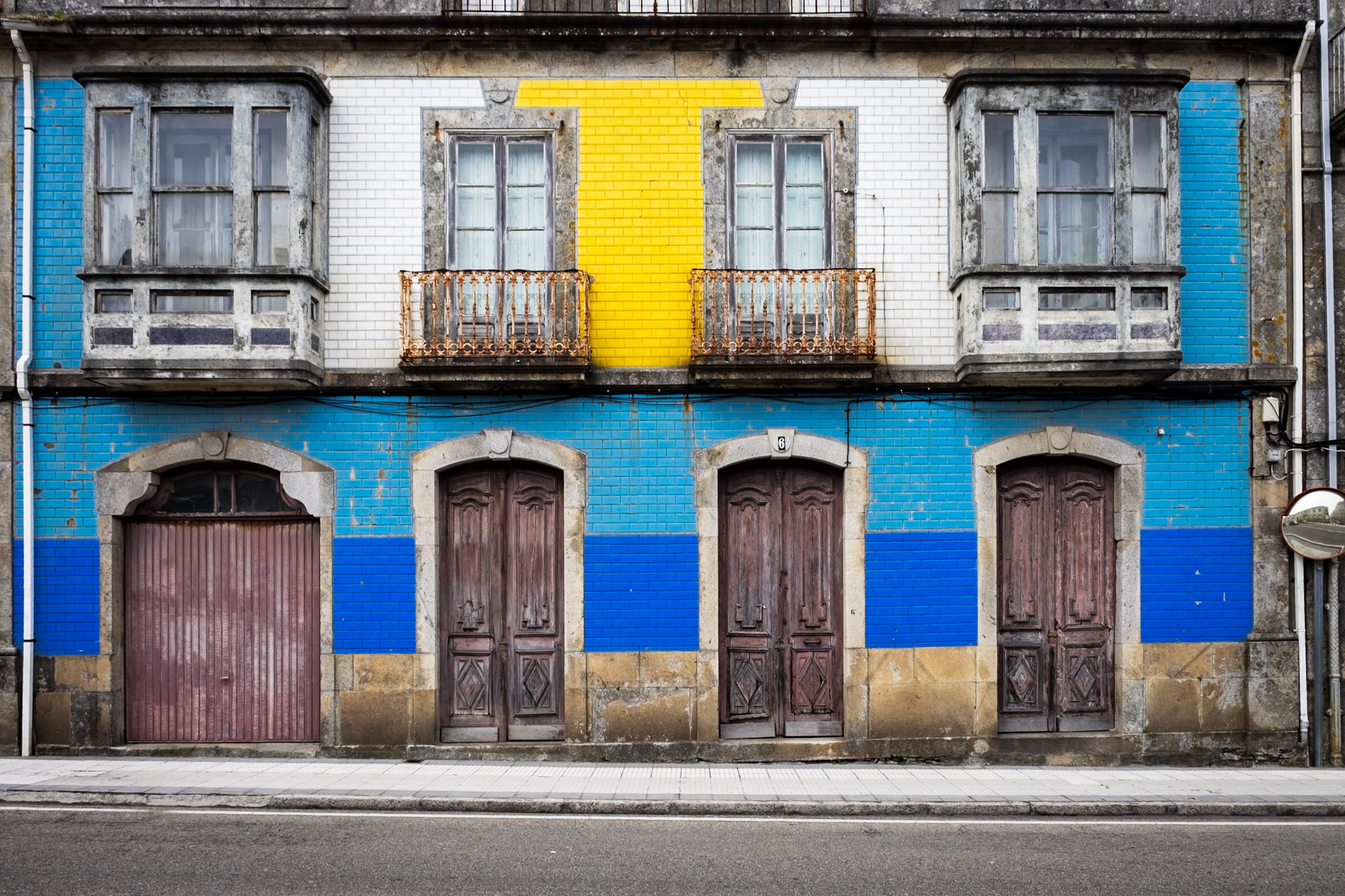
There's a stream of rustic old doors, red fire hydrants, wonky old stone steps, church interiors and friendly locals to choose from: a daily feast for the eye.
Scrolling back through my catalog of some 10,500 files now I realise that I have taken around two frames for every kilometre walked.
I can see improvements being made as the walk progressed, slow and it's steady, but it's there.
And like every photographer’s library, there are far more rejects than keepers.
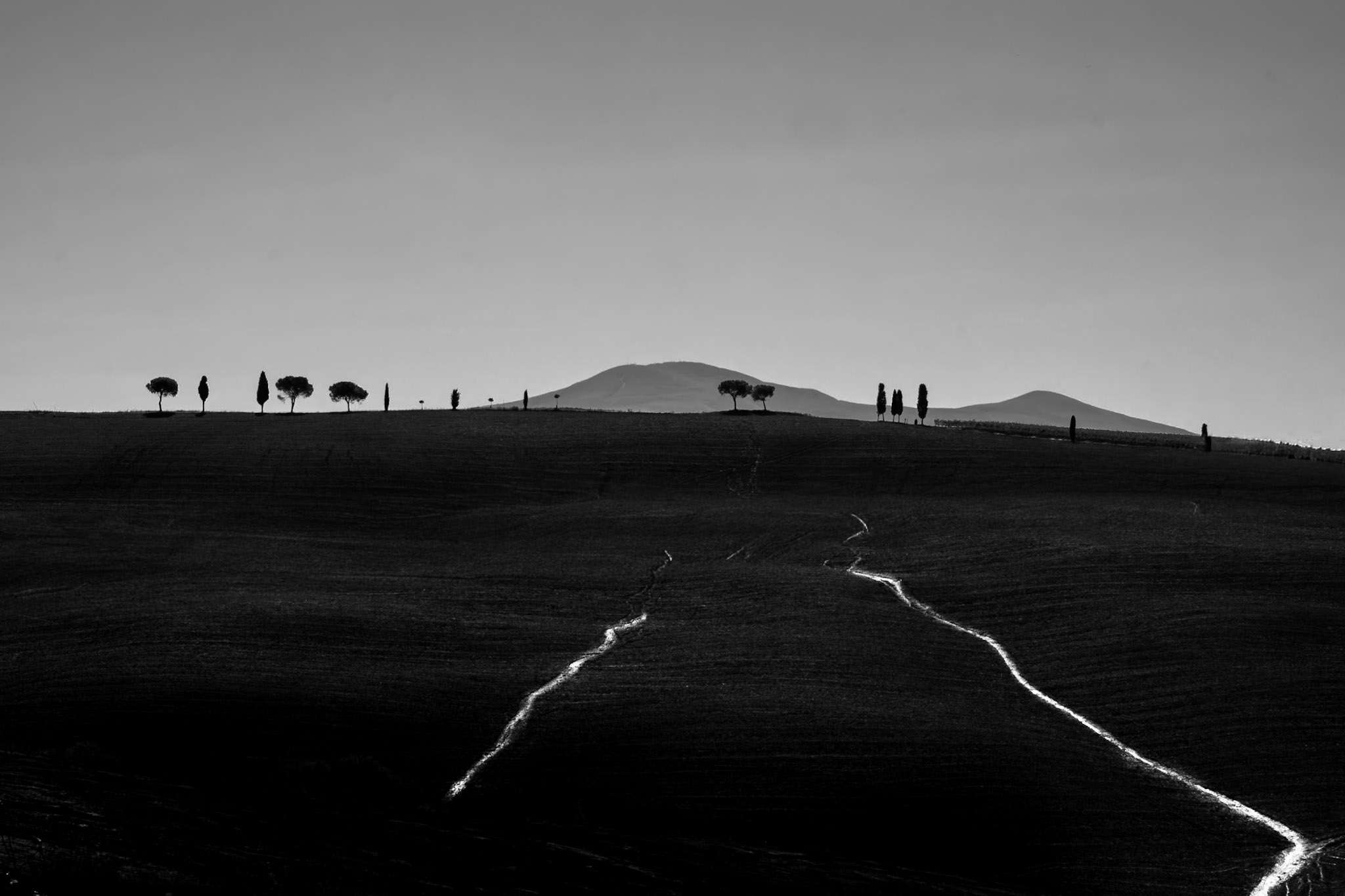
Scrolling through, I see more adventurous framing starting to appear, less obvious landscapes, experiments with sequencing and composition.
I see images where I understand what was behind the thought as the shutter was pressed, and many where I wonder what on earth I was thinking.
There are periods when panoramas were in fashion, periods of in-camera flash, periods where silhouettes were in favour, macro came and went, reflections, shadows, industrial landscapes, wastelands, street signs, and countless other themes. They all came and went.
When we finally arrived in Bari, worn out both physically and emotionally, the obvious question is whether we’d do it again.
Perhaps not straight away, but you never really know.
At the same time, the rare chance to be in a position to shoot on a daily basis is a reminder that photographic skills are a moving feast, always being updated and honed, and a reminder that you practice your craft, but you never truly master it.
After all, every day is an adventure.
About the author: Ross Duncan grew up in a small Australian country town before joining the local newspaper as a full-time press photographer. After many years working as a photographer and later as photographic editor for major Australian media outlets, including The Australian and The Sydney Morning Herald, he is now retired and an avid traveller.
He has also worked as a delivery boy and a barman, though not at the same time. He once crashed a racing car and has photographed both Paul McCartney and the Pope, but not together. See more of his work on Instagram.