

Chasing moments: Finding your voice in street photography
Street photography can be many things. It might be a stolen hour wandering unfamiliar streets on holiday, a lunchtime walk through places you know by heart, or long evenings waiting patiently in backstreets for something to unfold. It is a broad and endlessly popular genre.
From the romanticised black and white work of Henri Cartier-Bresson and the posthumously discovered images of Vivian Maier, through to the bold colour and flash of the late Martin Parr and the vibrant street scenes of Joel Meyerowitz, some of the most compelling photographs ever made fall under the banner of street photography.

It’s also a genre notoriously tough to make a living from (at least in the form of scoring commissions and selling images), which makes it truly a passion-first genre, but also one that’s democratic and open to just about anyone.
At the same time, and perhaps more so than in other genres of photography, street imagery is highly personal. Its impact is often quite subjective, where imperfection plays a central role in what can make an image work.

Styles and approaches
There are strong opinions about what qualifies as street photography, with these often centred on classic traditions. I like to think of street photography as a genre that comfortably overlaps with travel, portraiture, architecture, documentary and fine art.
I’ve long thought that many photographers known for their street work are not street purists at all. Their primary careers in other genres strongly influence how they approach the streets.

Australian Magnum photographer Trent Parke is a good example, blending elements of sports, documentary and personal narrative into his street work. Likewise, Don McCullin’s later documentary images carry clear echoes of his early street documentary photography of local London gangs.
I mention this because finding your own style and approach in street photography is key to enjoying it.
Your work doesn’t have to be a carbon copy of Cartier Bresson, or anyone else for that matter.
What it should be is something personal that reflects the environment you occupy and the opportunities that interest you.
If you can bring this to your imagery, and keep working, learning and crafting your own art, you’ll create something authentic.

On the streets
Photographing people in public has undoubtedly become more complex. The rise of social media and online sharing has blurred boundaries and heightened privacy concerns. This has also led to confusion about what is legal, acceptable and ethical.
At the same time, laws vary widely between countries and are changing quickly – in Uzbekistan for example, it is likely it will soon be illegal to photograph people in public without their permission.
Wherever you shoot, it is essential to research local laws and follow them carefully, and especially in places with severe penalties. All this has helped make street photography a different and more volatile prospect than it was in the past.

My strategy is to be polite and unobtrusive. I try to move slowly, avoid sudden movements, respect personal space and use a smile or gesture when appropriate. Asking permission can change the feel of an image, but it is often better than having a lit cigarette or a rotten apple thrown at you (both of which I’ve had!).
As photographers such as Fan Ho demonstrated so well, it doesn’t always have to be about people, or at least not recognisable people, that make for great street images.
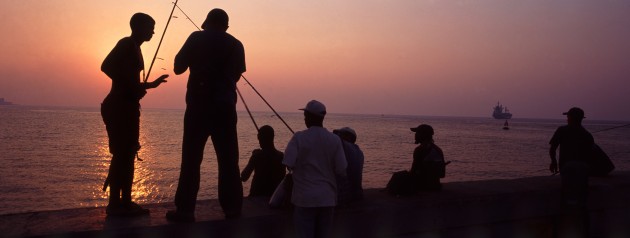
Shapes, shadows, details, silhouettes and reflections can all make for compelling images without intruding on anyone’s privacy.
How far you want to go with your street imagery is ultimately up to you, but always prioritise your own safety and people’s privacy rights over the image.
And do remember, that not even a verbal okay or nod to shooting images of people is a legal go-ahead to do what you want with, or to post those images however you wish.
The gear
Unlike other gear-heavy genres, street photography doesn’t traditionally require much gear.
In fact, I strongly believe less is more when it comes to gear. The smaller your setup the easier it is to carry around, and the less intrusive and intimidating it will be to your subjects.
My own preferred approach is a small camera body with a fast prime, such as my Fujifilm X100T or an XT/XE body with prime lenses (18mm or 35mm). I also increasingly rely on my smartphone as they are widely accepted and always available.
That said, when looking through the exif data of my street work, the majority is shot with a small mid-range 18-55mm (APS-C sensor) zoom lens. Street photography is often a one shot opportunity, and having the ability to change focal lengths quickly can make your life easier.
For local photography in locations you can revisit, low light, or situations where you can use a slower approach, fixed lenses come into their own.
I mostly shoot manual or aperture priority, and keep my ISO as low as possible, while shutter speeds vary depending on what I want to achieve. I only go below 1/125th for pan/long exposure or static night images.

Quick tips
- Make the most of the light you have. Early morning and late afternoon offer beautiful long shadows and softer light, but every time of day brings different people, traffic, weather and shadow patterns. Learn to work with all of it.
- Work the scene thoroughly. Look around, change direction, vary your angles and experiment. Waiting for a decisive moment can pay off, but time is limited, and waiting too long can mean missing something even better nearby.
- Use reflections, rain and visual complexity to your advantage. These elements can add depth and atmosphere, especially when supported by strong contrast or bold colour that reads well on smaller screens.
- Put safety first. Stay aware of your surroundings, keep gear discreet and secure, and avoid risky or controversial situations. Be especially cautious around government buildings in unfamiliar places and avoid sketchy back streets at night.
- Look up and look down. In busy urban areas and markets, bridges, stairways and buildings often provide elevated viewpoints that reveal strong patterns and unexpected scenes.

Preparing your images
Street photography is often associated with black and white, probably because of limitations of the cameras used when it was at its most popular. Today, your choice is up to you. I set my cameras to capture both JPEG and RAW, and I shoot in colour, leaving the decision to put the end result in black and white for later.
One of the things that has always appealed to me about street photography is that it encourages getting the shot right in-camera. as a result, post-processing doesn’t need to be complex. I find most of my images are finished with simple adjustments in Lightroom’s basic panel, usually Exposure and Contrast, with the occasional tweak to Vibrance or Saturation.
For a select few, I’ll take them into my old favourite, Nik Silver Efex, to finish in BW. But like everything with editing, experimentation with the sliders will help you settle on what works best. ❂