APS Behind the Lens: Chasing rainbows
I took up photography in 2011, but it was not until I retired in 2016 that I had the time to fully pursue my love of bird photography.
This type of photography allows me to immerse myself in nature, which I find very calming. Watching and observing birds in their natural environment without interfering also helps me focus and be present in the moment.
There is incredible variety within each species, from different colours to unique behaviours, and capturing each one can be magical. Bird photography can be challenging, as most birds are agile and fast.
I have had to learn the right camera settings and adjust them for each situation, which has significantly improved my skills. It requires finding the perfect location, exercising patience, and having a bit of luck to capture the perfect shot.
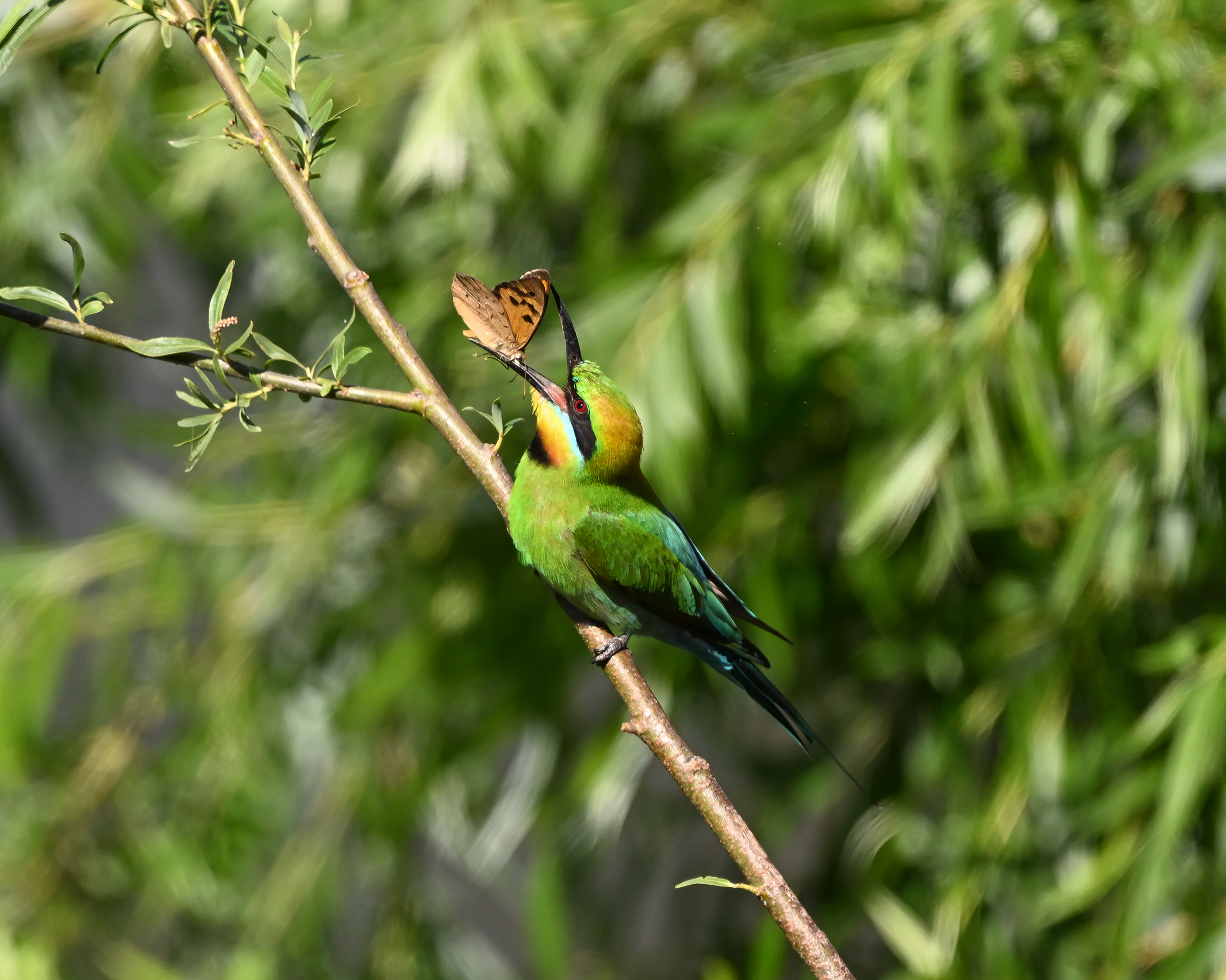
The Rainbow Bee-eater is one of my favourite birds to photograph. Its vibrant plumage of greens, blues, golds and black and its precise flying and swooping to catch insects in mid-air make it a stunning subject.
My image of a Rainbow Bee-eater feeding on a butterfly was taken at Jerrys Plains in the Hunter Valley, about a two-hour drive from my home on the Central Coast. Jerrys Plains is well known among birdwatchers and photographers for its abundant birdlife and has become a favourite spot of mine.
There are several good areas for spotting birds, but I especially like a large open field near the Hunter River. Dead trees along the river serve as perches for Rainbow Bee-eaters as they scan for prey. I can usually locate them by their distinctive birdcall, which sounds like a cricket, allowing me to focus my camera without disturbing them.
It took at least five visits to capture this image. Rainbow Bee-eaters eat hundreds of insects a day, so it is possible to photograph them feeding at almost any time. I find the best time is in the morning, between 8:30 and 11:00, when they are most active.
After observing this bird for over an hour, I noticed it tended to return to the same branch after each flight. I set my camera to multi-shot burst mode, anticipating that the bird would bring its prey back to the branch to stun it before eating.
At the time, I could not even see what insect it was carrying, as I was too far away, but sometimes a photographer’s instincts kick in, and I was lucky enough to capture this moment.