

'Napalm girl' photographer Nick Ut files defamation lawsuit
Lawyers for acclaimed photojournalist Nick Ut have filed a criminal defamation lawsuit in France against Netflix and the VII Foundation over allegations made in the controversial documentary The Stringer, according to Petapixel.
The Stringer: The Man Who Took the Photo, which is on Netflix, follows Gary Knight of the VII Foundation as he investigates claims that Nick Ut did not take the famous photo.
The photo, often referred to as Napalm Girl, depicts a naked nine-year-old Phan Thi Kim Phuc fleeing a napalm attack in the village of Trảng Bàng. Ut was awarded the World Press Photo of the Year in 1973 for the image.
The divisive film suggested that either Nguyen Thành Nghệ or Huỳnh Công Phúc may have been better positioned to capture the image than Ut. The documentary has sharply divided the global photojournalism community.
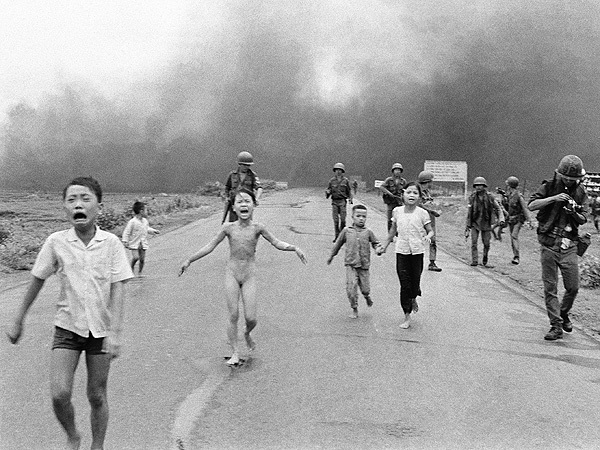
In May last year, World Press Photo suspended Ut’s credit on Napalm Girl after being shown the film.
Now, in the latest twist to the story, Ut’s legal team has turned to the French courts, where much of the film was shot, filing a public defamation action under France’s Press Law of 1881 against both Knight and Netflix.
The photographer is seeking €100,000 (approximately AUD $164,000) in damages, along with €20,000 (AUD $32,000) to cover legal costs.
The suit alleges the film defames Ut by asserting he is not the author of Napalm Girl and by claiming he misrepresented his role in helping transport the injured child at the centre of the photograph, Kim Phuc, to medical care after the napalm attack.
In a public statement, Ut said the film and its claims have caused deep distress to him and his family.
“Ever since the VII Foundation and Netflix released a film claiming that I didn’t take the ‘Napalm Girl’ photograph, and that I have been lying about it for more than 50 years, it has caused great pain to me and my family,” Ut said.
“These accusations strike at the very core of who I am. My entire career has been built on telling the truth, often at great personal risk.”
Ut added that he risked his life repeatedly as a Vietnamese photojournalist to document history honestly, beginning with the Vietnam War, and expressed gratitude for the support he has received from colleagues and friends worldwide—particularly in France.
“It feels only natural to seek justice there, surrounded by people who understand my work and my character,” he said. “I know that one day justice will be done.”
Ut’s lawyers claim that the film portrays the photographer as a “shameless liar who, over the years, has skillfully cultivated a narrative that he knew to be false and a stolen attribution” and presents him as a “man who built his reputation on an act of appropriation and who knowingly persists in this betrayal.”
The case now sets the stage for a potentially landmark legal ruling on authorship, reputation, and responsibility in documentary filmmaking.