

Exploring Svalbard: A location for photographers like nowhere else
There are places on Earth that you visit, and others that slowly, quietly enter you and seem to find a permanent home. Svalbard has been very much one of those places for me.
All my life I’ve been drawn to wild places. Not just for what they look like, but for what they do to you when you spend quality time there. Yet nothing quite prepared me for the way the immense and remote Svalbard Archipelago would sink into me.
Even now, many months after my latest trip, it returns in quiet moments: the quality of light, the vast silence, and the powerful sense of place.
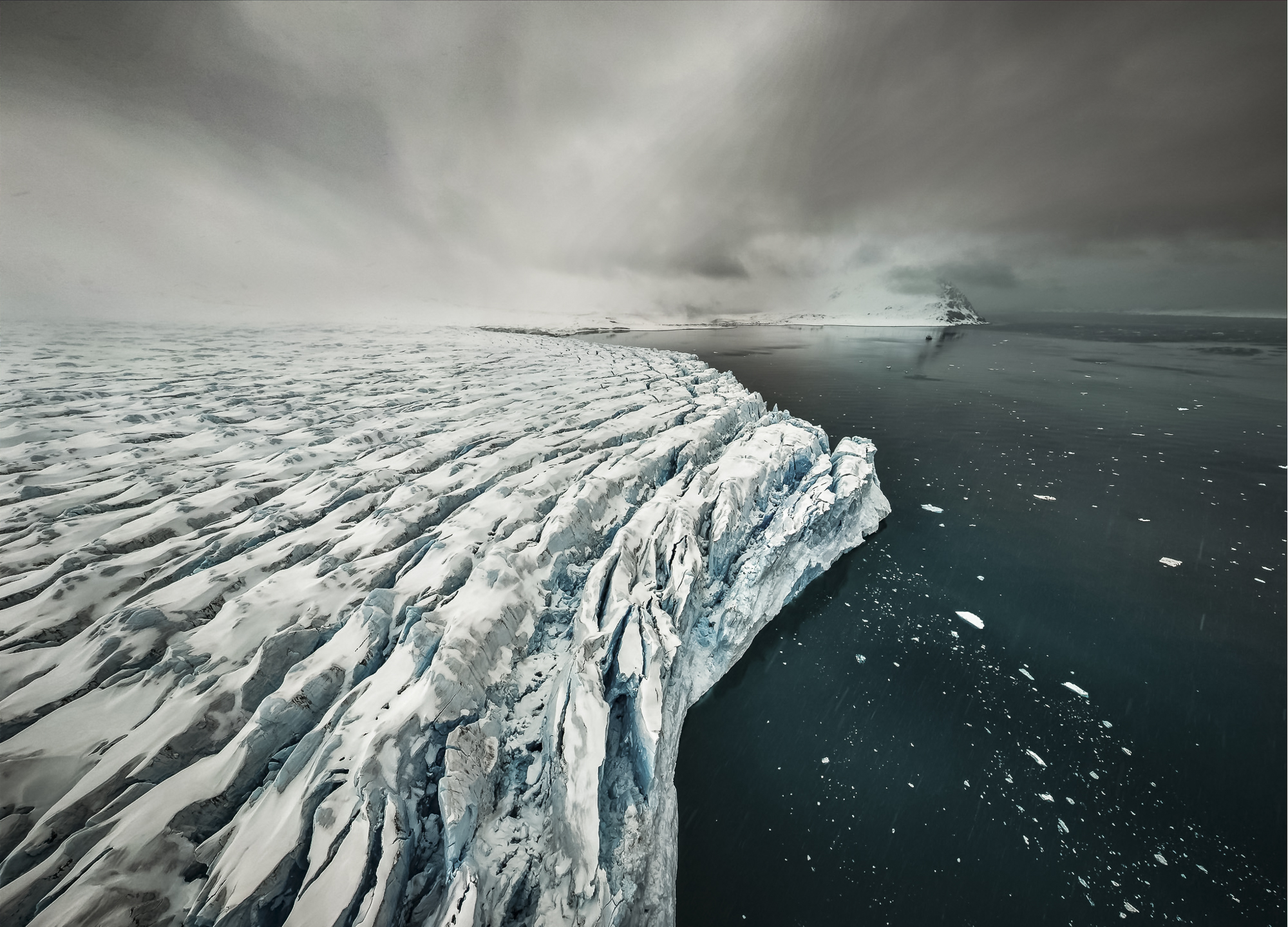
Glaciers cover much of Svalbard, immense rivers of ice carving their way to the sea. They dominate the Svalbard Archipelago, covering over 60 percent of its vast and remote landscape. On my first drone flight here, this immense ice front revealed both its scale and volatility—shifting weather, fading signal, and falling rain a reminder that working in this environment was going to be as demanding as it is extraordinary. Image: Paul Hoelen
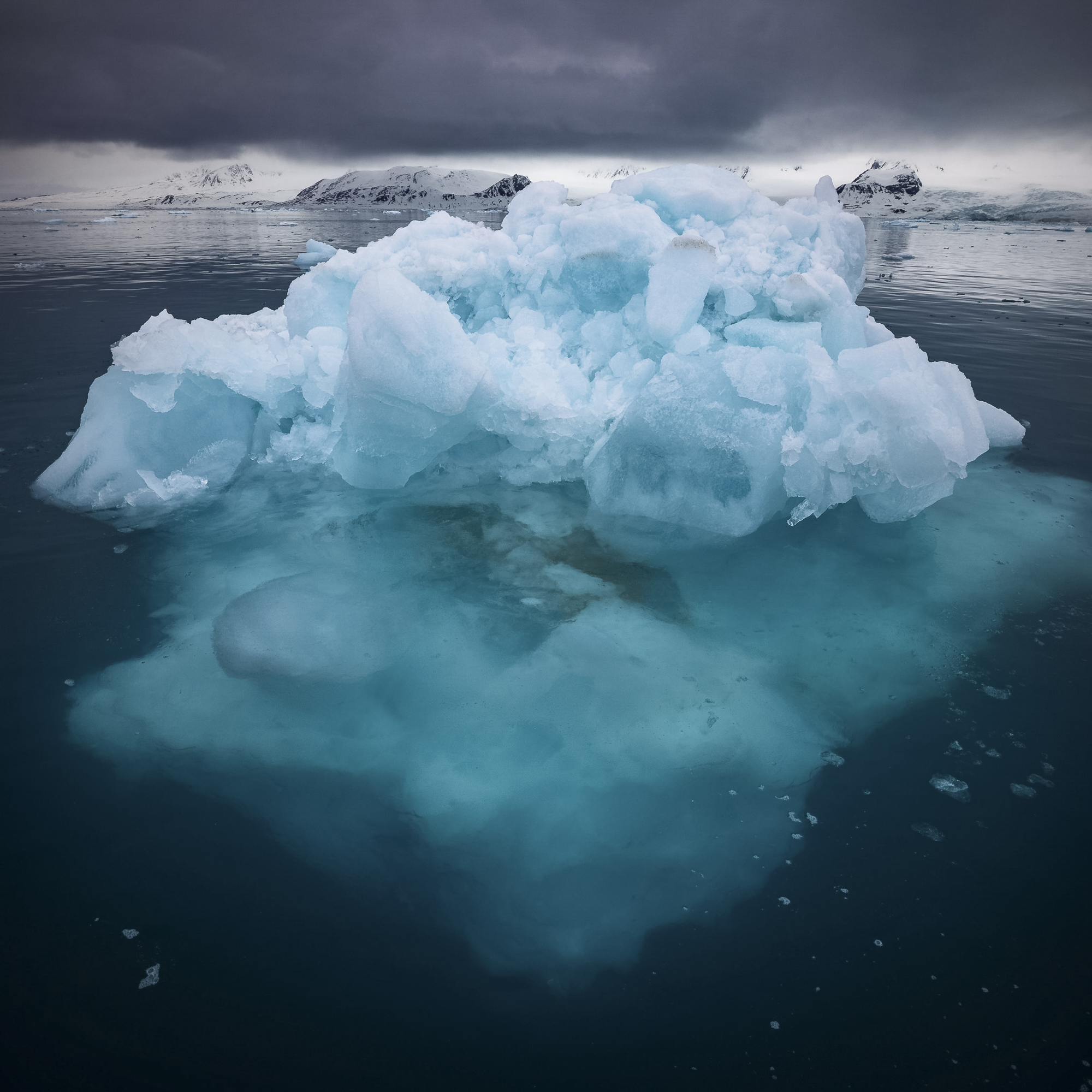
Every iceberg carries a hidden presence. Above the surface, sculpted and luminous; below, a vast, silent mass suspended in cold Arctic water. In Svalbard’s many fjords, these shifting forms are never fixed—always in motion, always evolving. Taken with a wide-angle lens and polarising filter standing high on the bow of the dedicated photo zodiac. Image: Paul Hoelen
The Svalbard Archipelago lies deep within the Arctic Circle, halfway between mainland Norway and the North Pole. Its Nordic name roughly translates to “The Cold Edge”, and it earns that title honestly.
This is a place of sharply sculpted mountains, deeply incised fjords, vast glaciers, and sea ice that is never still, drifting, cracking, breathing with the rhythm of the ocean.
Despite many early attempts, it wasn’t discovered until relatively late in modern history. Locked in sea ice for much of the year, it was simply inaccessible to most early exploration. As a result, unlike almost everywhere else on Earth, Svalbard never established an Indigenous population.
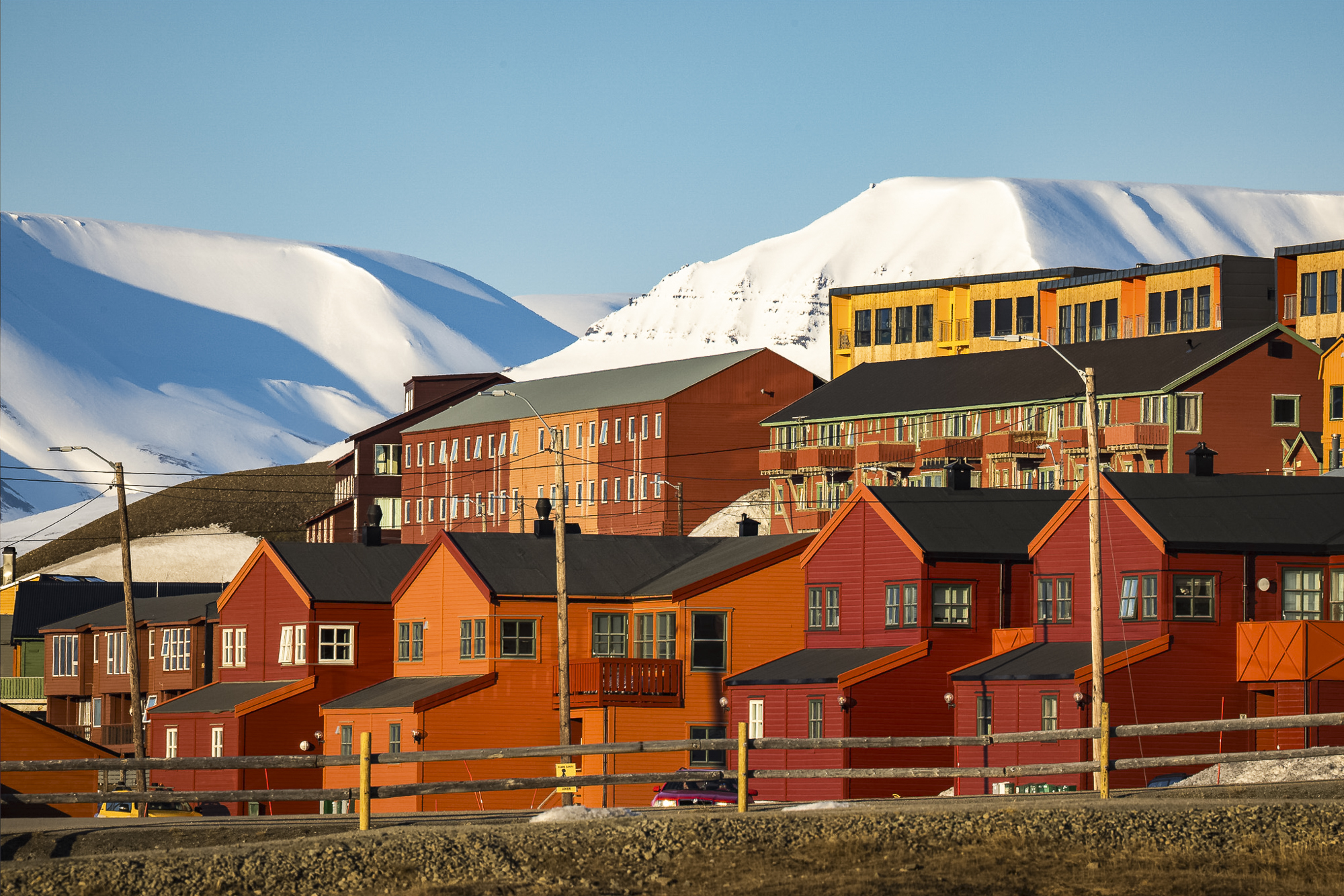
Set against a backdrop of snowbound mountains, Longyearbyen stands alone as the world’s northernmost major settlement. In the endless light of the midnight sun, its colourful buildings take on heightened character—an inviting and distinctly human juxtaposition to the vast Arctic wild surrounding it. Image: Paul Hoelen
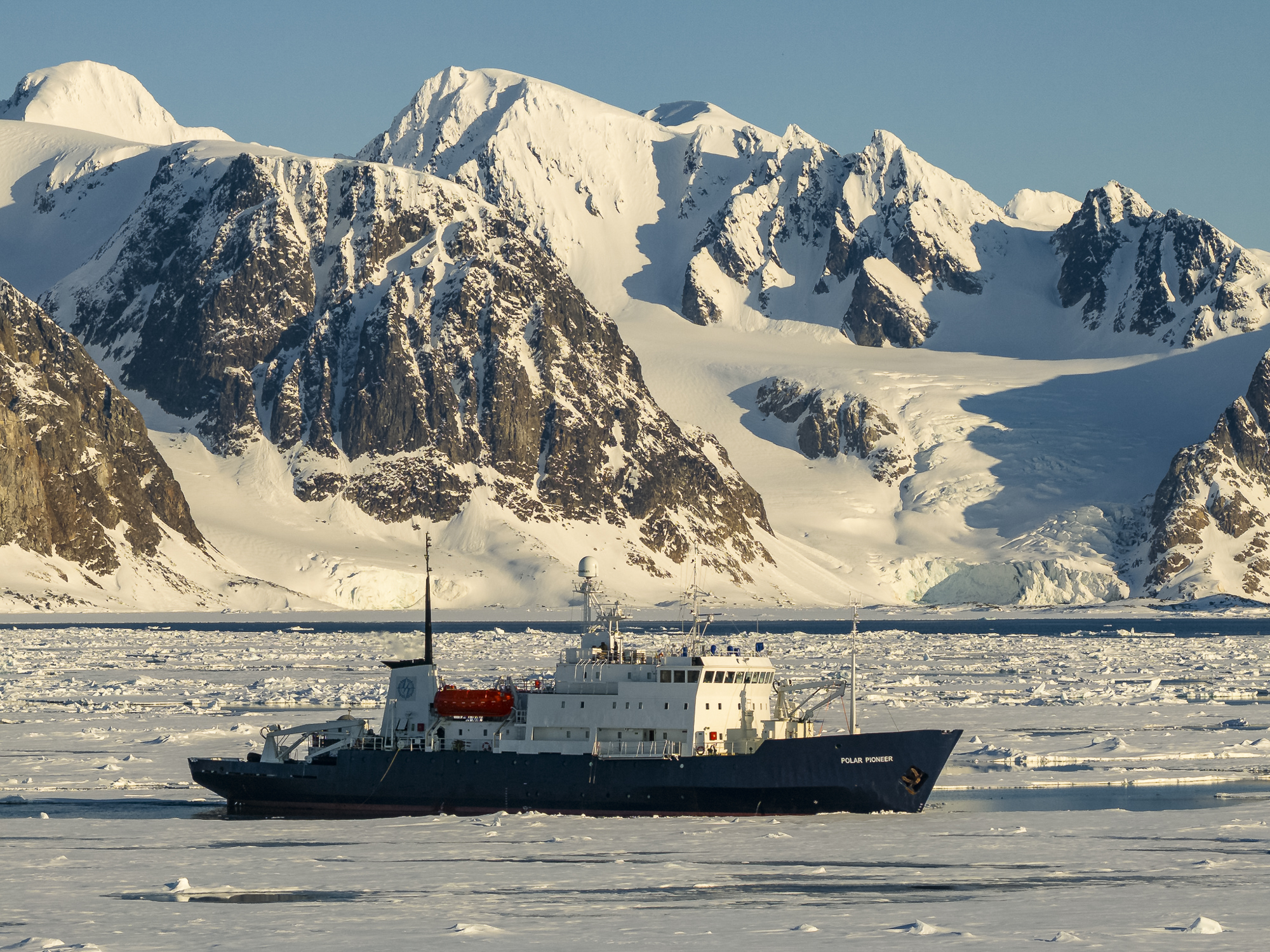
Svalbard has no road network to speak of—movement here belongs to the sea. Ice-capable vessels like this one provide access to its vast fjords, glaciers, and shifting pack ice—revealing a landscape that remains largely unreachable by land. Image: Paul Hoelen
Much of its wilderness therefore remains remarkably intact. Humans have made their presence known through centuries of exploration, mining, whaling, and trapping, but it feels less like a landscape shaped by humans and more like one that merely tolerates our presence, temporarily.
Silence that speaks
What struck me first is the nature of the silence that envelops you. Not as much the absence of sound, but a kind of expansive, encircling quiet that presses gently, yet firmly, against your senses.
At times it is broken by the deep crack of shifting sea ice, the low thunder of a glacier calving, or the sigh of an iceberg rolling in the water.
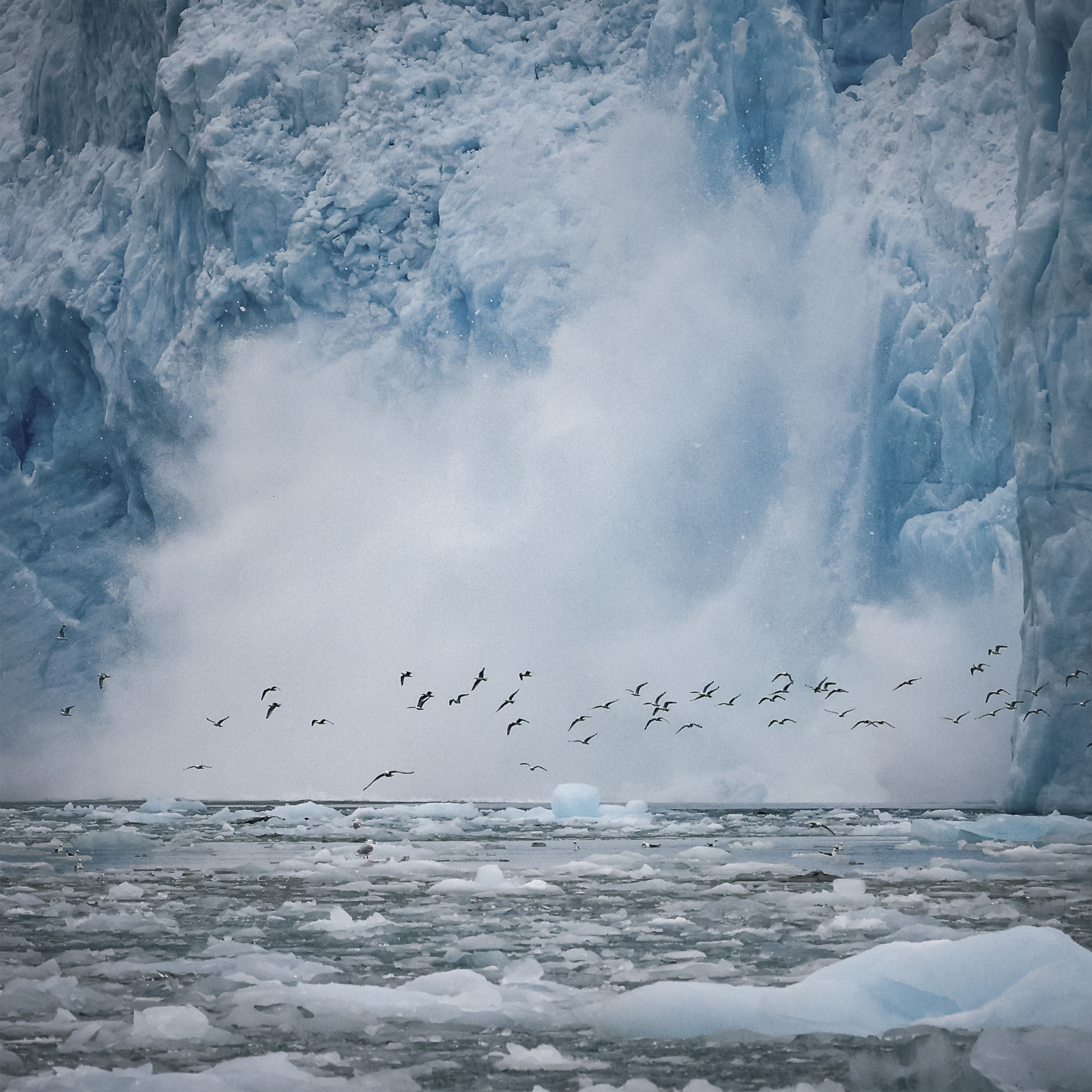
A glacier calves into the fjord, sending ice and energy into the water below. While moments like this are truly spectacular to witness, they are also indicative of a broader pattern of change—glaciers here are retreating, reshaping a landscape increasingly influenced by a warming climate. Image: Paul Hoelen
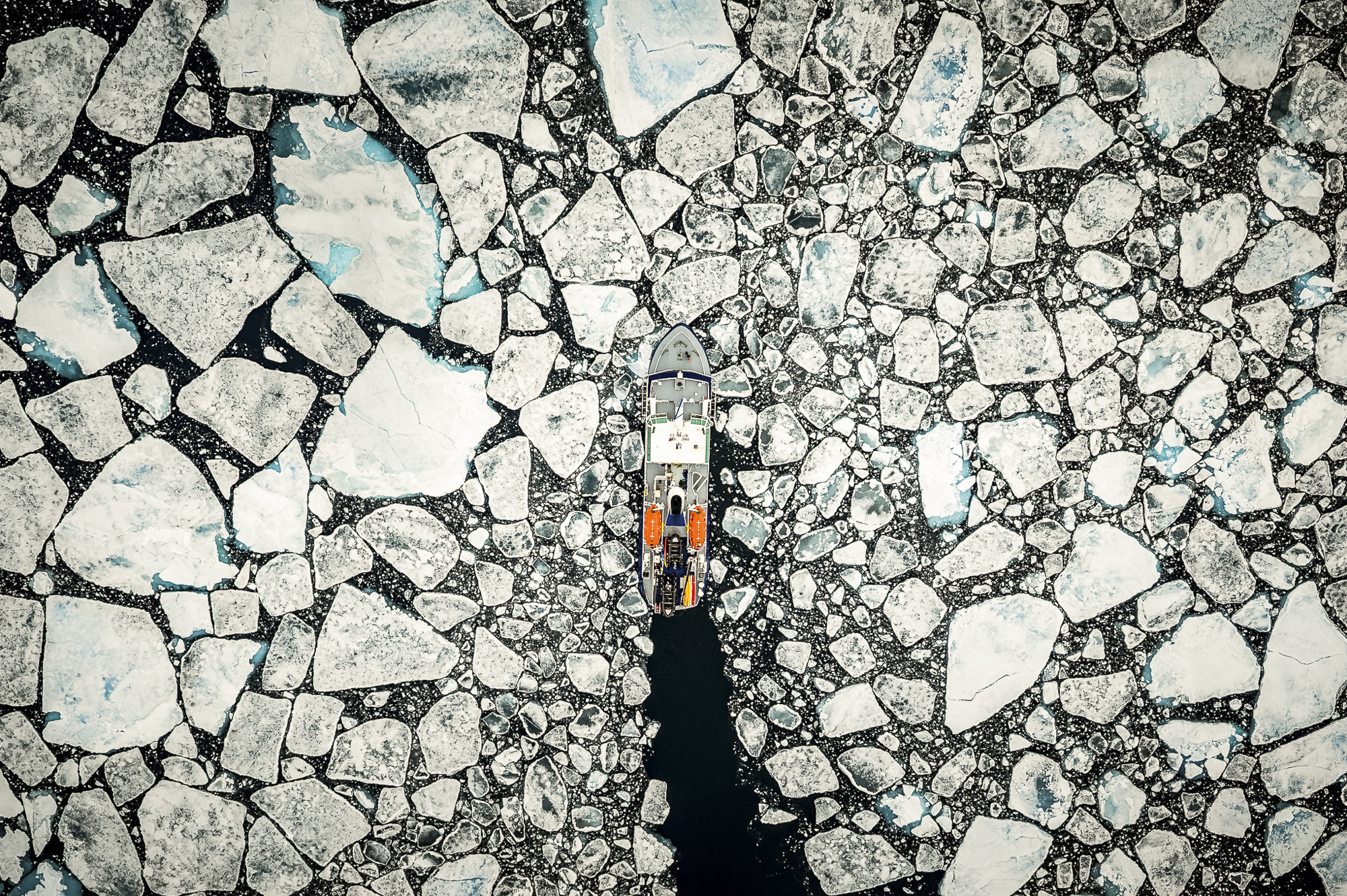
Over 200 kilometres north of Svalbard, the ocean becomes a shifting mosaic of pack ice. From above, its fractured geometry reveals a surface in constant motion, opening and closing with wind, current, and temperature. Image: Paul Hoelen
Occasionally the sound of a whale’s exhale drifts across a fjord, or Arctic terns stitch the sky with their calls, but between these moments lies immense stillness.
That silence creates space: to feel small, to observe carefully, and to let the landscape work on you without distraction. It is in those moments that Svalbard becomes less a destination to capture, and more a place to build a lasting relationship with.
A Living Geological Archive
Geologically, Svalbard is astonishing. The mountains here are not soft or forgiving; they are sharp, angular, and brutally honest. The main island of Spitsbergen was named by Dutch explorer Willem Barentsz in 1596, meaning “pointed mountains.”
Layers of sedimentary rock reveal hundreds of millions of years of Earth’s history, often laid bare by retreating ice.
Glaciers dominate the landscape — almost 60 percent of the archipelago is covered by them. Vast rivers of ice flow slowly but relentlessly toward the sea, carving the rocky underlayers beneath.
Some terminate in towering vertical faces; others spill into fjords in fractured tongues. Their blues range from milky turquoise to deep cobalt, depending on light, density, and age.
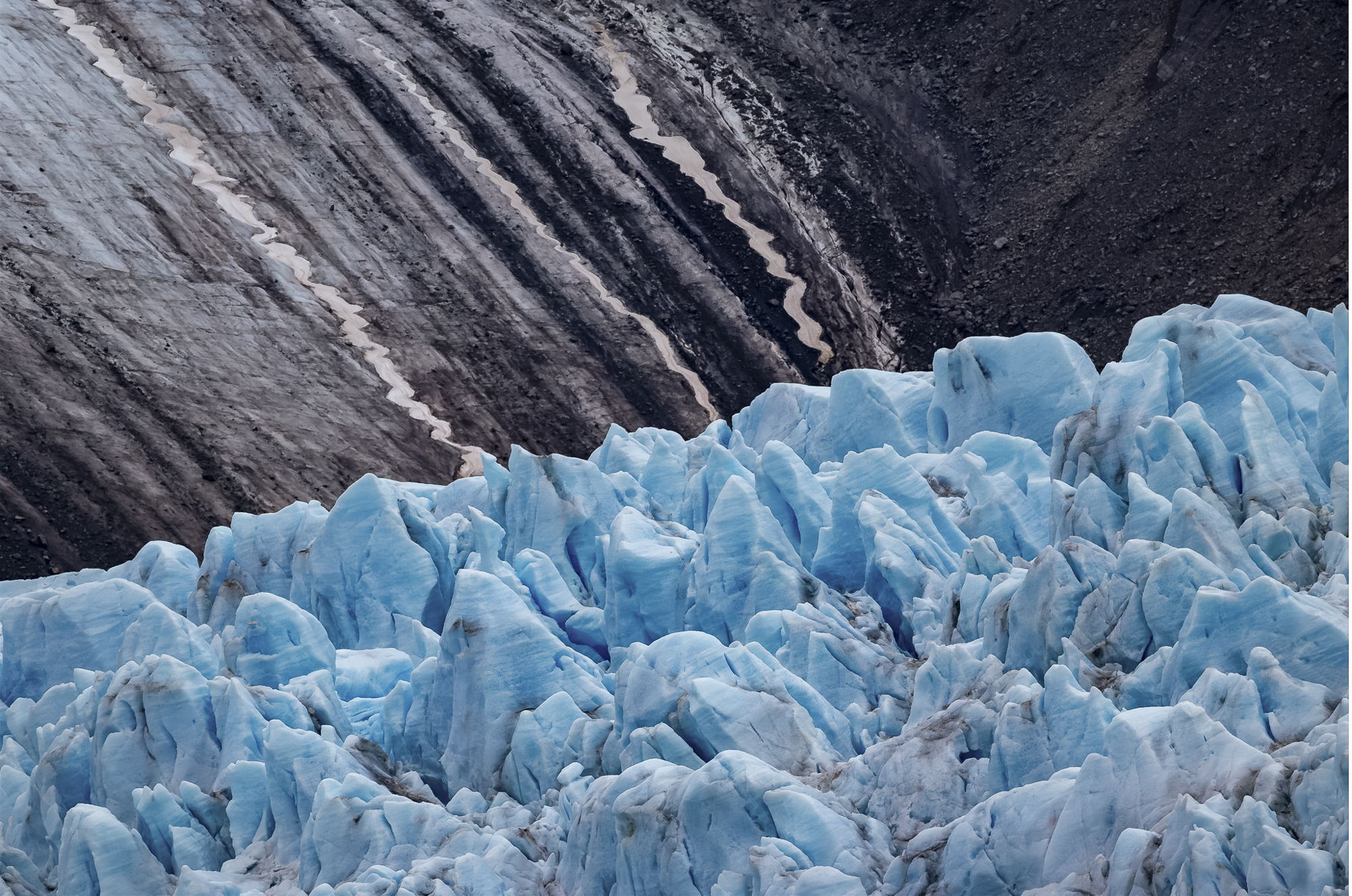
Working with a longer lens, the glaciers transform into a study of form and texture. In the wider archipelago, the opportunity for more abstract compositions exists around every corner —revealed in the fractured surfaces and subtle colour and tonal shifts in the ice. Image: Paul Hoelen
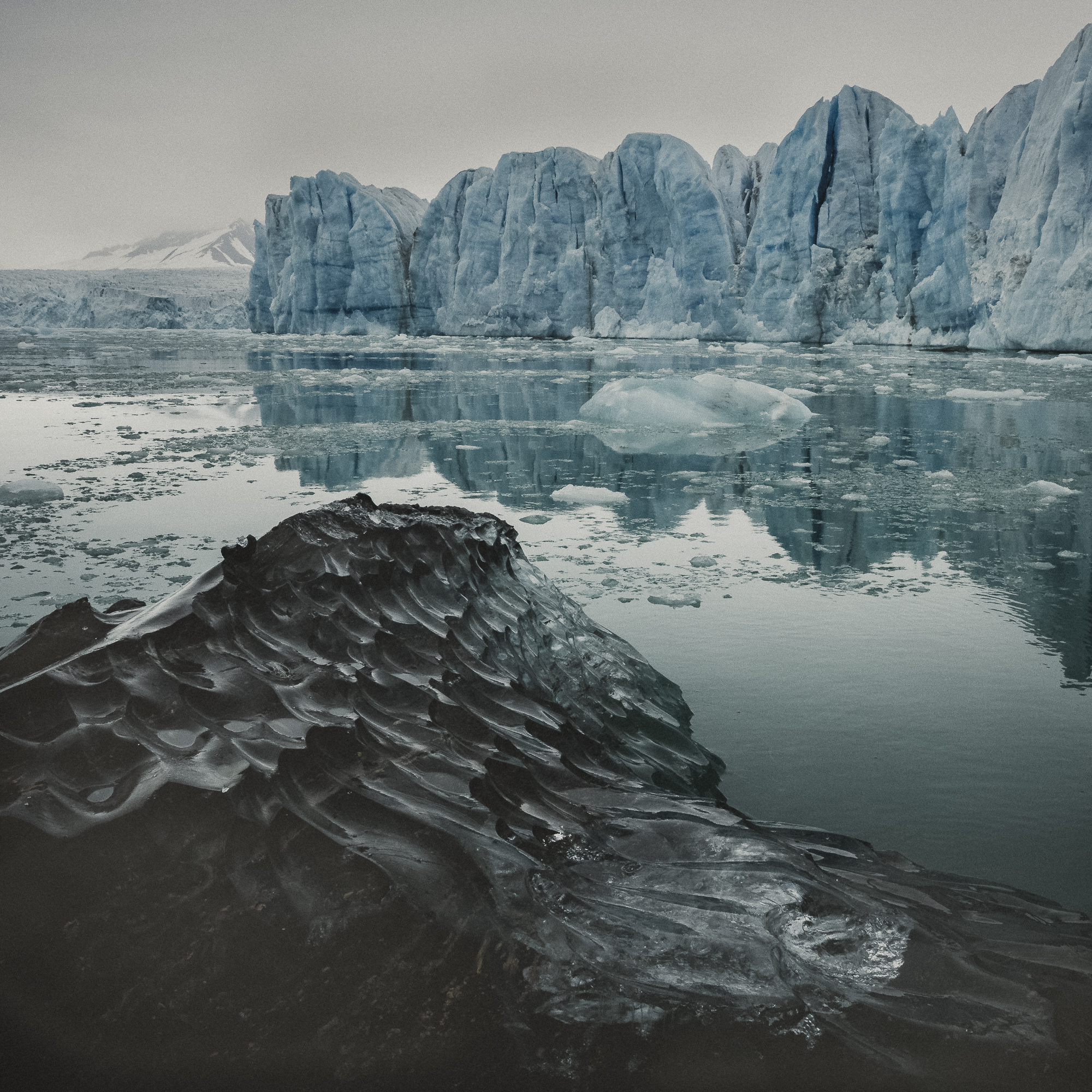
Beyond the vastness, it is the detail that lingers. This delicate, scalloped ice form—clear, textured, and quietly luminous—reflects the infinite variation found within Svalbard’s vast fjords. Image: Paul Hoelen
For photographers, the ice is endlessly compelling. No two forms are the same, and nothing holds still for long. Icebergs rotate, fracture, and dissolve. Sea ice shifts overnight, sometimes by the minute. Even familiar anchor points subtly change from hour to hour.
From a landscape photographer’s perspective, it is an utter paradise. The geological dynamism, immense physical structures, and textural richness offer boundless scope for both the grand and the intimate. Yet it is the accessibility to wildlife alongside this that truly elevates the region photographically.
Wildlife at the Edge
Svalbard is one of the premier places on Earth to witness Arctic wildlife and encounters here feel both intimate and profoundly humbling.
Polar bears are, of course, the most iconic presence. Seeing one in the wild, especially on sea ice, moving with such fluid confidence despite its size, is heard to describe. They are not aggressive in the way popular culture often suggests, but they are unquestionably powerful, intelligent, and highly skilled hunters.
Watching a bear navigate pressure ridges or investigate a breathing hole is to witness predation refined to near perfection.
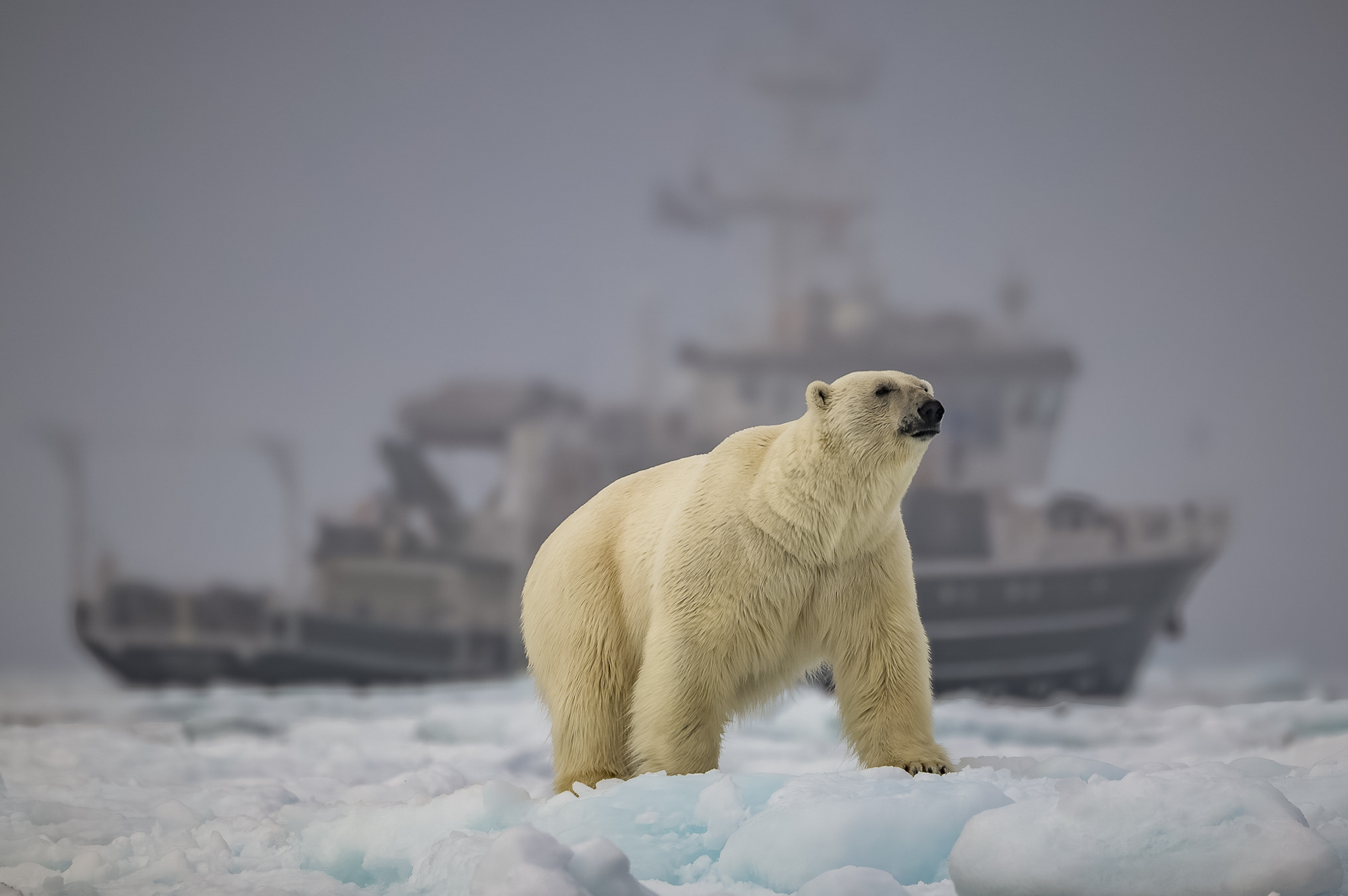
Svalbard is widely regarded as one of the best places on Earth to observe polar bears in the wild. Seen in international waters far north of the archipelago, this individual moves across shifting pack ice with calm confidence and quiet grandeur. In these remote reaches of the Arctic, they remain perfectly adapted to one of the harshest environments on earth. Image: Paul Hoelen
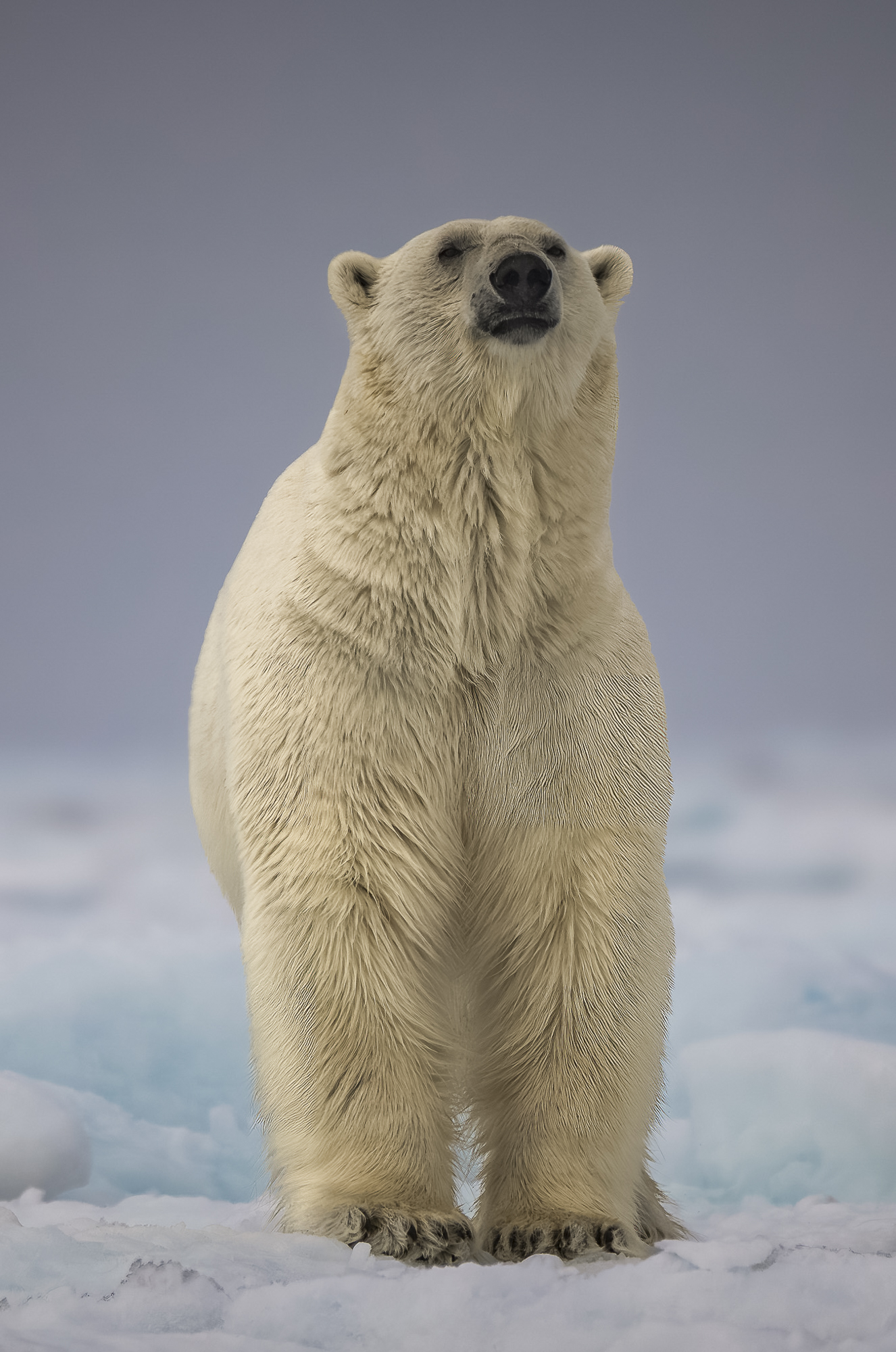
The undisputed king and apex predator of the Arctic, the polar bear presents with powerful authority and surprising grace—perfectly adapted to a life defined by ice, isolation, and constant change. Yet this strength is tainted with a level fragility living amongst a habitat that is quietly diminishing. Image: Paul Hoelen
Svalbard reindeer are often found grazing quietly on tundra slopes, sometimes even wandering through the streets of Longyearbyen, the world's northernmost permanently inhabited town, itself.
Arctic foxes dart along rocky shorelines with boundless curiosity, while walruses haul out in wrinkled, sprawling gatherings on low sandbanks, their intimidating bulk and tusks contrasting with their need for constant physical contact with each other.
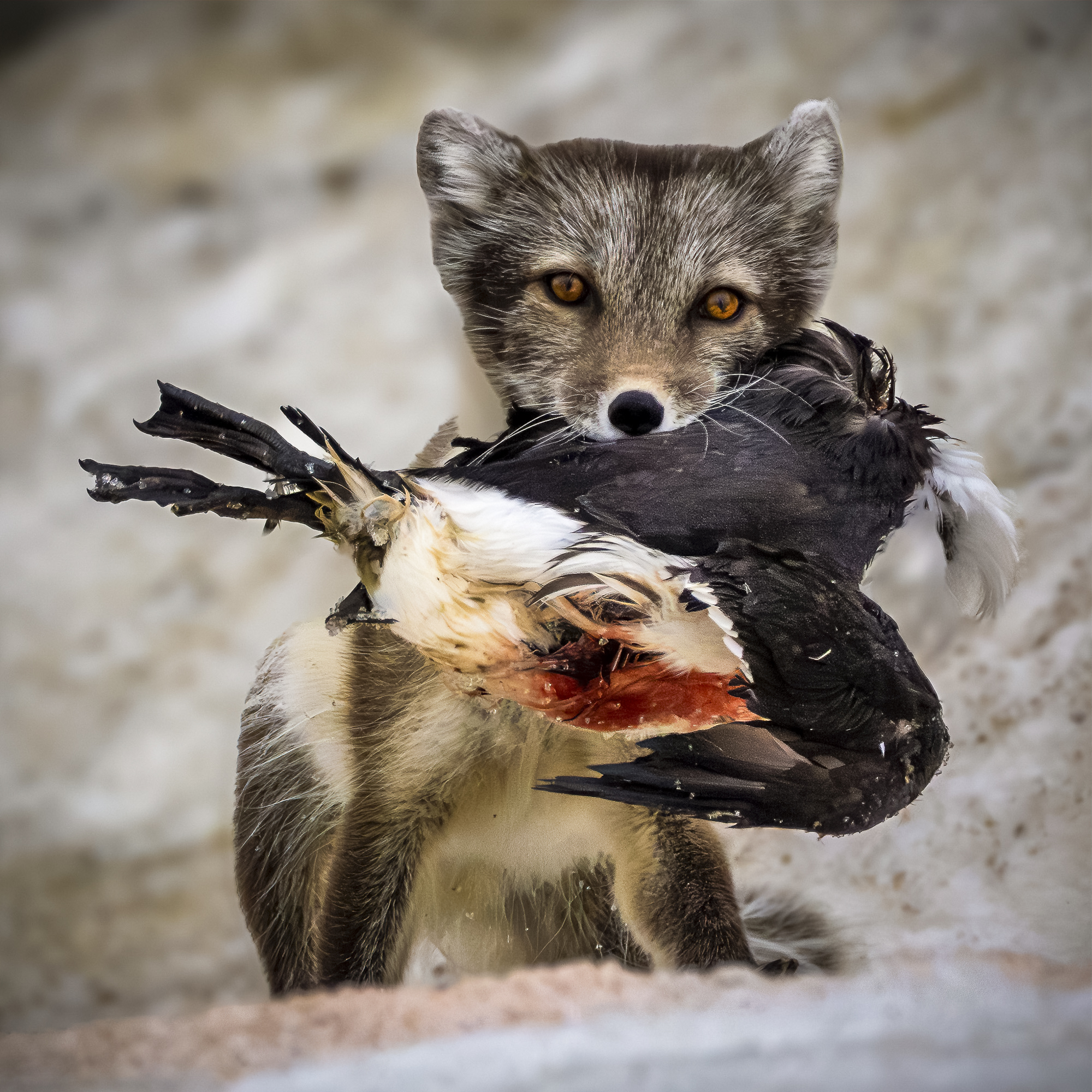
Beneath immense seabird cliffs, an Arctic fox hunts with precision and efficiency. Feeding on eggs, chicks, and fallen birds, they take full advantage of the Arctic summer’s surge in life. Image: Paul Hoelen
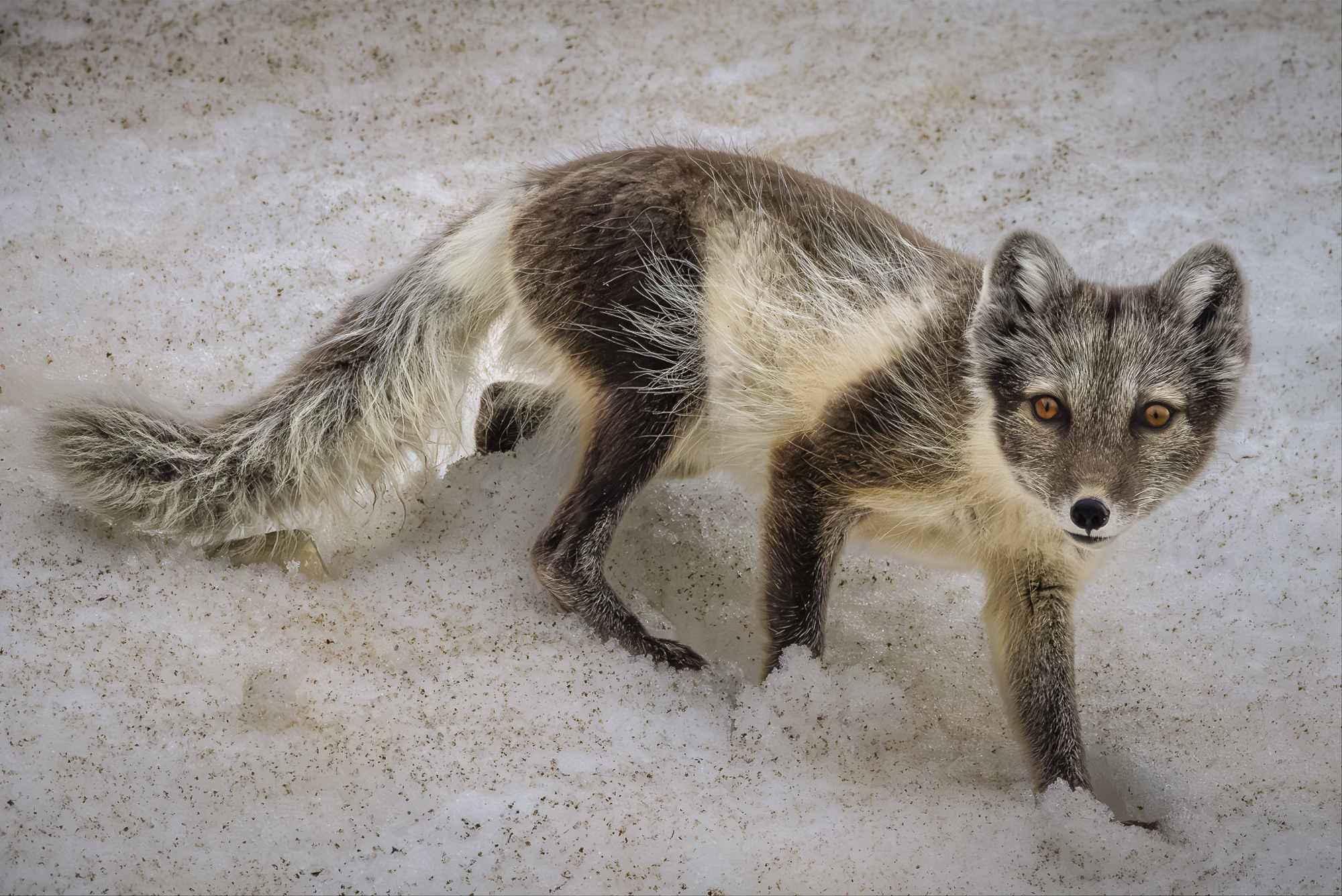
In summer, the Arctic fox sheds its white winter coat for a darker, more varied palette. This seasonal shift reflects both camouflage and adaptation in a landscape that changes rapidly with the light and temperature through the seasons. Image: Paul Hoelen
Above it all, birdlife is constant: kittiwakes, guillemots, puffins, skuas, and Arctic terns filling cliffs and skies with continual motion. For photographers, the proximity is extraordinary, and encounters feel unforced, natural and respectful when approached correctly.
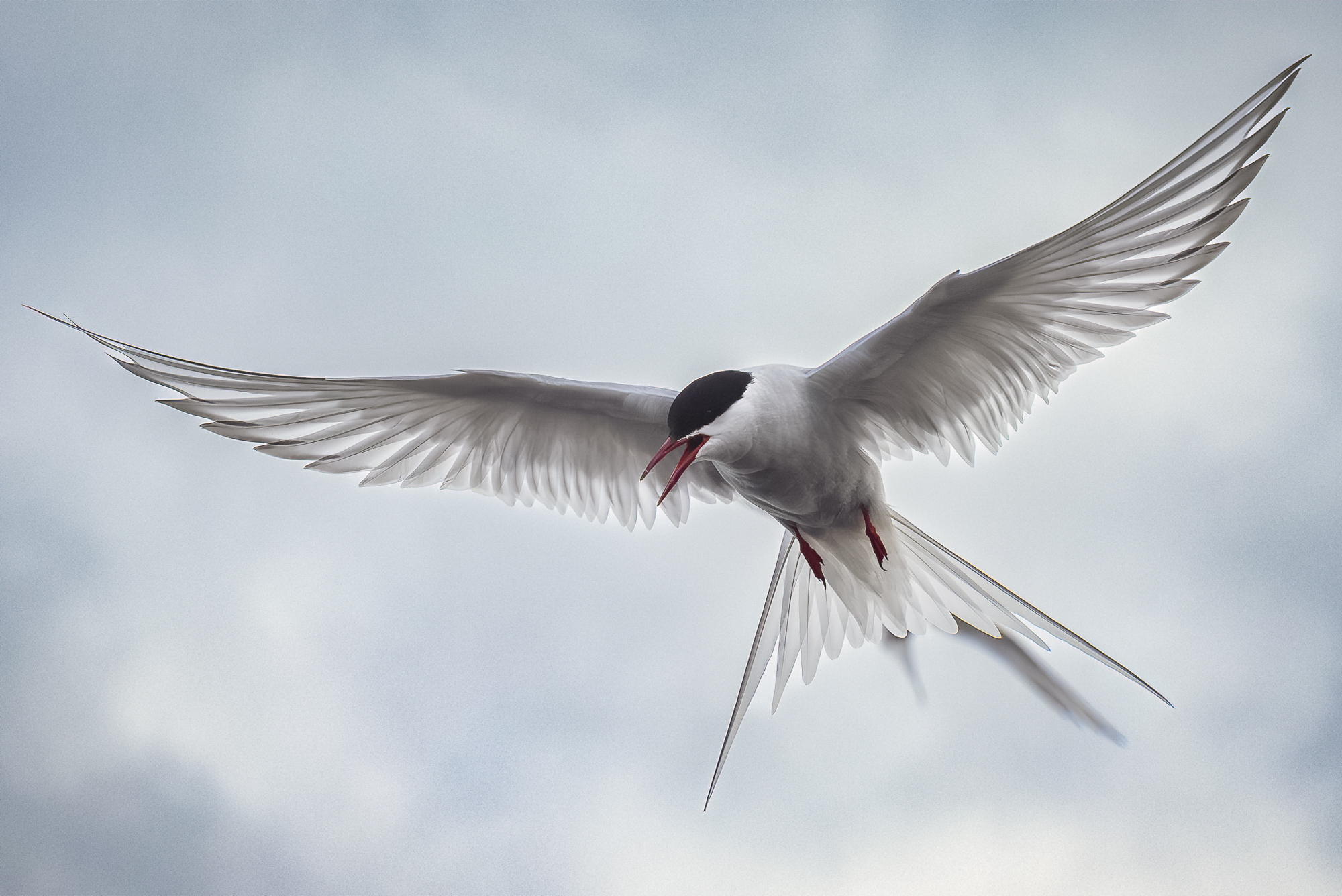
Arctic terns may be small, but they undertake the longest migration of any bird on earth – travelling all the way from the Arctic to Antarctica and back each year. Fierce and agile, they are a constant companion in Svalbard’s summer skies. Image: Paul Hoelen
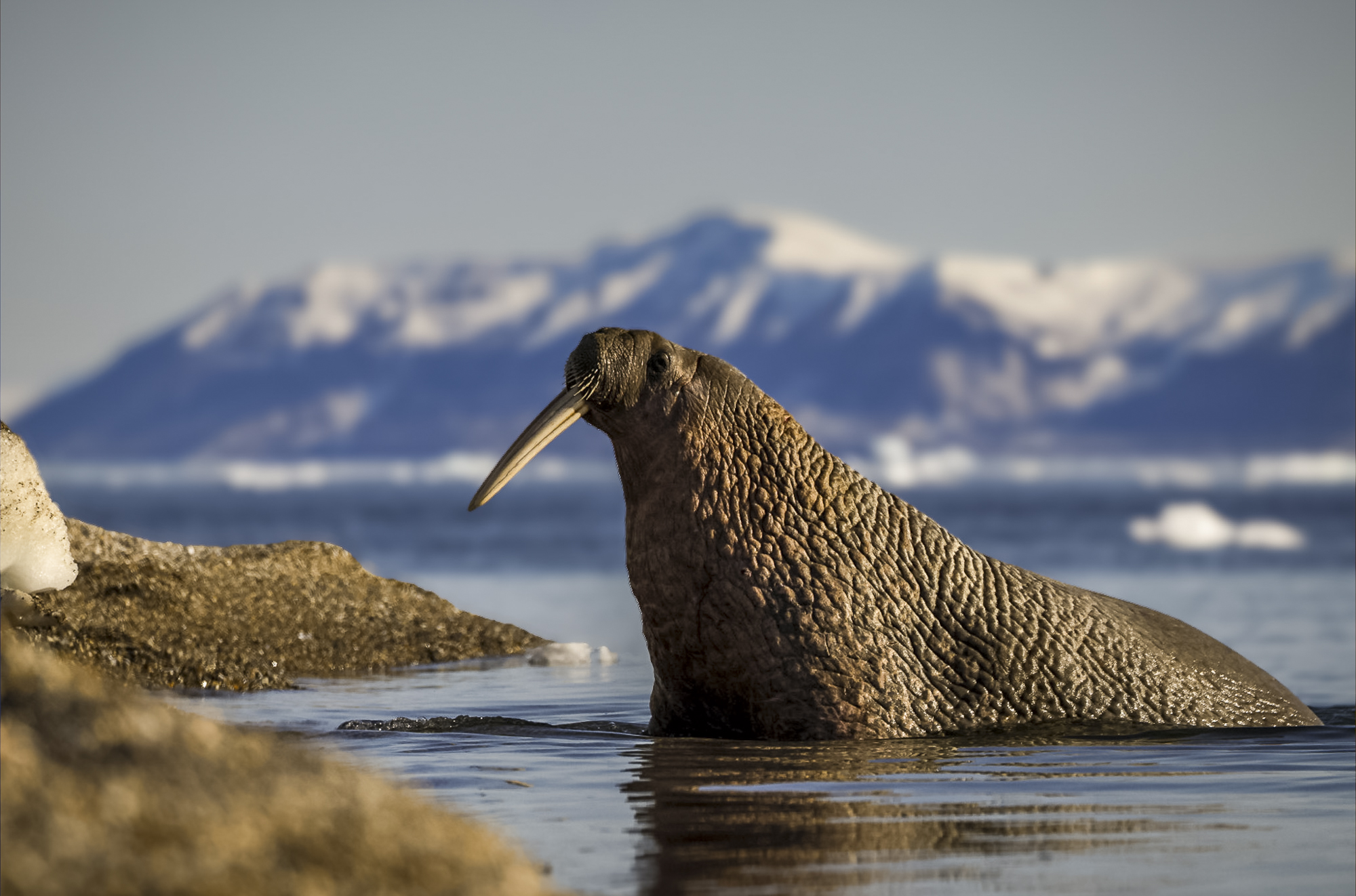
Walruses are among the largest and most distinctive mammals of the Arctic, yet in Svalbard they can be surprisingly accessible in certain locations, with the right protocols and guidance in place. Slow-moving and highly social, they commonly haul out on shallow coastal sandbanks in large, tactile groups. Image: Paul Hoelen
The Gift of Endless Light
One of Svalbard’s most remarkable features is the midnight sun. For almost four months in summer, the sun never sets. Time softens and begins to lose its familiar structure. There is no golden hour followed by darkness; instead, light cycles gently but constantly through subtle moods, angles, and textures.
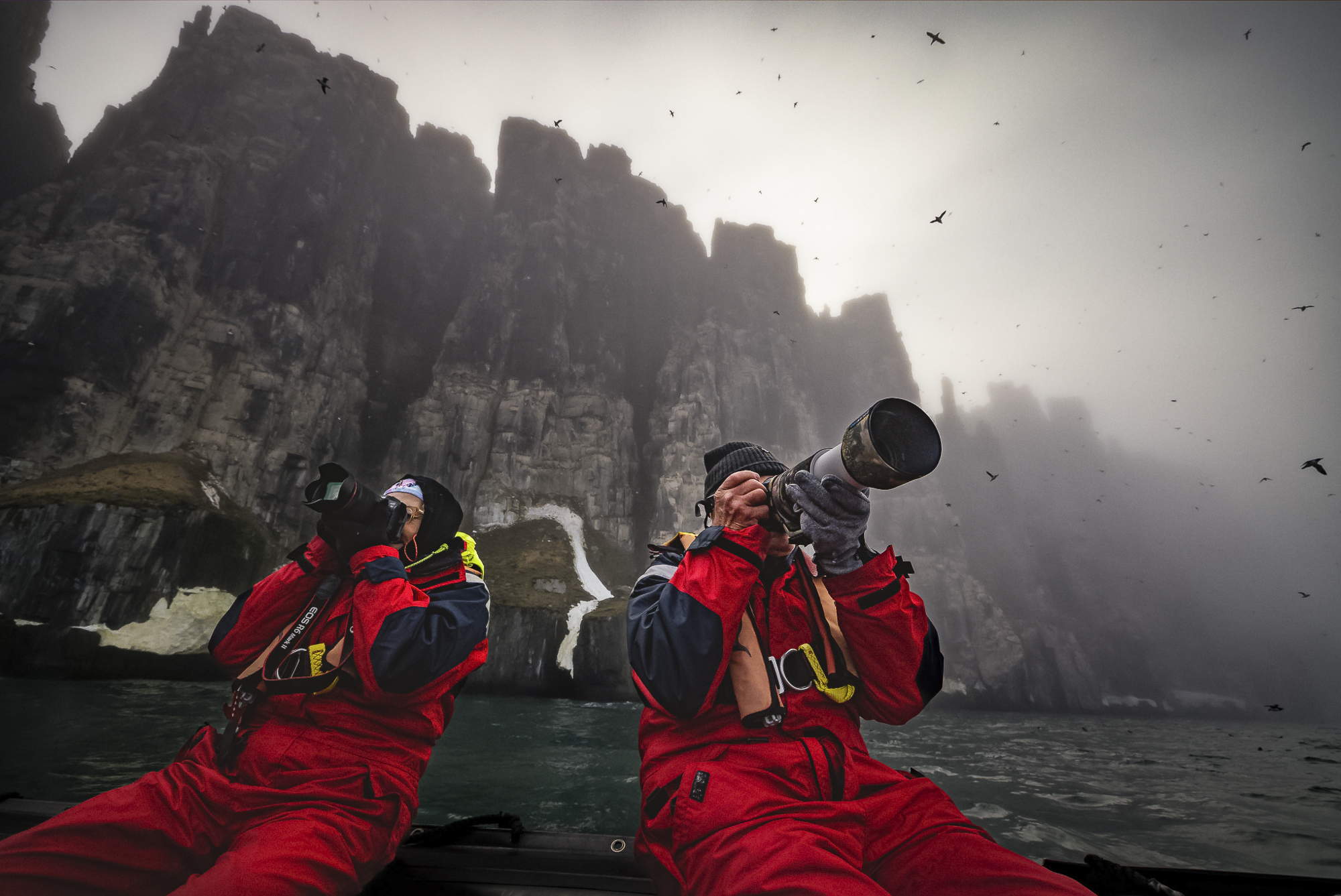
Beneath one of Svalbard’s largest accessible seabird cliffs, the experience is as much auditory as visual. Thousands of birds fill the air, their calls echoing off the rock in a crescendo of sound—so dense at times that standing up can bring you closer to the action than expected. Image: Paul Hoelen
Creatively, this is remarkably liberating. There is no pressure to rush, no frantic checking of sunset times. If the light isn’t right, you just wait. Photography becomes fluid rather than scheduled, allowing deeper immersion in both place and process — and your imagery inevitably reflects that.
Flying in the Arctic
On my first trip, I was fortunate to undertake drone filming. With all the needed permits, licences, and with close coordination with the captain and expedition leader, it became some of the most extraordinary flying I’ve ever experienced.
Offering the drone to scout routes through the ice pack proved unexpectedly valuable for expedition planning as well. Many flights happened while the ship slept.
On one occasion, anchored in pack ice overnight, I was given permission to fly throughout the night. With 24 hours of daylight on offer, sleep became a distant thought — but it was an opportunity I wasn’t willing to waste.
From above, Svalbard reveals itself differently. The sheer scale of the peaks and the immense breadth of glacial landscapes unfolding from the fjords is fully unveiled.
Fractured ice mosaics, braided meltwater channels, and glacial scars etched into mountainsides offer limitless textural and creative visual material. With future zoning changes likely to restrict such access, the experience felt especially privileged.
I have created a cinematic representation of that extraordinary opportunity here:
The Long Echo
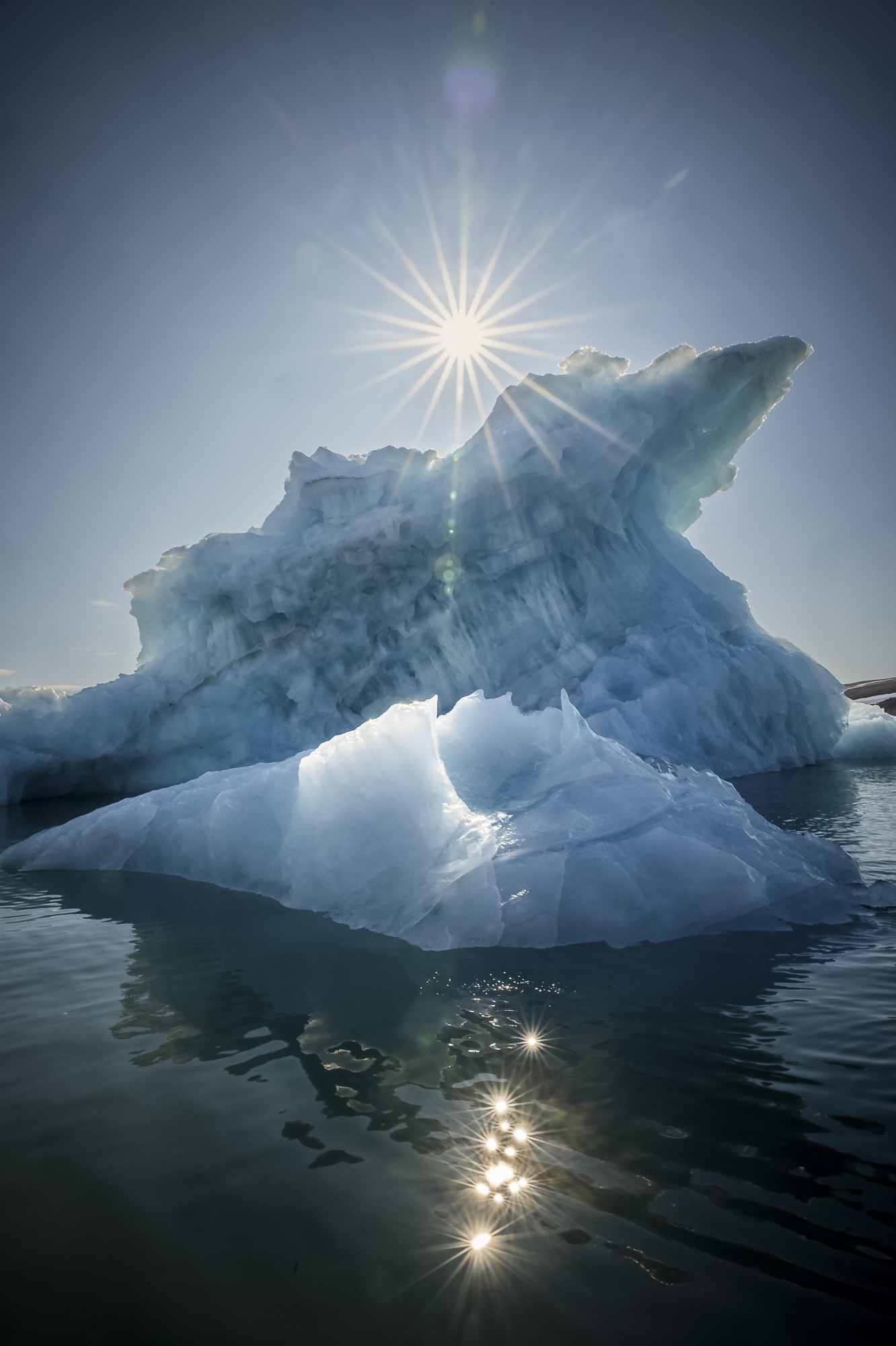
With the sun circling rather than setting, Svalbard’s 24-hour summer light offers a limitless creative window. Icebergs like this transform throughout the day, revealing new shapes, textures, and reflections with each subtle shift in angle. Image: Paul Hoelen
Some places call you back quietly, long after you’ve left. Svalbard is one of them, and for me, familiarity does not dull its impact. With each return, the urge to collect images softens into a desire to simply respond to moments as they arise, with full presence and attention.
Svalbard doesn’t ask for that attention. It doesn’t perform. It simply exists: vast, patient, and indifferent to whether we are watching or not. And yet, if you give it time, it gives back so much and offers an increasingly rare commodity: perspective.
In a world that moves ever faster, Svalbard stands quietly at the edge, asking nothing — yet offering so much, if we are willing to slow down and listen. I will be answering its call again very soon.
About the author
Based in the beautiful, wild island of Tasmania Paul Hoelen is a full-time professional photographer working across portrait, travel, documentary and commercial fields. He is best known however for his landscape imagery, particularly from an aerial perspective. With decades of experience, he has been awarded Grand Master of Photography (NZIPP) and named Tasmanian Professional Landscape Photographer of the Year seven times.
You can see more of his work here.