

Review: Sony A7 V
Over the last few years, I have generally been using two different Sony bodies for different reasons. The A1 for its fast focus, high shutter speed, and high-resolution capabilities, and the A7 IV as both a street and a back-up camera that also has the benefit of being about half the price of the A1.

When I heard the A7 V was launching, I was curious to see how it had evolved from the A7 IV, and whether I thought it was worth the upgrade. Now if you don’t want to read any further, spoiler alert, the answer is yes.
But, why?
Well to put it simply, by sacrificing a few megapixels, you’re getting many of the great features you’d find in an A1, but at a significantly reduced cost.

The build
At first glance, the layout and body of the V look very similar to its predecessor. Still dust and moisture resistant, compared to the A7 IV the body is nearly identical in size (130 × 96 × 82 mm vs 131 x 96 x 80 mm) and only comes in slightly heavier at 695g (vs 659g).
But upon a closer look, there have been some significant changes. The A7 V has an improved grip and now has a four axis multi-angle (i.e. flip and tilt) screen, and this has double the resolution (2,095,104 dots up from 1,036,800 dots) of the A7 IV.

Additionally, the viewfinder now doesn’t black out in between shots during high-speed bursts, but to be candid, I never thought that type of thing was an issue anyway.
If there’s one upgrade I had hoped for but didn’t see, it’s an improvement to the viewfinder resolution. Unfortunately, it remains the same as the A7 IV.
Most wildlife, sports, and action photographers I know prefer reviewing images in the viewfinder while in the field. In low ambient light, it’s much easier to zoom in and “pixel peep” without glare, and you’re always ready to capture the next moment as it happens.
Given this, I’m not sure why Sony chose to increase the flip screen resolution before upgrading the viewfinder—it’s a disappointing omission.


The sensor
The full-frame sensor remains at 33MP, but several changes have been made to its design and processing. It is now a partially stacked Exmor RS CMOS sensor, paired with the BionZ XR2 processor (up from the previous BionZ XR). Combined with updated algorithms, these changes result in noticeable improvements in performance across a range of areas.

Autofocus
Subject recognition range has been increased along with autofocus accuracy and speed (even though the number of autofocus points remain at 759).
Sony claim The A7 V offers about 30% improved animal recognition and about 50% improved bird recognition and it also has an auto mode now to decide for you, or if you are not quick at changing things.
However, its EV sensitivity (the camera’s ability to focus in low light) remains unchanged at a respectable, if unremarkable, −4 EV.
It is also worth noting that faster sensor readout reduces the likelihood of rolling shutter distortion with fast-moving subjects, as well as banding under artificial lighting when using the electronic shutter. These issues are improved, but not eliminated entirely, and can still occur in certain situations.
Using the electronic shutter, burst speeds increase to an impressive 30 fps in RAW (up from 10 fps on the A7 IV), for up to 10 seconds when using a fixed shutter speed. One of the standout improvements for me—particularly for action shooters such as sports and wildlife photographers—is the addition of up to one second of pre-capture.
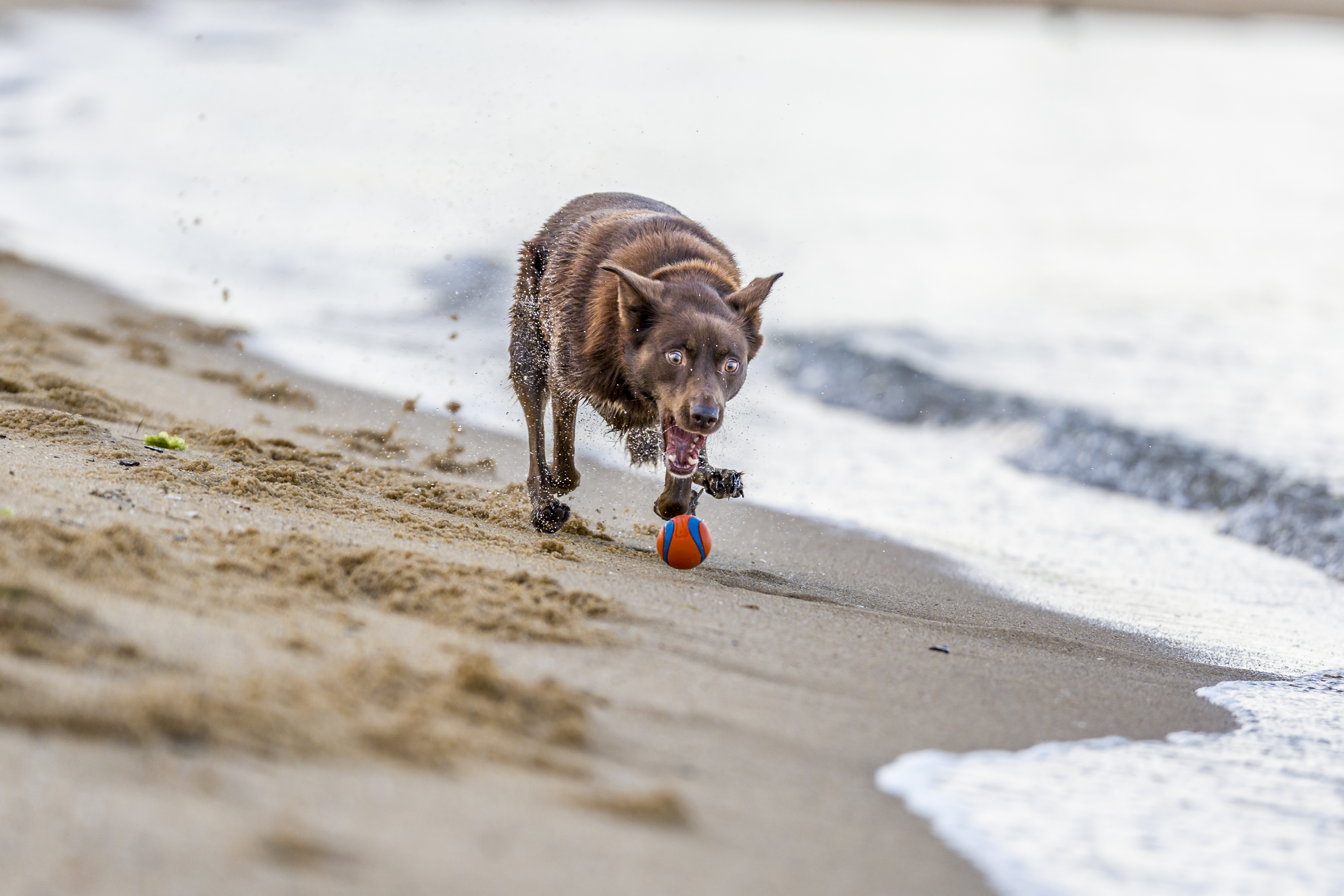


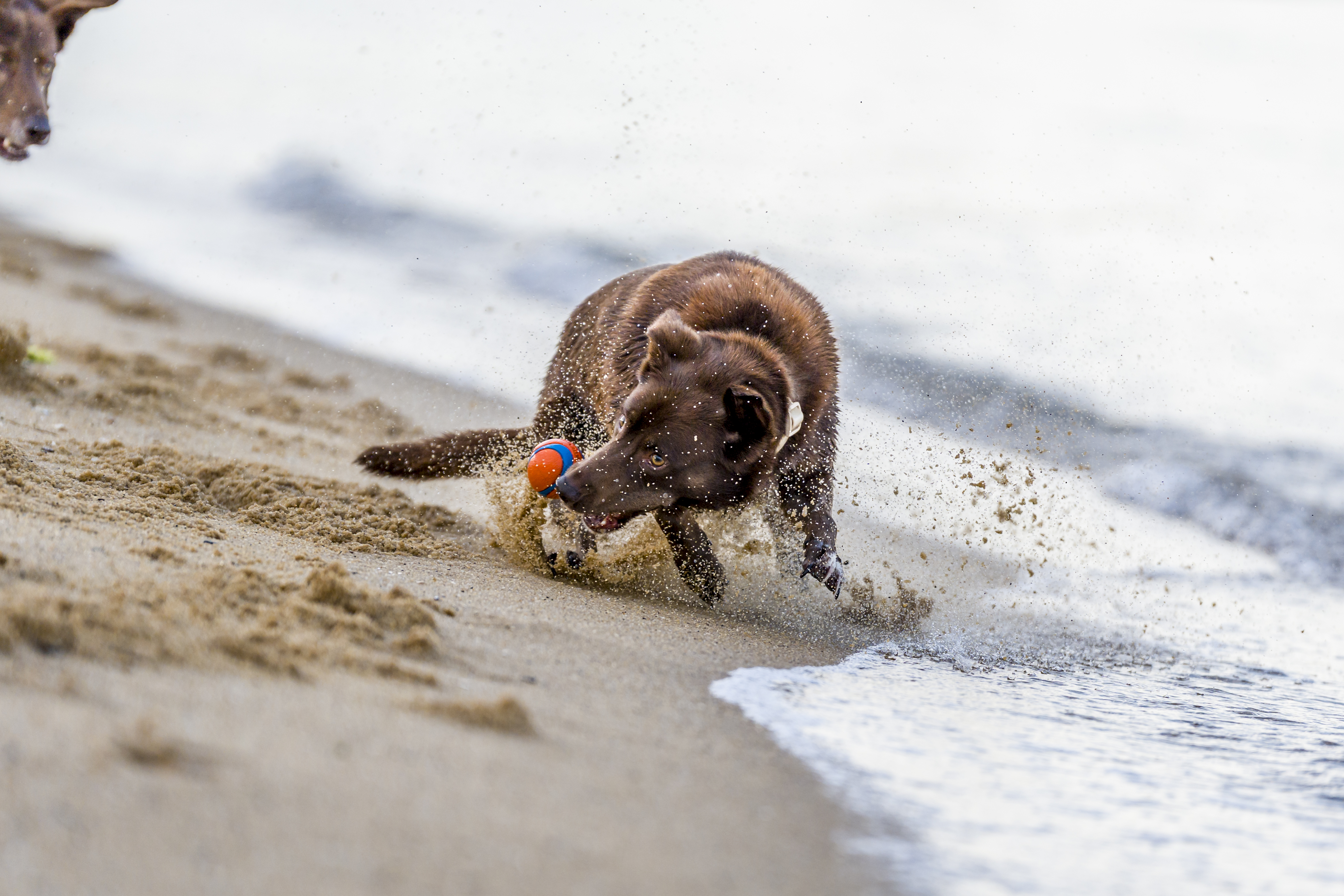


If you have not used pre-capture before, it can be genuinely valuable. When the shutter button is half-pressed, images are continuously recorded to a temporary buffer and only written to the memory card once the shutter is fully pressed.
This effectively allows you to capture moments from up to one second before the decisive press, which can make the difference when timing is critical.

Speaking of buffer, it is relatively shallow, and you probably get around 30-40 shots shooting in Lossless Compressed mode before it starts to fill. That’s not an issue if you are shooting in short bursts or using, for example, a fast CF Express Type A card to write to, or if you’re shooting compressed RAW.
But if you have an SD card and are continuously filling the buffer with pre-capture, or shooting 30fps lossless for more than a second, it’s something to be aware of.

Image quality
Another major upgrade is dynamic range, which increases from 14.7 stops on the A7 IV to a claimed 16 stops on the A7 V. This translates to improved flexibility when recovering both highlights and shadows. On paper, this also places it ahead of Sony’s flagship A1, which is rated at 15 stops.
The 5-axis body image stabilisation on the A7 V is also improved to an impressive 7.5 stops in the centre, 6.5 stops at the periphery (vs 5.5).
This basically means, all else being equal, you can hand hold at a lower shutter speed without getting operator movement blur. Does it work well? You bet. I took a hand-held image at 24mm using a 1/5th second exposure with no noticeable movement blur - impressive.

Other new features
Internally, there's other benefits to the newer model that you may not be aware of. If wireless workflows are your thing the A7 V now also supports 6GHz Wifi (in addition to 2.4 and 5GHz), meaning faster transfers rates, and Sony claims the battery life is also notably improved.
You’ll get approximately 630 shots (viewfinder) and 750 shots (LCD monitor). This is up nearly 20% (The A7 IV maxed out at around 580 shots with its LCD monitor).
Video
I only occasionally shoot short 4K wildlife clips for stock, so I am far from a video expert, but a few specification changes stand out. 4K can now be recorded at up to 120 fps when shooting NTSC (up from 60 fps), or 100 fps when shooting PAL (up from 50 fps).
The higher of the dual base ISOs has also increased from 3200 to 8000, which should result in cleaner footage at ISO 8000 than was previously possible at ISO 3200.
To be candid, I do not fully understand the technical details of how dual base ISO works for video, but it is an impressive improvement and one I would love to see extended to stills photography in the future.
Image stabilisation has also been improved, resulting in smoother handheld footage, and a new auto-reframing feature can help keep moving subjects centred in the frame, albeit with a reduction in resolution.
The results
Handling ★★★★
It’s solid and the layout felt very familiar to the A7 IV. In fact, I only didn’t give it five stars because I’d love to have seen (for ease of functionality) a drive/focus mode dials on the top like the A1 - but maybe that’s not a fair ask!
Features ★★★★★
At this price, given the multi-angle flip screen, ability to shoot 30fps RAW (electronic mode) and having up to one second RAW pre-capture, I’m really not sure for the still photographer it would be reasonable to ask for much more.
Autofocus ★★★★
Generally good to grab focus most (not all) of the time, however it is excellent to hold it once it has. I’d like to have seen a little better low light focus capability (i.e. an improved lower EV) especially as I can see this as a great street photography camera, but that’s OK.
Image quality: ★★★★ 1/2
Excellent even at higher ISOs, with an impressive 16 stop dynamic range (on mechanical shutter). For video shot in S-log, there's two great base ISOs, 800 and 8000.
Value For Money ★★★★★
Value for money always depends upon what you compare it to and what you need something for, but at an RRP of $4,699, for me there really is no other Sony camera that I can compare it to and not give it full marks.
Final word
If I had to summarise the A7 V in one sentence, I’d say “The A7 V is the lower price, lower megapixel, but higher dynamic range baby sibling of the A1”, making it a comparative bargain, a great first sport/wildlife camera, a great landscape, street camera…etc...this is a great camera for a lot of things, and also a great second/spare body for those who shoot primarily with an A1 II.
So, ultimately this is a great camera for many styles of photography, and I don’t think you’ll be disappointed, given what you get for the price. And if you already own the A7 IV, should you go out and upgrade? Well I did!