APS Behind the lens: From up above
Although I have an interest in photography generally, a particular passion I have is abstract photography. Over the years, subjects I have photographed include rockscapes, tree bark, and urban landscapes.
But it’s aerial photography that has allowed me to photograph abstract shapes and patterns in a way unlike anything else.
In recent years, I’ve been lucky enough to attend workshops at Shark Bay, Broome and Derby in Western Australia.
Whilst the above areas can be picturesque at ground level, they are stunning from the air. The structures that can be seen include river estuaries, mud flats, sand and wave patterns, islands, sea grass, mangroves, lakes, clouds, reflections and man-made structures. The shapes, patterns, colours and textures shown are amazing when seen from the air.
When you see photos taken in these areas, it can be easy to think they’re not real—but they are. In Broome, for example, the contrast of turquoise water, white surf, red earth, yellow sand and green mangroves is especially striking, creating a vivid palette that feels almost unreal from above.
Ideally with aerial photography, the doors of the aircraft are removed and you shoot through the open space. This avoids possible reflections associated with shooting through window glass.
Camera settings also play an important role in aerial photography. With the aircraft constantly moving and wind adding to the challenge, a fast shutter speed is essential. Shutter-priority mode around 1/2000sec, combined with a wide aperture and Auto ISO, is often used to keep exposures consistent. Setting around –0.7EV exposure compensation can also help retain detail in bright highlights, especially when shooting reflections on water.
When in a plane or helicopter, the scenery passes very quickly, so you have to do your best to frame subjects and take plenty of photos, with a view to refining the composition through cropping in post-processing.
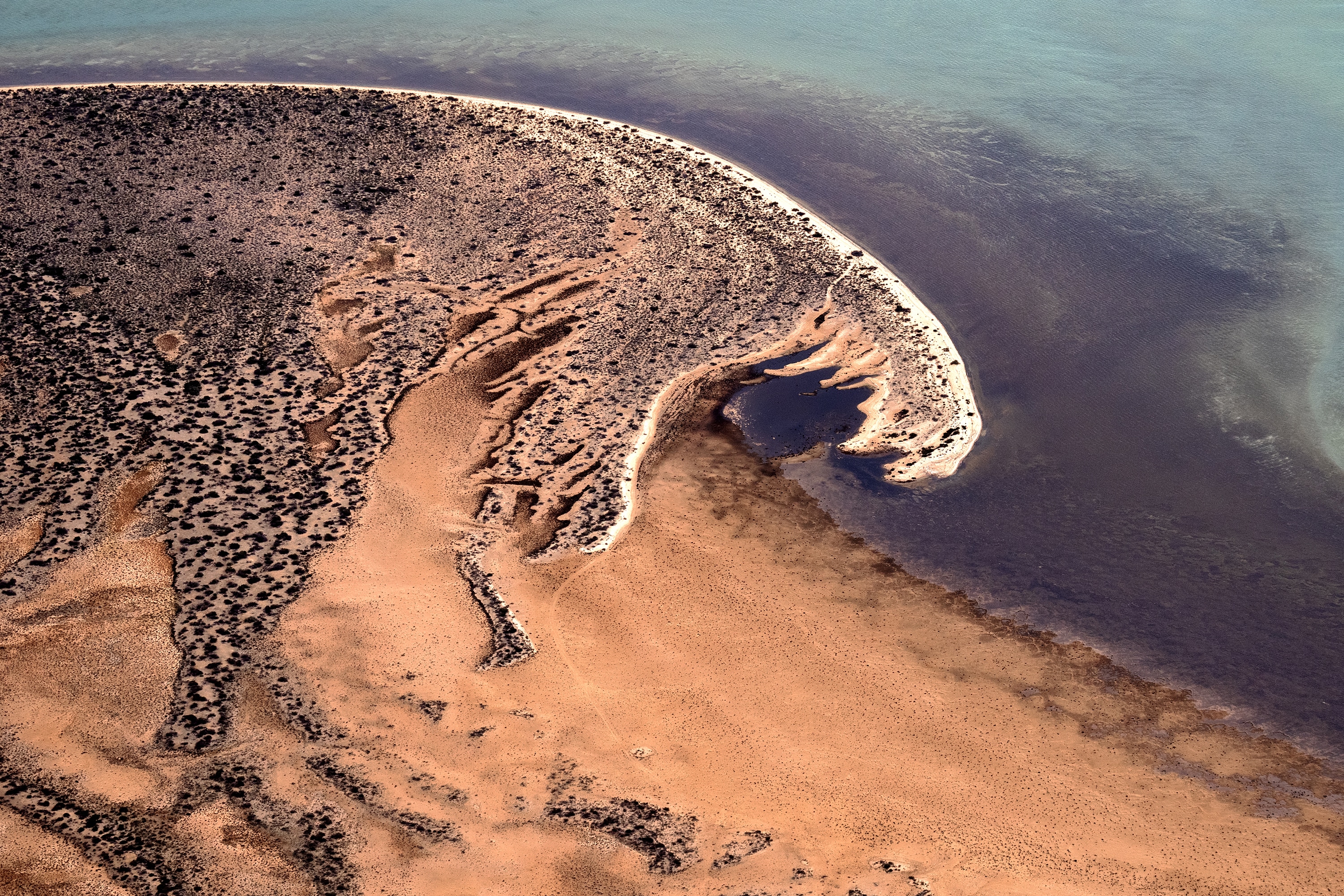
The photo shown in this article shows a sand pattern that looks like a wave. It reminds me of the print of The Great Wave by Hokusai. I still find it amazing to think that sand patterns can mimic waves, or tidal patterns can mimic trees. ❂