

Behind the images: The stories behind six award-winning photographs
For travel photographers Jackie Ranken and Mike Langford, the strongest images often come from slowing down and experimenting.
The pair were among the successful photographers at the 2026 NZIPP Iris Awards in Christchurch, New Zealand last week, with Langford taking out the Landscape Category, and Ranken winning the Travel Category.
Their winning images span Morocco, Japan, Uzbekistan and China, and also demonstrate very different approaches to travel photography, from deliberate multiple exposures and panning to carefully observed moments of movement, architecture and light.
We asked the duo to share the stories behind their award-winning images this year.
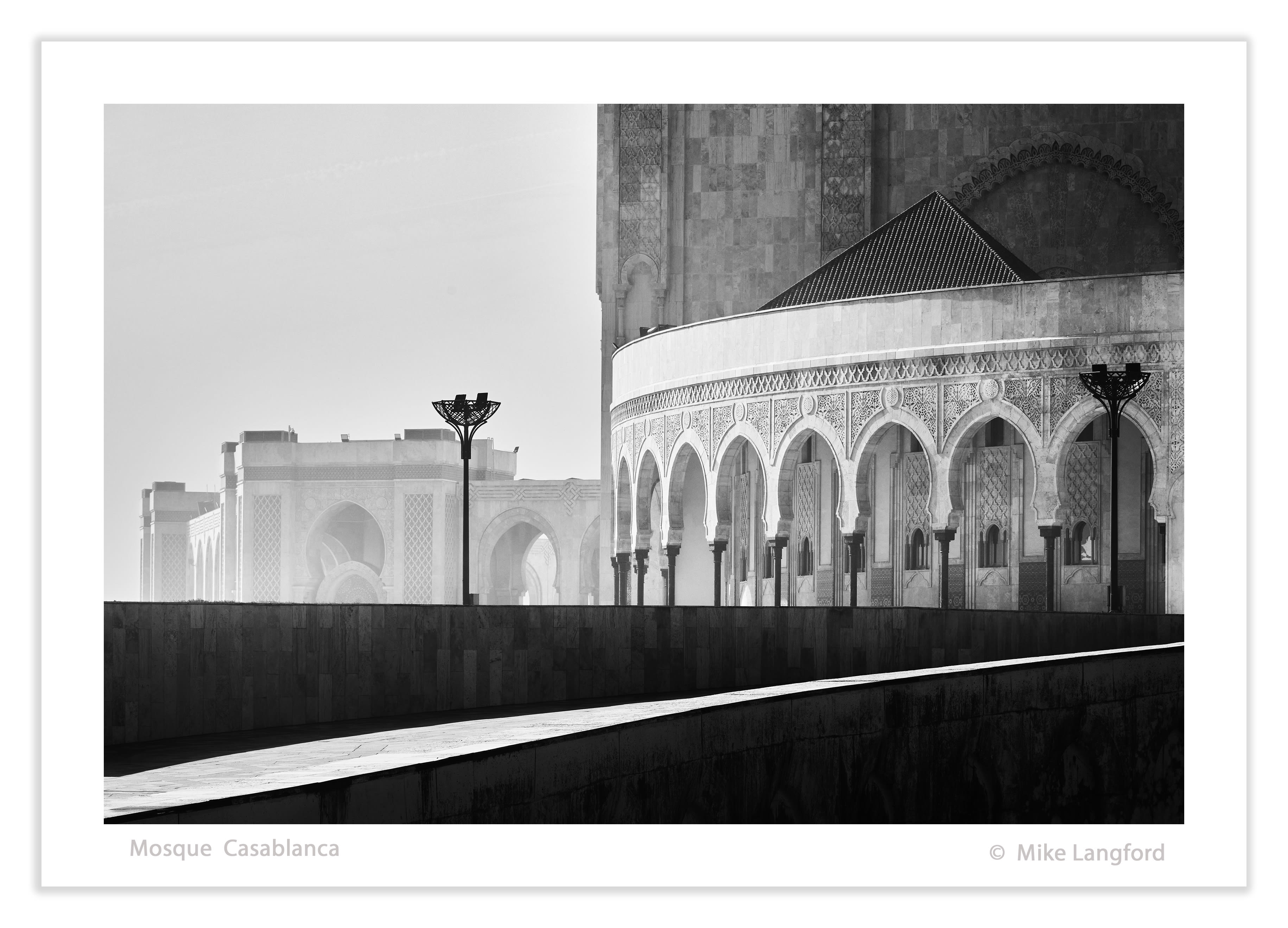
Mike Langford: A short overnight stay in Casablanca earlier in the year gave us just enough time to try to photograph this famous mosque, the largest in the North African region, even though we weren't allowed inside the buildings or even into the grounds.
There was quite a heavy sea mist coming in from the right, creating a soft glow around the background buildings without being thick enough to obscure the detail in the lacework textures on the facades.
I hadn't brought my long lens, thinking we'd be able to get quite close, so I borrowed Jackie's 100-500mm to make this shot. It's just as well we're both Canon shooters.
I deliberately allowed the foreground ramp to enter from the bottom left corner, leading the eye into the more interesting part of the image, where the intricate high-key patterns are found. This bright line also breaks up the dark sea wall in front, which retains just enough detail to remain interesting while creating a strong tonal counterpoint to the lighter middle area.
What made the image work for me was the contrast in tones, ranging from almost pure white in the background to solid black in the lighting towers, combined with a series of very graphic but simple shapes.
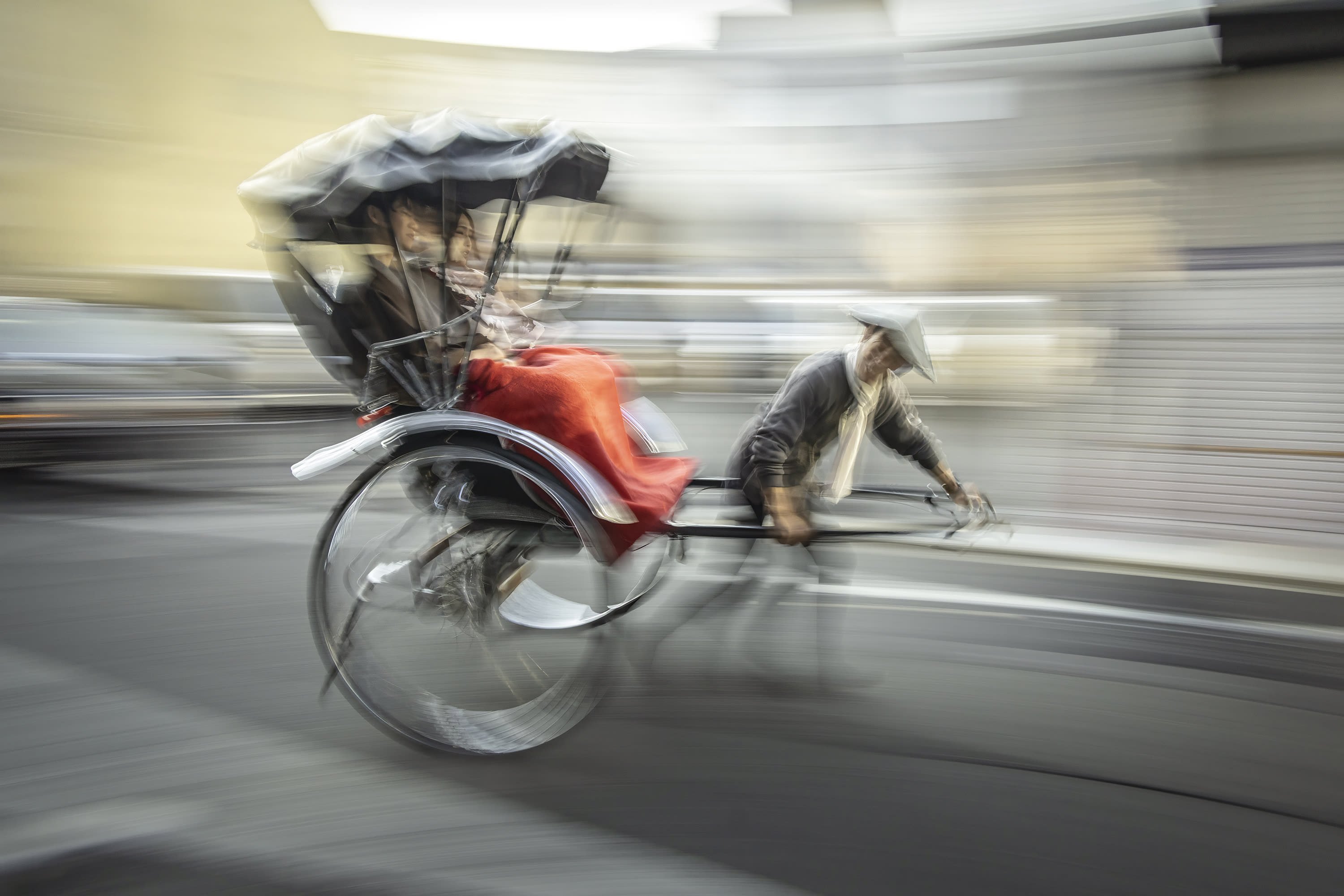
Jackie Ranken: This image was made just after we were dropped off at our accommodation in Kyoto. Fortunately, I had my camera out and ready to shoot in AV mode, with a neutral density filter already attached. I was prepared to capture the rickshaw driver as he navigated the narrow street, using a slow shutter speed to introduce movement into the image.
The sharpest parts of the frame are the rug and the shiny wheel hub, which then naturally draw the eye towards the people. The movement tells the story of the rickshaw driver as he balances the rig while looking back for traffic.
I was using my widest focal length, 24mm, so the movement in the background begins to take on a cylindrical appearance as it mimics my panning action. This wraps the environment around the subject and adds a sense of speed and action to the image.
In travel photography, being prepared can be just as important as being in the right place at the right time. I almost always have my camera out.
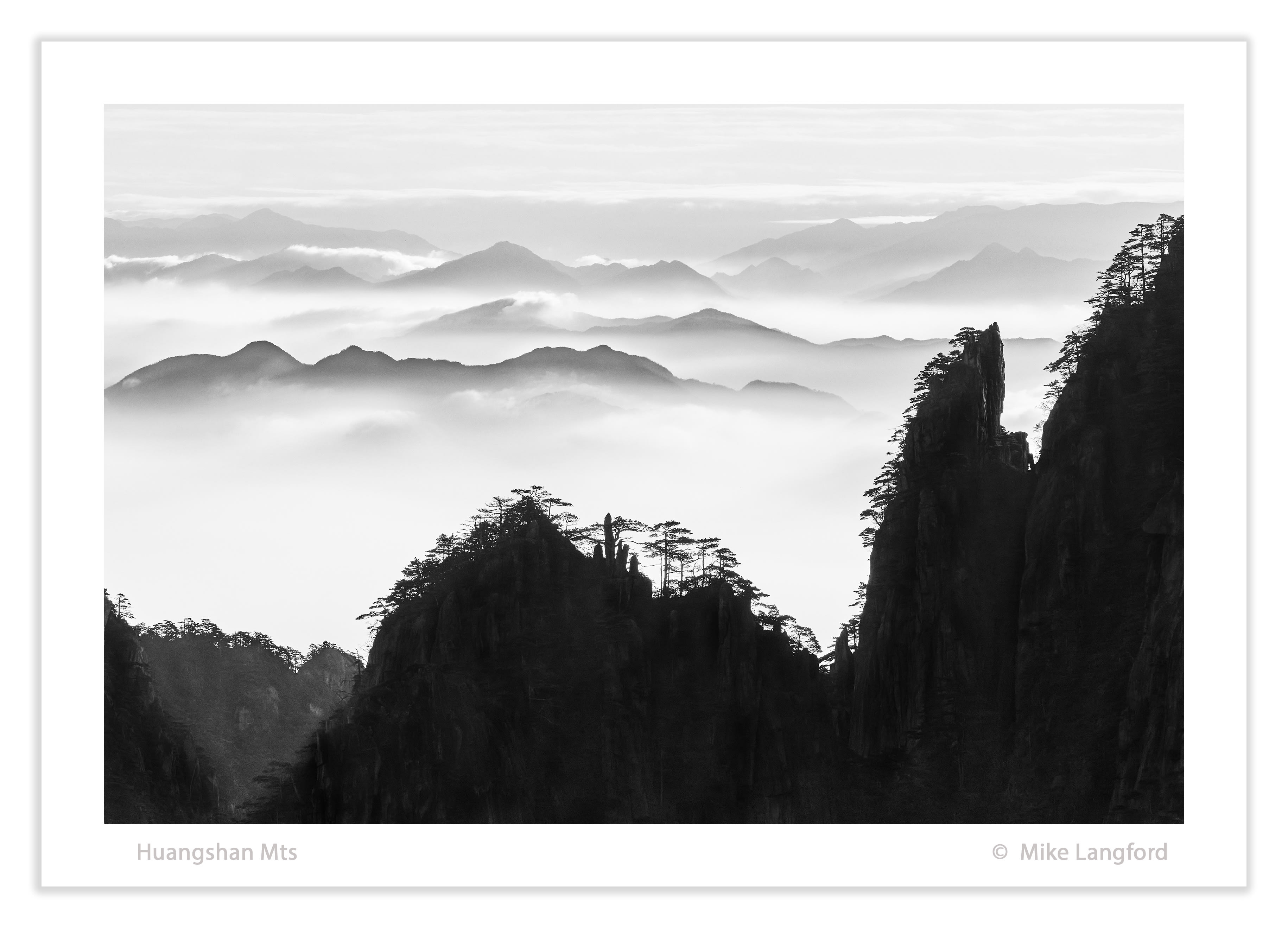
Mike Langford: As is often the way, we found ourselves on the wrong side of the mountain when it came to photographing the sunrise. We had already worked out that the Chinese love photographing sunrises, and that all the best vantage points would be packed. In this case, that would have been something of an understatement.
Instead, we waited until the sunrise was over and everyone had returned to their hotels for breakfast. We then found ourselves completely alone, with some incredible vantage points from which to make this and many other photographs.
I love the way the Chinese use pareidolia to name things in nature. It is playful and adds another layer to the experience. I started at the lower Dawn Pavilion before making my way up to the Refreshing Terrace, which sits just below the rock formation known as Monkey Watching the Sea. All of these viewpoints face east towards the sunrise.
I found that photographing from the Refreshing Terrace gave me better separation between the stark, almost silhouetted ridgeline in the foreground and the softer, cloud-covered ridges further back. This created a stronger sense of depth in the frame.
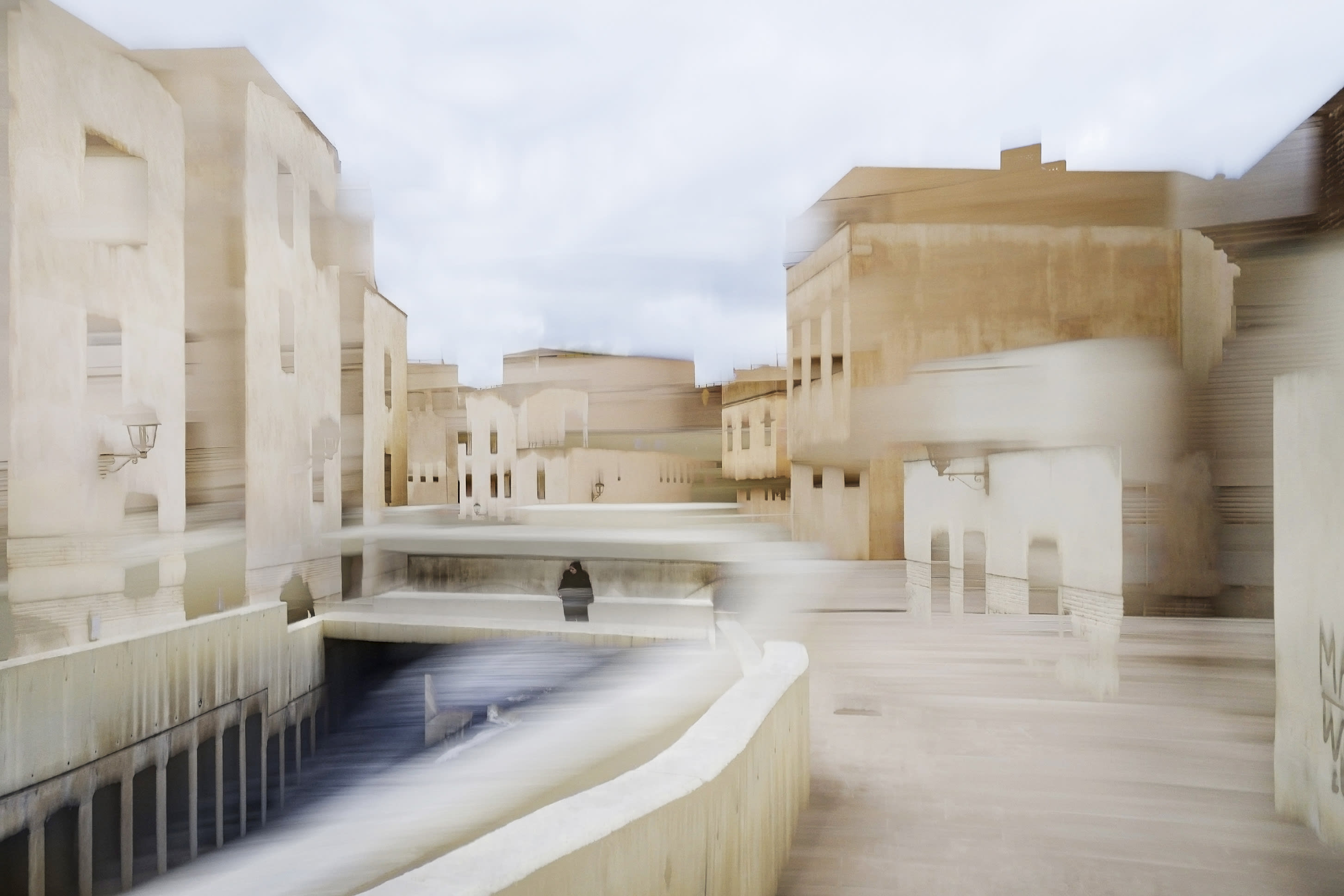
Jackie Ranken: This image was made in Fes, in an area where the old meets the new. The dark area is the river that runs through and beneath the city. Mike and I had been wandering around for a while looking for street photography opportunities when I spotted a woman in a black dress and headscarf walking across the bridge.
I made the first exposure with a small amount of up-and-down camera movement, followed by a second exposure with a wider, faster movement from left to right.
Using the ‘Light’ multiple exposure mode keeps the lighter tones on top, covering the darker areas and giving the image an almost otherworldly feel.
Using movement, multiple exposures and other creative camera techniques allows me to create photographs that feel like a place, rather than simply recording what that place looks like.
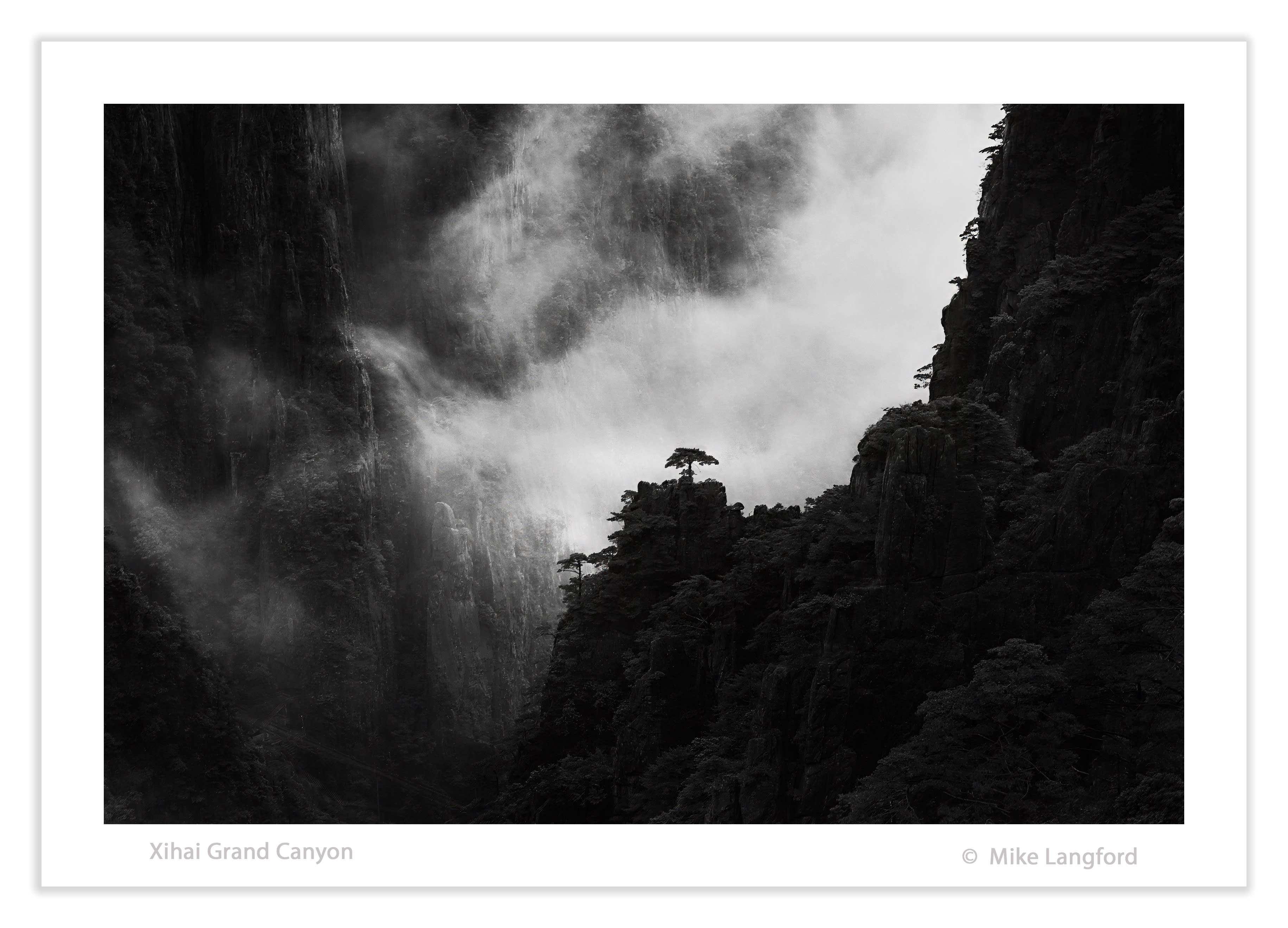
Mike Langford: The Huangshan Mountains are among the most famous mountains in China, largely because they have been the subject of traditional landscape paintings dating back to the Song Dynasty in the 12th and 13th centuries. Their distinctive character comes from the vertical granite cliffs, with pine trees growing from the smallest cracks, symbolising hardship and tenacity.
Getting there involves a four-hour high-speed train journey west from Shanghai, an hour-long bus ride to the base of the mountains, followed by several smaller bus trips and, finally, a spectacular cable car ride to the summit. If you choose the wrong time of year, or visit during a public holiday, that final part of the journey can take another four hours due to the sheer number of Chinese tourists doing the same thing.
The first time we visited, we were completely unaware that the mountains could be accessed from several sides via cableways leading to the upper ridges. As a result, we took the most popular route, and seemingly the only one advertised, via the Yungu Cableway on the eastern side. From there, we walked and climbed for another two hours to our accommodation on the western side, near Xihai Grand Canyon.
The second time we visited, we took the Taping Cable Car, which isn't widely advertised, and ended up right next to both our accommodation and the Xihai Grand Canyon.
We spent most of the day climbing up and down the various ridges, photographing the iconic landscapes the mountains are known for. Because there was plenty of light when we set out and we had a lot of climbing ahead of us, we decided to leave our tripods back at the accommodation.
That meant we arrived at the end of the day with this stunning view, low light and no tripod. The Grand Canyon is famous for the 'Sea of Clouds' that rolls in late in the day, and on this occasion it briefly isolated this small tree against the granite background.
My compromise in the low light was to use an aperture small enough to give me sufficient depth of field, a low ISO to minimise noise and a shutter speed that required the camera to remain completely still. So, I jammed the camera between some rocks, held my breath for several seconds and squeezed the shutter.
Even though it isn't the sharpest image I've ever made, it was enough to help win me this award.
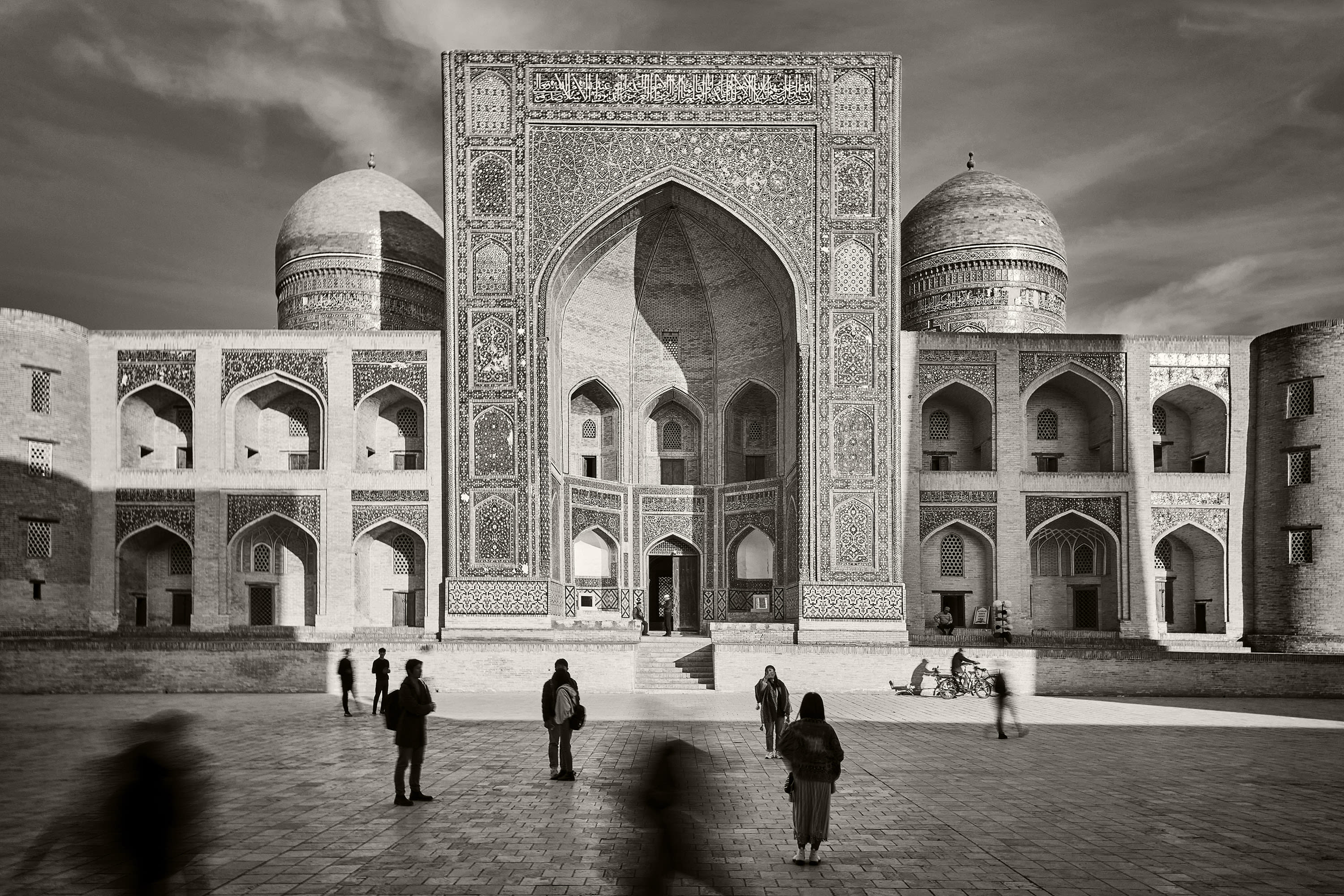
Jackie Ranken: This structure is a 16th-century centre for Islamic religious instruction that is still in use today, and the surrounding area is considered the spiritual centre of the city.
For this image, I watched and waited for the people in the frame to separate from one another, looking for interesting gestures and fleeting moments where everything would line up and come together.
Using a slow shutter speed allowed the two people closest to the camera to blur as they moved through the square. Their movement creates a contrast with those standing still, taking in the architecture and their surroundings.
The architecture provides the sense of place, while the people provide the story, movement and scale.
You can see more of Mike and Jackie's work here.