

Canon announces EOS R8 Mark II
Canon has unveiled the EOS R8 Mark II, a 24.2-megapixel full-frame mirrorless camera positioned as an accessible entry point for beginner and enthusiast photographers.
Building on the foundation of the original EOS R8, the Mark II iteration introduces significant hardware and firmware updates, inheriting several advanced features previously reserved for the higher-tier Canon EOS R6 series.
Initial rumours suggested the EOS R8 Mark II would feature a retro design, leading many to expect an aesthetic similar to the Nikon Zfc or Fujifilm X100F – models that resemble classic 1970s cameras with a silvered magnesium alloy finish.
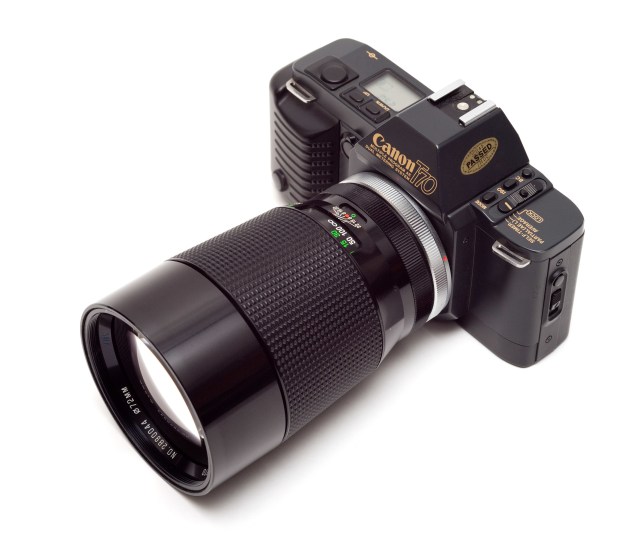
At the Canon media preview, it was revealed that the styling was instead inspired by the 1980s Canon T series cameras – such as the Canon T70, which featured a squared-off pentaprism viewfinder. Other attendees noted a physical resemblance to modern Sony mirrorless bodies.
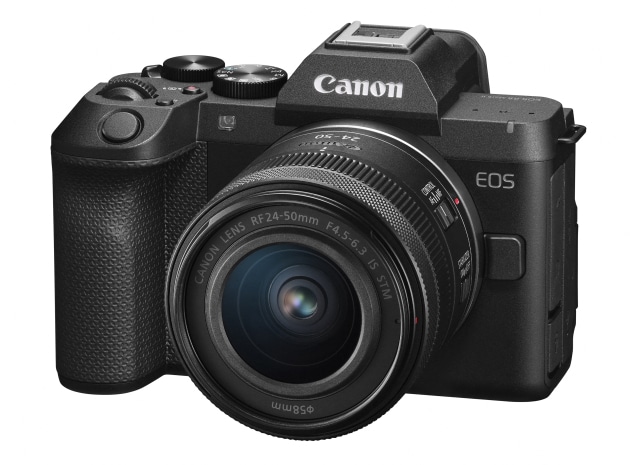
At the core of the EOS R8 Mark II is a 24.2MP full-frame CMOS sensor paired with Canon's DIGIC X processor. A major upgrade from its predecessor is the addition of In-Body Image Stabilisation (IBIS).
This system provides up to 7.5 stops of coordinated stabilisation, addressing one of the primary critiques of the original R8 and allowing for more reliable handheld shooting in low-light environments.
The camera is built for speed, offering continuous shooting at up to 40 frames per second with an expanded buffer capable of handling up to 73 RAW files in a single burst – a noticeable increase in capacity over the original R8.
It also features a pre-continuous shooting function in H+ mode, which records approximately half a second of action before the shutter is fully pressed, capturing up to 20 extra frames.
Autofocus is driven by Canon's Dual Pixel CMOS AF II, which utilises deep learning to recognise and track people, animals, and vehicles. The system functions in light levels as low as EV -7.5. For portrait and event shooters, Canon has introduced a Register People Priority feature.
This allows users to register up to 10 faces in the camera and up to 100 on a memory card, prompting the autofocus system to prioritise these specific individuals in crowded scenes.
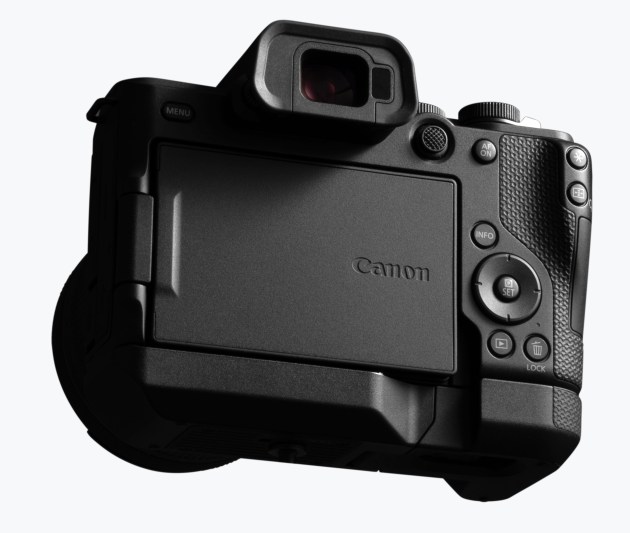
Ergonomically, the EOS R8 Mark II remains compact and lightweight at 546 grams with a card and battery. However, it benefits from a notable physical design improvement: the addition of a multi-controller joystick.
This makes focus point selection and menu navigation much faster than on the original R8.
Connectivity options include Wi-Fi (2.4GHz / 5GHz), Bluetooth 5.3, and a high-speed USB-C port supporting 10Gbps data transfer and power delivery. For video, the camera records oversampled 4K 60p from 6K data, alongside Full HD at up to 180fps.
At an RRP of $2,529 for the body only, the EOS R8 Mark II sits in a highly competitive market segment.
When compared to full-frame equivalents from Nikon and Sony – such as the Nikon Z5II ($2,199) and the Sony Alpha 7IV ($2,907) – the R8 Mark II offers a compelling beginner full-frame option, particularly due to its 40fps burst speeds and advanced R6-derived autofocus tracking.
Alongside the camera, Canon announced the Speedlite EL-5 Ver.2. This updated wireless flash extends transmission range up to 50 metres – an increase from the 30-metre limit of the original EL-5.
The Canon EOS R8 Mark II and the Speedlite EL-5 Ver.2 will be available at authorised retailers from mid-October 2026.
Pricing details
• EOS R8 Mark II Body Only: $2,529 RRP
• EOS R8 Mark II with RF 24-50mm f/4.5-6.3 IS STM: $2,859 RRP
• EG-E2 Extension Grip: $169 RRP
• Speedlite EL-5 Ver.2: $639 RRP
You can see more on the Canon AU website.
Key Features
- Lightweight at approximately 499g (546g with card and battery)
- 24.2MP full-frame sensor
- Up to 7.5-stop Coordinated lens and In-Body Image Stabilisation
- 40fps continuous shooting, with a bigger buffer than the EOS R8
- Pre-continuous shooting in H+ mode up to 20 frames
- Dual Pixel CMOS AF II with intelligent subject detection
- Filmtone Colour Filters, Custom Picture and Look File (LUT) support
- Wi-Fi (2.4GHz / 5GHz) and Bluetooth 5.3
- USB-C connectivity and charging
- Livestreaming options
- Up to 4K 60p video, oversampled from 6K